
Dear Friends,
I was on a meditation retreat in the mountains last week and found myself reflecting on the word wisdom.
First, going into retreat sounds so romantic. But after a few hours, boredom hits like a large wave. Giving up my typical mundane habits (checking my email every hour, messages from my team, and text messages every few minutes) takes discipline. Giving up my real addiction, YouTube, takes more.
Wisdom is a word we use often. It is even part of the name of our platform. But sitting on the cushion, I caught myself using it wondering what it actually means.
It’s a bit like assuming we all know what blue is.
The sky is blue. The ocean is blue. But what is blue? I could look up the exact frequency on the color spectrum, but even then, is that the same blue my mind experiences? Is my blue your blue?
Perhaps wisdom is similar.
The world’s great traditions have endured not just because they offered powerful words, but because they produced wise women and men whose presence transformed others. Whatever wisdom is, it’s a healthy virus that travels through humans.
And yet what we sometimes call wisdom keeps shifting.
For many of us over 50, there was a time when we were told butter was unhealthy and margarine was the better choice. Now we know that is not true. Cancer treatments we use today will look primitive in a decade. Psychological theories evolve. Even our understanding of trauma, attachment, and healing continues to deepen.
So some of what we call wisdom is really our best current understanding. It moves with culture, science, and new information.
But underneath, something else seems to stay still. Something human beings have been rediscovering for thousands of years.
Rumi wrote, “What you seek is seeking you.“
Jesus said, “The kingdom of God is within you.“
The Buddha taught, “Peace comes from within. Do not seek it without.“
The Talmud asks, “Who is wise? One who learns from every person.“
Different traditions with different languages at different moments of history. All pointing toward something already here. Something intimate. Something discovered not through our conceptual thinking, but through presence and awareness.
This is the wisdom our clients are quietly looking for, even when they come in asking about a marriage or a panic attack or a job.
They want to feel that someone in the room is rooted in something deeper than technique. Years later they won’t remember your interventions. They’ll remember the wisdom or reflection you shared that opened them to new possibilities.
The older I get, the less interested I am in people who can simply parrot the right words, and the more drawn I am to people who feel deeply human. Qualities like humility, tenderness, discernment, and spaciousness.
People who make others feel a little more grounded, a little less alone.
Perhaps wisdom leaves clues in how we live, how we listen, and how we hold grief. Whether our presence brings more fear or more peace into a room.
Thanks for reading.
Warmly,
Brian Spielmann
P.S. I’d love to hear from you. What does wisdom mean to you, and who in your life has embodied it? [Click here to share your reflections in the Therapy Wisdom Network.]
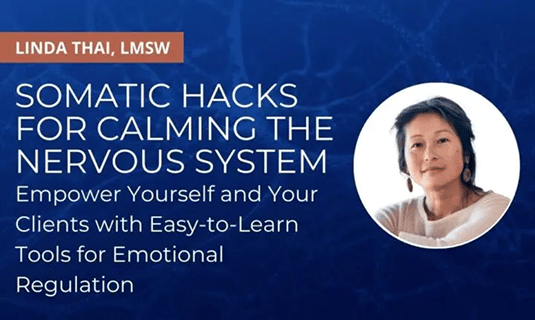
What you´ll learn:
- Vestibular Engagement for Emotional Regulation
- Using the Eyes to Hack the Stress Response System
- Subtle Sounds to Release the Peri-Trauma Response
- Effective Self-Holding and Self-Swaddling Techniques
- How and When to Apply Bilateral Stimulation
- Integration and Completing the Stress Response Cycle