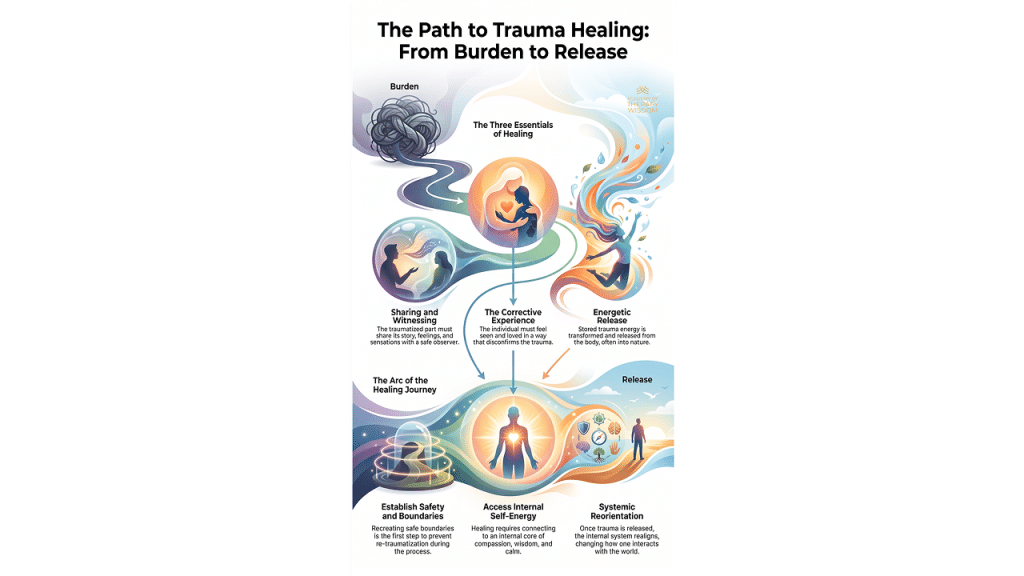

Q: What causes trauma fragmentation in psychotherapy clients?
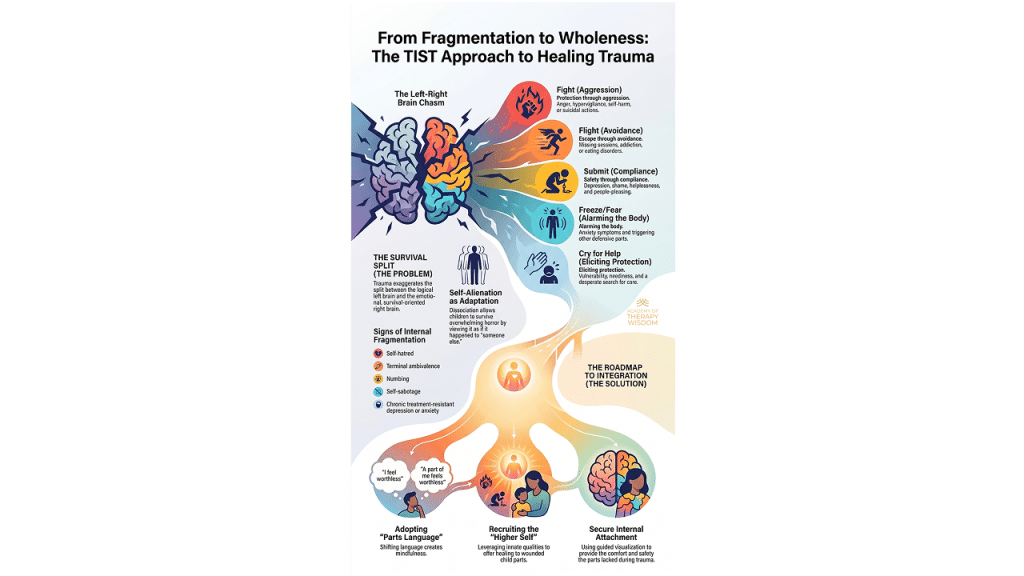
A: Trauma fragmentation occurs when the nervous system splits to ensure survival. It creates an internal divide between logical left-brain parts that manage daily operational life and emotional right-brain parts anchored in protective states like fight, flight, freeze, or submit.
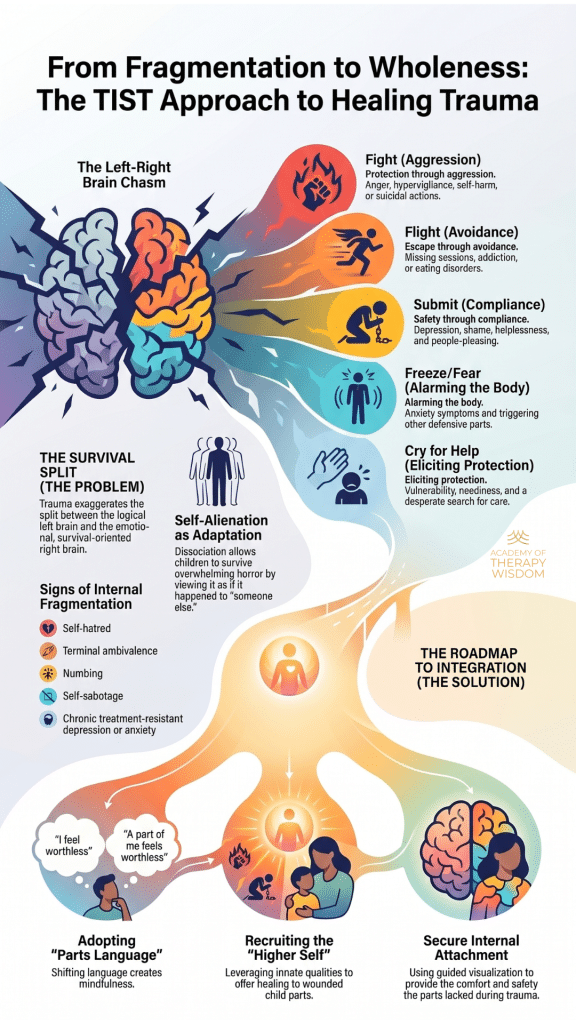
the nervous system into daily functioning blocks and protective survival responses.
Moving Past the Paradigm of Pathology
In our community of therapists, we regularly meet clients who feel completely broken by their internal contradictions. A person walks into our office acting highly successful in their career, yet they feel completely paralyzed by deep shame or sudden attachment panic the moment they step into a relationship. For a long time, traditional psychological models looked at these rapid shifts as personality flaws or stubborn resistance to treatment.
When we look through a neurobiological lens, the entire clinical picture changes. Fragmentation is not a failure of personality. It is a brilliant survival strategy executed by an overwhelmed nervous system.
When a child grows up experiencing chronic unsafety, their brain cannot integrate the terrifying experience with normal development. To keep the child alive, the nervous system partitions the awareness. Dr. Janina Fisher emphasizes that understanding this structural dissociation allows us to stop treating symptoms as pathology. Instead, we can honor them as deeply intelligent, protective adaptations.
The Left-Brain and Right-Brain Divide
Our daily interactions with clients show us exactly how this neurobiological partition functions in real time. The nervous system assigns specific duties to different parts of the brain during prolonged distress:
- The Left-Brain System: This side handles logical daily living. It gets the client to work, manages tasks, and presents a composed mask to society. It desperately wants to ignore the trauma history just to get through the afternoon.
- The Black-Box Right-Brain System: This side holds the emotional survival states. It remains frozen in the exact timeline where the danger occurred, completely organized around fear, protection, and unmet attachment needs.
When an ordinary event triggers the client, the right brain suddenly floods the entire system. The logical left brain loses control. The client might lash out in a fight response or completely withdraw into a freeze state, leaving them feeling intensely chaotic and out of control.
Mapping the Functional Roles of Survival Parts
To help our clients find stability, we must assist them in recognizing the jobs their defensive parts are performing. These are not random acts of self-sabotage. Every single survival state has a specific protective mission.
+——————+——————————————————-+
| Survival State | Protective Mission & Clinical Presentation |
+——————+——————————————————-+
| Fight | Uses anger and boundaries to keep abusers at bay |
| Flight | Employs anxiety, panic, or perfectionism to escape |
| Freeze | Immobilizes the body to evaluate hidden danger |
| Submit | Uses passivity and people-pleasing to minimize harm |
| Cry for Help | Uses intense distress to secure proximity and safety |
+——————+——————————————————-+
When a client struggles with chronic people-pleasing, they are often blended with a highly active submit part. Shifting the language from “I am completely worthless” to “A part of me feels entirely worthless” alters their relationship with the symptom. This simple phrasing tweak builds immediate mindful distance. It invites the client into a space of curiosity rather than absolute fusion with their despair.
Integrating Through Compassion and Relational Safety
True healing does not happen by forcing cognitive insight or trying to eliminate defensive symptoms. If a part has spent twenty years protecting a client from emotional collapse, it will not surrender its job just because of a logical argument.
We must recruit the client’s wise self-energy to build an internal secure attachment with these wounded pieces. Dr. Janina Fisher notes that integration requires profound compassion and relational safety. As we slow the process down and track somatic signals, the nervous system learns that the historical threat has passed. The protective parts can finally step down from their exhausting posts, allowing the client to feel genuinely whole and grounded.
Frequently Asked Questions
- How does Trauma-Informed Stabilization Treatment differ from standard talk therapy? Traditional talk therapy often encourages clients to endlessly retell their stories, which can accidentally re-traumatize an unstable nervous system. Trauma-Informed Stabilization Treatment focuses entirely on somatic stabilization first. It teaches clients to identify their internal parts and manage physical dysregulation without getting swallowed by historical memories.
- What signs indicate that a client is experiencing structural dissociation during a session? You will often notice sudden, extreme shifts in their body posture, vocal tone, or facial expressions. A client might change from speaking logically to suddenly feeling completely numb or intensely angry. These shifts mean a protective part has taken over the system to shield them from a perceived threat inside the therapeutic room.
Can you use parts work safely if a client presents with severe complex PTSD? Working with parts is exceptionally effective for complex trauma because it safely reduces internal conflict. Instead of fighting their terrifying symptoms, clients learn to view their distress as communication from protective systems. This perspective instantly lowers internal shame and helps them develop sustainable emotional regulation.
What you´ll learn:
- Vestibular Engagement for Emotional Regulation
- Using the Eyes to Hack the Stress Response System
- Subtle Sounds to Release the Peri-Trauma Response
- Effective Self-Holding and Self-Swaddling Techniques
- How and When to Apply Bilateral Stimulation
- Integration and Completing the Stress Response Cycle