

Dear Friends,
I’ve been doing research on aging lately, as we are preparing for our Elderhood program with Hedy Schleifer and Paul Browde, and I came across the work of Arthur Brooks, a Harvard professor who writes on happiness for The Atlantic. His framework called the Four Pillars of Happiness has been sitting with me.
Faith or philosophy. Family. Friendship. Meaningful work.
At first glance, it sounds almost too simple. And the older I get, the more I suspect that much of wisdom is not about discovering something wildly new, but remembering what human beings need for connection and meaning.
What struck me most about Brooks’ work is that these pillars are not really about happiness in the modern consumer sense. They are about the stability of the heart. A way of orienting ourselves in difficult times.
And these do feel like difficult times. Including myself, many of us feel exhausted, while younger folks are anxious about a very uncertain future. AI is reshaping entire professions. Politics and social media reward outrage over wisdom. Even within our own field, many clinicians I speak with feel overextended, emotionally saturated, and spiritually undernourished.
So perhaps the real question is not, “How do I become happier?”
It is, “What actually sustains a human life?”
Faith or Life Philosophy
Brooks does not reduce this only to organized religion. He points toward transcendence. The human need to feel part of something larger than ourselves.
For some, this is prayer. For others, meditation, silence in nature, music, poetry, ritual, or service. Or simply those fleeting moments when the separate self softens and we remember we are not the center of the universe. Kind of a relief if you think about it.
One of the hidden costs of modern culture may be that we have become overdeveloped in information and underdeveloped in awe.
Family
Not a perfect family, or necessarily an easy family. But the deep bonds that shape us, challenge us, humble us, and often ask more from us than we wish to give.
As many of us move into midlife and elderhood, family begins to shift form. Some are raising children while caring for aging parents. Others are grieving fractured relationships, or trying to heal old wounds. Even with all its complexity, family remains one of the great training grounds for love.
Friendship
Brooks distinguishes “real friends” from “deal friends.”
Deal friends are transactional; networking relationships, professional proximity, mutual usefulness. Real friendship is different. You spend time together not because it advances your career or expands your influence, but because you genuinely care about one another’s lives.
Many helping professionals struggle here. We become surrounded by colleagues, clients, and professional contacts, and still feel lonely. True friendship asks for time, presence, and mutuality. It cannot be performed, and it cannot be scheduled into the cracks of an overfull week.
Meaningful Work
Not work as income generation. Work that creates what Brooks calls “earned success.” The feeling that your effort matters. That you’re contributing something real. That your labor, in some way, reduces suffering, creates beauty, or serves life.
This is one reason so many therapists, coaches, healers, and caregivers stay committed for life despite the emotional demands of the profession. Underneath the exhaustion is a profound longing to be useful in a meaningful way. To help another human being suffer a little less.
A healthy life distributes meaning across multiple dimensions of being human. Awe. Love. Friendship. Contribution. With just enough rootedness to remain human in a world that keeps pulling us away from ourselves.
Warmly,
Brian Spielmann
P.S. If one pillar in your own life feels thin right now, that is worth noticing. Not as a problem to solve this week, but as information about where your attention might want to go in the months ahead.
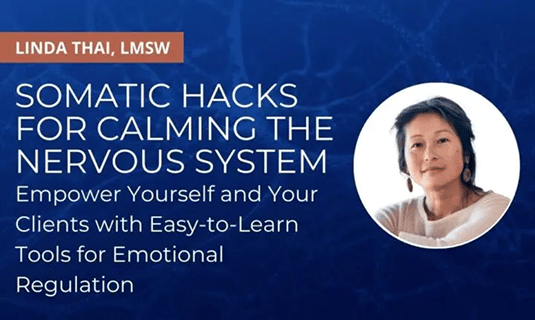
What you´ll learn:
- Vestibular Engagement for Emotional Regulation
- Using the Eyes to Hack the Stress Response System
- Subtle Sounds to Release the Peri-Trauma Response
- Effective Self-Holding and Self-Swaddling Techniques
- How and When to Apply Bilateral Stimulation
- Integration and Completing the Stress Response Cycle