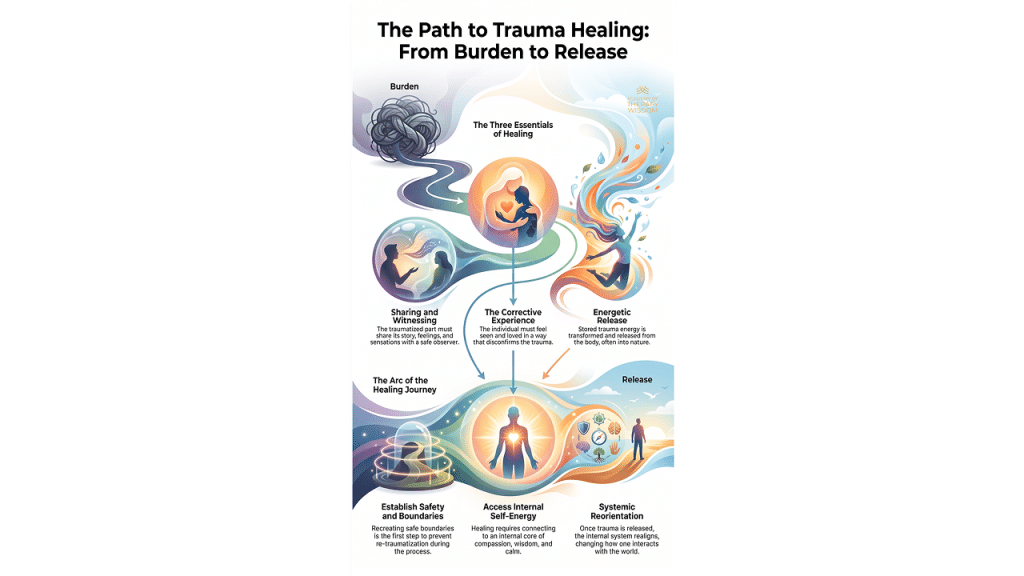

Exploring the neurobiology of structural dissociation and the clinical application of parts work to help survivors move from fragmentation to internal coherence.
Q: How does trauma fragment the internal self?
A: Trauma disrupts brain integration, creating a divide between parts that manage daily life and parts holding survival memories like fight or flight. This structural dissociation allows a person to function while unresolved threat remains held in state-dependent, isolated internal systems.
The Internal Divide in Clinical Practice
In our community of therapists, we often see clients who seem to lead successful lives but feel an agonizing hollowness or sudden, uncontrollable emotional shifts. This phenomenon is not a sign of a broken personality. It is a brilliant, albeit painful, adaptation of the human nervous system. When an experience is too overwhelming to integrate, the brain compartmentalizes the memory and the associated survival response.
One part of the client keeps showing up for work and family. Meanwhile, other parts stay stuck in the moment of impact. We must recognize that these survival parts are not symptoms we should try to extinguish. They are messengers of an unfinished story. By shifting our perspective, we help our clients move from “What is wrong with me?” to “How did my system help me survive?”
Mapping the Split Between Life and Survival
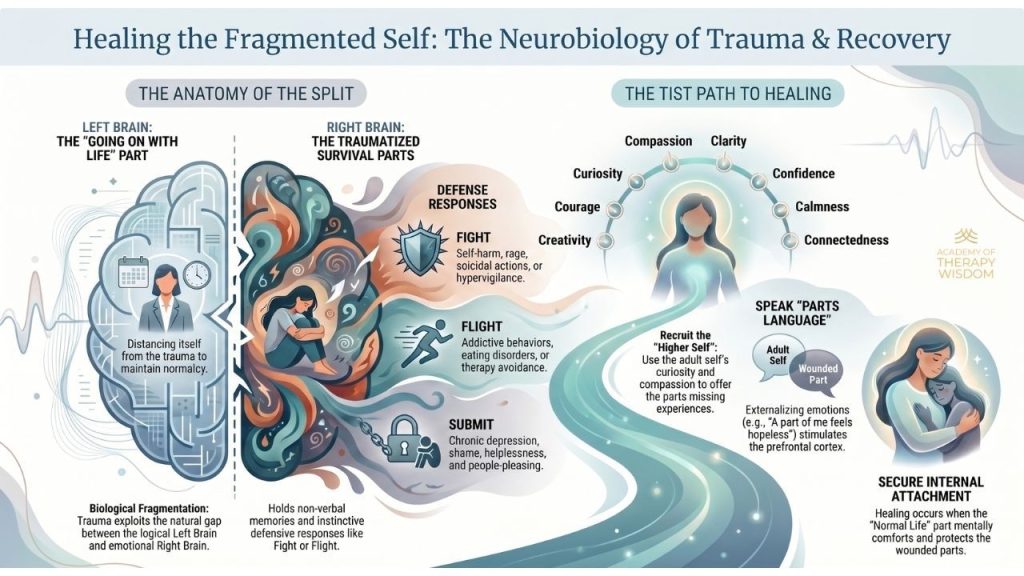
The infographic above illustrates a concept often discussed in Trauma-Informed Stabilization Treatment regarding the structural dissociation of the personality. On one side, we have the part that handles the mundane requirements of being a person. On the other side, we find the emotional parts that are organized around threat.
These emotional parts are often governed by the right brain and the limbic system. They don’t have a sense of time. To a “submit” part, the trauma is still happening right now. Healing requires us to bridge this gap. We help the functioning self become a compassionate observer of these younger, wounded parts.
Why Parts Language Changes the Brain
When we introduce parts language into our sessions, something remarkable happens in the client’s neurobiology. Instead of being completely blended with a feeling of terror, the client can say that a part of them feels terrified. This small linguistic shift recruits the prefrontal cortex. It creates the “medial prefrontal” capacity for self-observation that the American Psychological Association notes is vital for emotional regulation.
This distance allows the client to stay within their window of tolerance instead of falling into a state of total overwhelm. We are not just talking about feelings. We are actively retraining the brain to achieve a state of neuroplasticity where new, safer connections can be formed.
Fostering Internal Attachment
Healing is an act of building a secure internal attachment. Many survivors grew up in environments where their survival responses were shamed or punished. In the therapy room, we model a different way of relating to these parts. We teach the client’s “adult self” to provide the safety that was missing during the original trauma.
This process leads to memory reconsolidation where the old, traumatic meanings are updated with new experiences of support. The goal is not to eliminate the parts but to foster a system where every part feels seen and regulated. As we support this internal connection, the system moves toward coherence and genuine presence.
Frequently Asked Questions
How do I know if a client is experiencing structural dissociation? Clients often describe feeling like a different person in certain situations or having “voices” in their head that criticize or protect them. You can observe sudden shifts in posture, tone, or eye contact that signal a part has taken over. This is often a hallmark of c-ptsd where the nervous system has been shaped by chronic, early-life threat.
What is the first step in working with fragmented parts? The first step is always stabilization and building a map of the internal system. We must help the client identify their “apparently normal” part so they have a stable base from which to explore. This involves understanding their neuroception of safety and threat before attempting to dive into the emotional memories held by the survival parts.
Can parts work be used alongside other modalities like EMDR? Many clinicians find that using a parts-informed approach makes other trauma-processing tools much safer. Identifying which part is “targetting” a memory ensures that the client does not experience dissociation during the process. According to research from the CDC, early childhood adversity has long-term health impacts, and parts work offers a gentle way to address these deep-seated patterns without re-traumatization.
What you´ll learn:
- Vestibular Engagement for Emotional Regulation
- Using the Eyes to Hack the Stress Response System
- Subtle Sounds to Release the Peri-Trauma Response
- Effective Self-Holding and Self-Swaddling Techniques
- How and When to Apply Bilateral Stimulation
- Integration and Completing the Stress Response Cycle