

Dear Friends,
As I age, seeing the impermanence of suddenly losing friends, watching environmental destruction, school bombings in Iran, children leaving the nest, I am much more aware of grief. And how it is a strange companion.
Unlike anger, which you can look at so directly and discharge, grief is much more elusive. It does not follow a schedule. It doesn’t ask permission to creep into your emotions. And it doesn’t care how busy we are, or how much we think we’ve already worked through.
Linda Thai writes, “And yet, to surrender to grief absolutely requires an intimacy with powerlessness, for grief asks that we succumb to the throes of grief.”
It arrives in waves. Sometimes quietly, like a heaviness in the chest. Sometimes all at once, in the middle of an ordinary moment.
And suddenly, we’re back there.
In our culture, there is so much pressure and to move on. To quickly process, integrate, find meaning, return to being okay. Especially in the helping professions, where there can be a quiet expectation that we should know how to navigate grief. That we should be able to hold it skillfully.
But grief does not really work that way.
There is an old Buddhist story of Kisa Gotami, a young mother who comes to the Buddha mad with grief over the death of her child, begging him to bring the child back. He sends her to gather mustard seeds from any household that has not known loss. She returns empty-handed, understanding that grief is the universal thread of being alive.
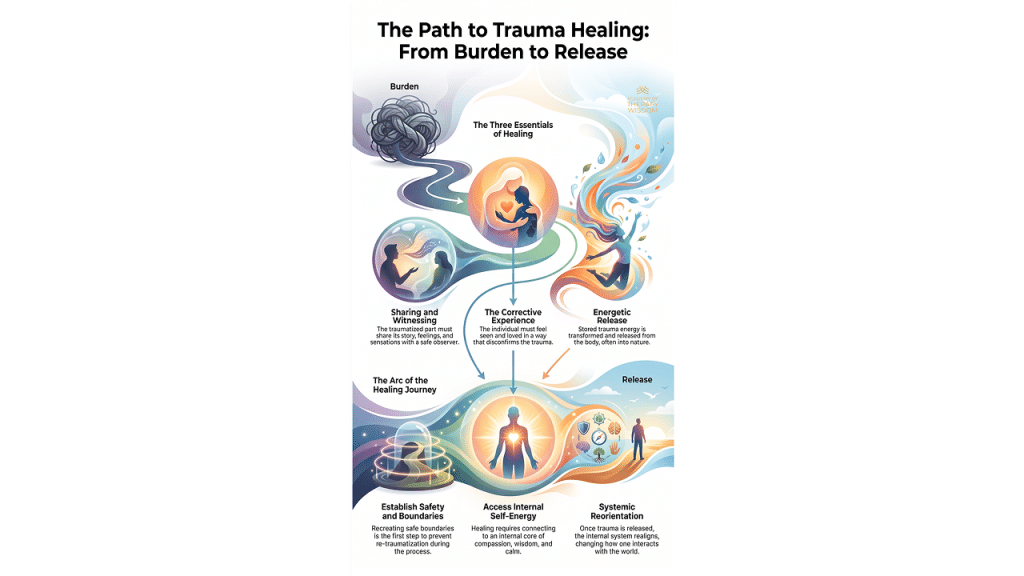
We just interviewed Edy Nathan today for the upcoming Elderhood program, and she reminds us that grief is not a problem to solve. It is a lifelong companion. Not something to get over, but something to live alongside. In her course with us, Unmasking the Pain of Loss: Helping Clients Identify & Work with Grief, she frames grief as a dance. It reminds us that you learn to move with it rather than away from it. We partner with the grief and it is a lifetime dance.
Edy also pushes back on the tidy five-stage model many of us grew up with. In her experience, grief is non-linear. People cycle through phases many times, in any order. So when a client feels stuck, or worries they should be further along by now, that itself may be the doorway, not the obstacle.
And one of her most useful teachings for clinicians: grief hides in unexpected places. It often shows up disguised as shame, anxiety, anger, distraction, depression, or detachment. Much of what we see in our sessions, what looks like a presenting issue on the surface, may actually be unmetabolized grief that has never been named or witnessed.
If we are honest, grief is not only about loss. It is also about love.
We grieve because something mattered, because someone mattered. A moment, a season, a chapter of life touched us.
In that way, grief is not a sign that something has gone wrong. It is a reflection of our capacity to care and love.
Grief for the state of the world. Grief for the pace of change. Grief for what feels uncertain or out of our hands. Grief for the clients and friends you can’t fully reach. Grief for the parts of ourselves that had to adapt, or harden, along the way.
I’ve been thinking about what it means to make space for grief. To feel fully and not rush the process and allow grief to move at its own pace. The late Zen Master Bernie Glassman talked about sitting in the bathtub every morning for 6 months after his wife died.
And maybe most importantly, we don’t need to do it alone.
There is something profoundly human about being witnessed. About having someone sit beside us, without any effort to fix anything.
If grief has been present for you lately, in whatever form it is taking, I hope you can give it a little space. Just enough to acknowledge: something here matters.
With warmth,
Brian Spielmann
P.S. How has grief showed up in your practice, or even more intimately in your life lately? Click HERE to share your insights in our free online community…
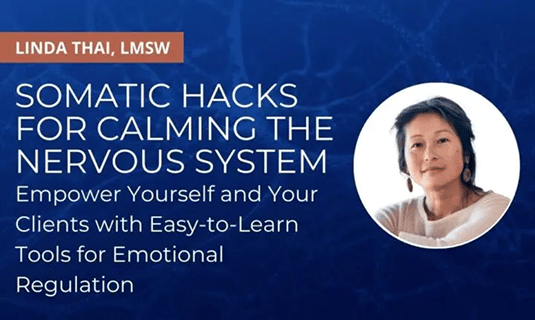
What you´ll learn:
- Vestibular Engagement for Emotional Regulation
- Using the Eyes to Hack the Stress Response System
- Subtle Sounds to Release the Peri-Trauma Response
- Effective Self-Holding and Self-Swaddling Techniques
- How and When to Apply Bilateral Stimulation
- Integration and Completing the Stress Response Cycle