
Dear Friends,
Spring is the season of waking up. Seeds are sprouting, gardens are being planted, flowers are blooming, while new projects are emerging. For those of us in the Northern Hemisphere, the Earth is asking us to move again after winter.
But healthy growth depends on proper rest. The soil must rest, which is why ecological farmers plant cover crops. Olympic athletes know that recovery is as important as the workout itself. The nervous system needs to settle. Even the heart needs spaciousness and time to stay open.
This morning my stepdaughter, home from her freshman year for Mother’s Day, turned me on to Tricia Hersey’s remarkable book, Rest Is Resistance, A Manifesto. The central idea is simple, but worth deep contemplation:
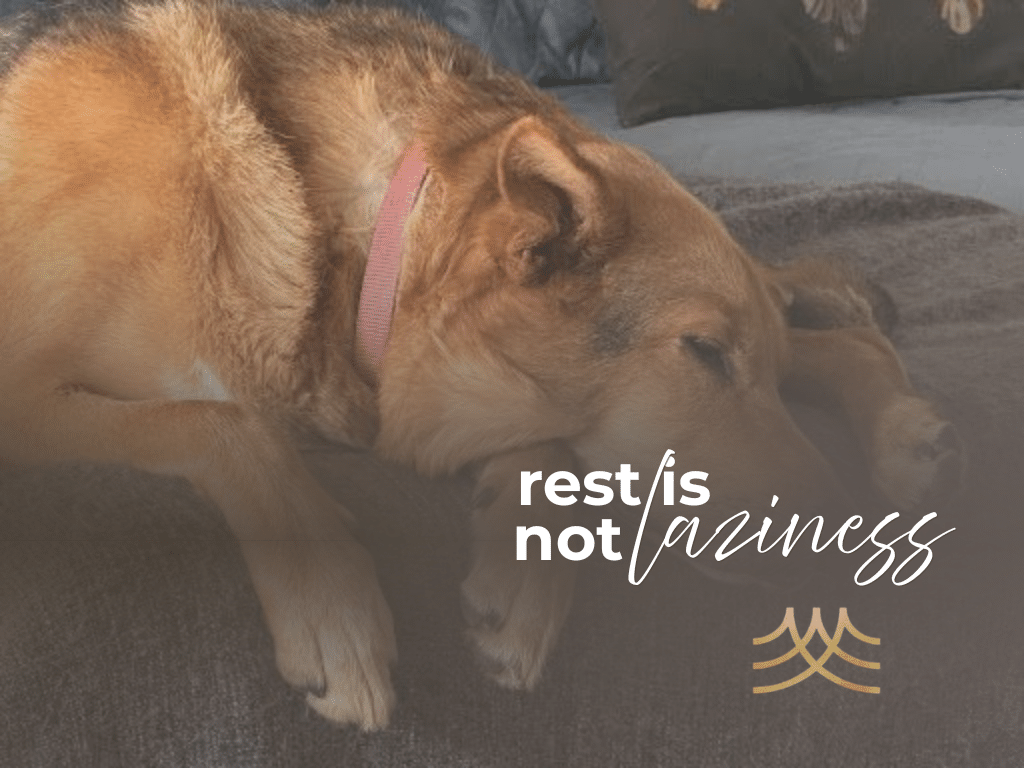
Rest is not laziness. Rest is resistance.
Hersey challenges something many of us have unconsciously absorbed: that our worth is tied to productivity. (My industrious German parts are screaming “of course it is.”) She goes on to say that exhaustion is normalized, and that slowing down is not an option in the grind culture of a repeatedly traumatized world. Rest comes much later.
One of my earlier mentors, Dan Sullivan of Strategic Coach, built his Time System around three kinds of days: Free Days, Focus Days, and Buffer Days. What’s interesting is that Dan, who has coached thousands of high-level entrepreneurs around the world, flips our usual logic. We don’t end our cycle with free days. We start with them so we are well rested before we begin our work.
This can land particularly hard in therapist culture.
Helping professionals are extraordinarily caring people who quietly live inside chronic overextension. You’re exposed to grief, trauma, anxiety, and uncertainty while holding space all day for your clients. Then you return home to families, aging parents, financial pressure, inboxes, and a digital world that never stops asking for more attention.
Somewhere along the way, exhaustion became normalized. As if being depleted proves devotion, a badge of honor.
But from a somatic perspective, and perhaps a spiritual one, chronic exhaustion changes us. When we are constantly accelerated, we lose access to imagination, to creativity, to friendships, to grief, to simply being present. And we know where it leads in the body: chronic fatigue, autoimmune conditions, the slow wearing down of the system itself.
We become ultra efficient, but less alive.
What I appreciated about Hersey’s work is that she does not frame rest as a reward for successful people, or a vacation to Costa Rica earned after a hard year of work. She frames it as a human right (that is radical). Something sacred and biological (I think of bears hibernating), not something we “deserve” only after collapsing.
Worth its own discussion: the book exposes how capitalism and white supremacy have robbed our bodies; robbed us of leisure, of dream space, of the right to simply be. Which makes me wonder how we’ll function as a society as AI and robots replace so much of human work in the coming decade. If our worth has been tied to productivity, what happens when the machines are more productive than we are? And will our leaders share the wealth?
That conversation deserves more room than I can give it here. But underneath the politics, she names how we are profoundly tired. Not just physically, but existentially.
The Eastern and Western wisdom traditions have not so accidentally always pointed toward Stillness. Sabbath. Retreat Practice, Pilgrimages in silence. Long meals with people we love. Moments where nothing “work productive” is happening, but something deeply human is being generated.
Rest is not the absence of meaningful life. Rest may be what allows meaningful life to emerge.
One tension in our field: many of us understand the dimensions of trauma, but struggle to give ourselves permission to slow down. We know the nervous system needs regulation. We know healing requires safety. And yet we continue living with relentless urgency.
Rest itself ,is part of the healing.
So as spring unfolds, perhaps the question is not only: What do I want to create?
But also: What kind of rhythm allows me to stay fully human while creating it? And as Hersey asks in Manifesto, How can we reimagine rest without guilt or shame? Click HERE to join the conversation…
With warmth,
Brian Spielmann
P.S. For those who like to plan ahead, we have three powerful upcoming programs we’re excited to share:
- De West — A Path for Healing Medical Trauma begins July 22 [Save the date]
- Báyò Akómoláfé — Cracks in Therapolis, a year long exploration beginning in August [Save the Date]
• BG Mancini — Neurodivergence in Practice: A Brain-Body Framework for ADHD and Autism in Clinical Care begins August 17 [Save the date]
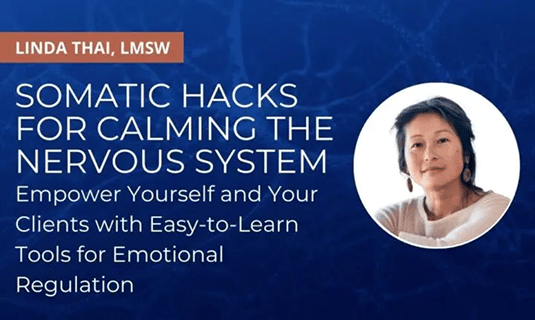
What you´ll learn:
- Vestibular Engagement for Emotional Regulation
- Using the Eyes to Hack the Stress Response System
- Subtle Sounds to Release the Peri-Trauma Response
- Effective Self-Holding and Self-Swaddling Techniques
- How and When to Apply Bilateral Stimulation
- Integration and Completing the Stress Response Cycle