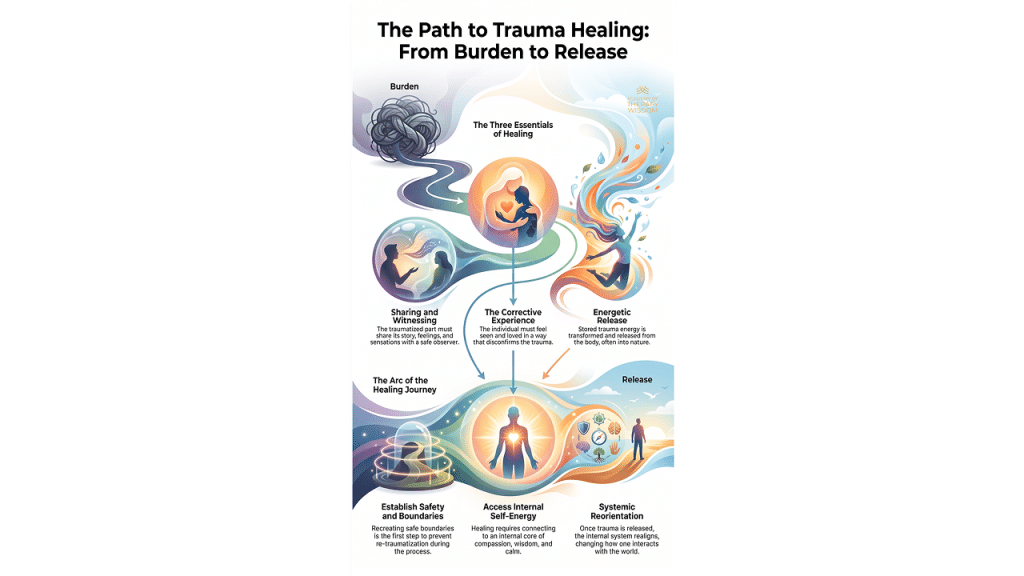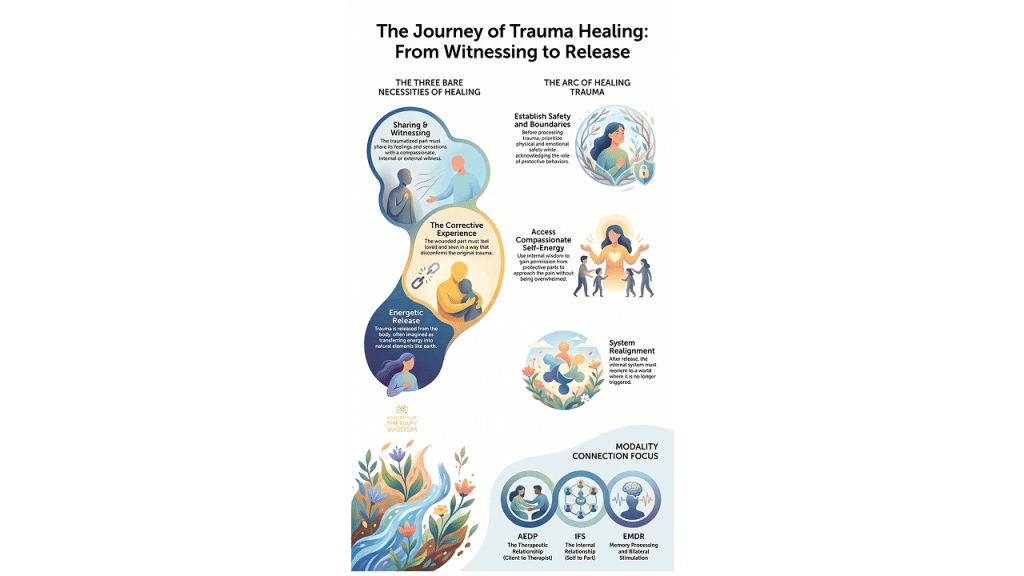


Imagine being a survivor of sexual abuse and being told that your healing depends on going through the distress of retelling, over and over, the story of those crimes?
To add insult to injury, memory-focused techniques that cause retraumatization don’t work too well for survivors of familial child sexual abuse (CSA). Exposure methods were developed primarily for people who suffered single-incident trauma, while most child sexual abuse survivors grew up in an environment of constant and multiple threats.
Child sexual abuse is far from a singular event. It is usually just one form of ongoing trauma, alongside emotional, physical, and sometimes spiritual or financial abuses and neglect in families where perpetrators reign.
Overwhelming survivors with intensive memory-based therapeutic modalities can replicate the experience of trauma: it pushes beyond boundaries and can—once again—make survivors feel they cannot control what’s happening to mind and body. Yet, retraumatizing, memory-focused talk is still the therapeutic approach often offered to survivors of child sexual abuse.
The Origin of Trauma Informed Stabilization Treatment (TIST)
That’s one reason why Dr. Janina Fisher developed Trauma Informed Stabilization Treatment (TIST). She had a deep conviction that healing shouldn’t require trauma survivors to hurt even more.
My practice of the last 16 years has focused on adult survivors of sexualized violence. Typically, my clients have made three or four or even more attempts to start therapy. But they could not hold up through the re-traumatizing experience of having to retell their painful memories, repeatedly “unpacking” the worst times of their lives.
If they are willing to try again to reduce the post-traumatic symptoms that are truncating their lives, I am duty-bound to offer gentle methods that do not cause more harm, that are effective, and that clients actually like. That’s where TIST comes in.

Shifting the Focus from the Past to the Present
TIST focuses on what clients are experiencing now. For CSA survivors, “now” is often a full array of trauma responses which helped them survive as children: fight, flight, panic, crying for help, and submitting or fawning.
These can show up in a thousand ways, triggered by ordinary daily experiences:
-
Panic and vomiting as soon as we wake each day.
-
Dissociation when someone we love tries to touch us.
-
Rage when we experience even minor disrespect.
-
Extreme fatigue in response to anticipated challenges.
As adults trying to live their lives, these clients can understandably hate these responses and want them to stop. They loathe the panic, they are exhausted by rage and ensuing shame, and they feel overwhelmed and confused. Suppressing these trauma responses doesn’t work forever; the survival brain that grew reactive in developmental years is simply too powerful.
Cultivating the “Ember of Knowing”
But these confused survivors also often have a truth very quietly whispering to them from deep inside: that these feelings don’t belong to them in the here and now. They belong to the survival parts who were left alone as children, to fend for themselves through the ongoing trauma.
TIST leverages and cultivates this ember of knowing. It encourages clients to simply notice the activation of survival parts and strategies. This is done with a light touch: neutral, non-judgmental, brief, like a calm glance.
It is just recognition to begin with—that any intense distress they experience that is not warranted by their immediate circumstances is coming from a survival part, based on memory. Brief recognitions of survival parts can then become soft curiosity and attunement.

Befriending Our Survival Parts
As clients build these gentle skills, they become more sensitive and more inquisitive about these formerly “shameful” survival parts. They may realize:
“Oh, there is that numbing part, shutting down the senses, trying to spare me from overwhelm, in the way it knows how.”
“There is the fight part, winding up to protect me at any cost! It’s so strong!”
“The flight part wants to help by going WHOOSH up to the ceiling. I feel its protective pull. I wonder what it needs right now?”
At first, we keep this noticing simple and brief, but it is powerful medicine. That’s because it contains the experience of safety.
When our adult clients mindfully tune in, even while the survival brain is active, this reverberates positively in the nervous system: “Hang on! There is a calm, capable adult out there!”
Someone is present with these intense responses in a stable way, even if only for a moment. This is big news to the survival brain: “What?!!? You mean I’m not out here all alone, trying to save my own life??!”
Sending Big News to the Survival Brain
This is a huge contrast to the terrifying isolation of childhood sexual abuse, when these survival systems did not have a safe adult protecting them, and when they had to make it through these violations totally alone.
Our clients’ gentle attunement to the responses those young survival parts are producing now is the path to reclamation. Finally, there is a consistent, caring adult who can hold the parts’ expressions—who can hear the cries for help, see the resigned despair, and respect the deep rage while remaining calm and present.
[ Survival Brain Activity ] ──> [ Mindful, Calm Adult Noticing ] ──> [ Systemic Safety & Relief ]
Then, the limbic-brain survival parts can begin to notice something new: a safe adult who is interested, consistent, and caring. Eventually, they can begin to hand over the job of navigating everyday life back to the adult client.
This noticing sets the stage for a new relationship between clients and their survival parts, which the therapist can help build into solid reparation. Nothing is forced; nothing is merely cognitively understood. Through the repeated experience of safe noticing and attunement, the survival parts come to know that a responsible adult is there, sometimes for the first time ever.
As the survival parts’ confidence grows in the adult leadership of the client, these parts will begin to step back from trying to solve adult life situations with the emergency tools of fighting, fleeing, panicking, clinging, or shutting down.
A Gentle Evolution Toward True Restoration
The goal of TIST therapy is not to rapidly push sexual abuse survivors toward a perceived “normality” in their work, their relationships, or other functions. It is to help survivors come into a new, more confident and compassionate relationship with now.
-
For the adult brain: The first task is noticing the now of well-intentioned survival parts activating based on past memory (triggers).
-
For the survival brain: The task is beginning to feel the now of our present adult circumstances—of calm, power, and safety.
As we guide clients to keep offering attunement to these distinct survival parts, these experiences lay the foundation for the later stages of TIST. Then, clients can engage gently and thoroughly with the repair and restoration needed in the aftermath of child sexual abuse.
Because this healing is based on strong, gentle noticing, the repair process does not involve retraumatization. The adult client leading the repair will be too attuned to the needs of young parts to allow more harm. Through this befriending, the survival brain can observe that the adult client can navigate everyday life without the emergency survival responses of fight, flight, panic, attach, or submit.
A gentle evolution takes place in which there is room to safely handle whatever arises.