

Dear Friends,
Growing up in the 1970s in middle-class suburbia on the east coast, I was raised on TV dinners, pop tarts, canned string beans, margarine, and the Brady Bunch. Iceberg lettuce was the only fresh green we knew until decades later I discovered real greens like romaine, arugula, chard and mixed greens.
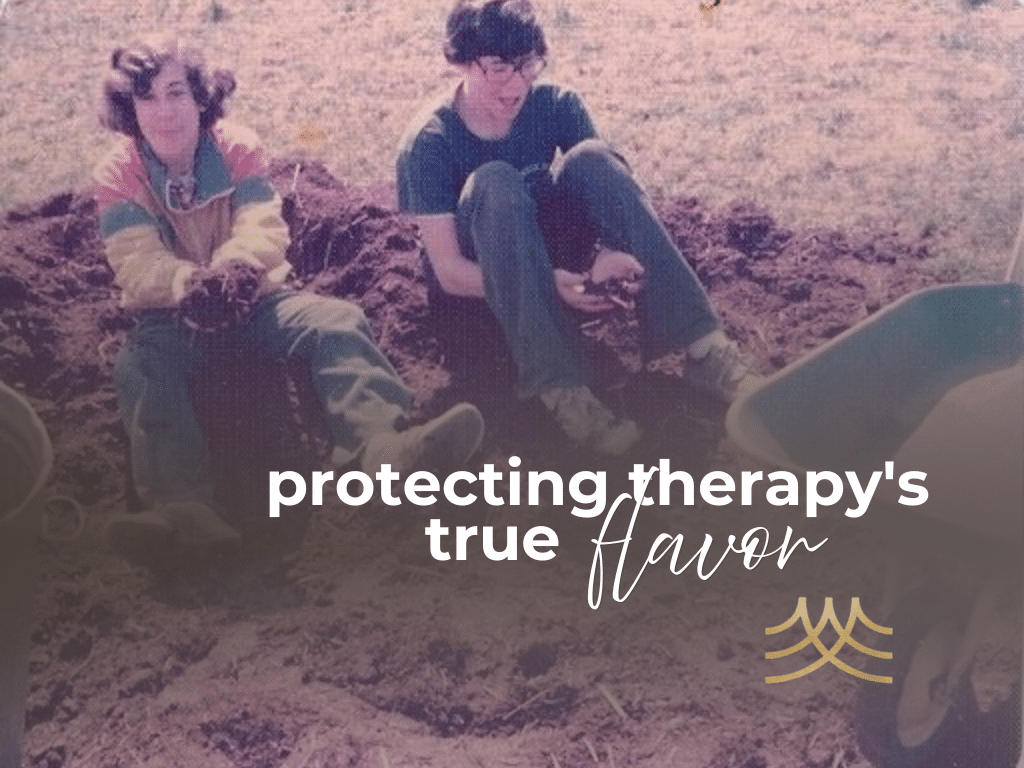
Somehow, around age thirteen, I became interested in organic foods and gardening and even got a job at a tiny health food store. I tracked down a man with a Troy-Bilt Horse rototiller to tear up our entire backyard. Then I ordered three tons of horse manure delivered, a pile as high as my basketball net. My mother was horrified and hid in the house for several weeks, worried about what the neighbors might think.
Looking back, I wasn’t just searching for food.
I was searching for something real, something grounded.
A dear friend just gave me a book called In Search of the Perfect Peach by Franco Fubini. It explores a simple question: how did so much of our food lose its flavor?
We know the answer; industrial agriculture optimized for uniformity, shelf life, and efficiency. Tomatoes became easier to ship cross country.
Strawberries lasted longer in stores. Apples looked more consistent with no bruises. And the price for low cost food was tasteless produce with almost no nutritional value.
As I read, I kept thinking about psychotherapy. The same forces seem to be at work…
Insurance companies push standardization while licensing boards require regulations and national organizations codify competencies and best practices.
None of this is inherently bad. These structures protect clients and can strengthen the profession.
But every system has a shadow.
When efficiency becomes the primary driver, something not so subtle disappears.
The flavor, humanity, and aliveness…
I was recently interviewing Mariah Rooney for the Therapy ‘Wisdom Podcast, and they shared a moment from her own therapy. She was talking about someone who had been harmful to them and Mariah’s therapist said: “I’m going to say something wildly inappropriate, but I want to punch this person.”
Mariah laughed telling it. “On paper, that’s a hard no,” she said. “But what was really sweet was realizing: you care about me in this way.”
That’s it, isn’t it? That’s the flavor.
Not being imprisoned by any methodology, however good. But bringing your living qualities that make healing possible. Qualities like curiosity, presence, humility, embodiment, and love.
It’s also about the willingness to sit with uncertainty, the courage to not know, the ability to be genuinely changed by the person sitting across from us, and ok to once in a while slip in some humor.
These qualities are hard to measure. They don’t fit neatly into an insurance report. They resist standardization.
And yet they may be the very heart of your work.
A perfectly shaped supermarket tomato will never taste like one grown in nurtured backyard soil and picked at the right moment, and no amount of technology can fully replace the transformative power of one human being genuinely meeting another.
The future of therapy will include AI and new technologies.
But my hope is that we never lose the flavor.
Because healing has always been a profoundly human endeavor.
And that flavor is worth protecting.
Thanks for reading and wishing you to be a most flavorful wisdom therapist.
Brian Spielmann
P.S. Every therapist carries a flavor, a way of being present, a hard-won knowing, a quality of care that no protocol could fully capture. Sometimes it’s buried under years of documentation, productivity pressures, and playing it safe. I’d love to know: what’s yours? What’s the living quality you bring to your work that doesn’t show up in your notes? Share it with us in the Therapy Wisdom Hub.
What you´ll learn:
- Vestibular Engagement for Emotional Regulation
- Using the Eyes to Hack the Stress Response System
- Subtle Sounds to Release the Peri-Trauma Response
- Effective Self-Holding and Self-Swaddling Techniques
- How and When to Apply Bilateral Stimulation
- Integration and Completing the Stress Response Cycle