

A decade ago, James Hillman wrote We’ve Had a Hundred Years of Psychotherapy—and the World’s Getting Worse. Now seems to be the moment when therapy is finally addressing what Mr. Hillman refers to as the “deteriorating environment.”
This is a time when there is a rising realization that the outward societal conditions (social, economic, and physical) cannot be separated from a person’s interior spiritual and emotional qualities.
Last year, we asked the Academy of Therapy Wisdom community to offer editorial and artistic submissions in response to the prompt:
What do you believe is the frontier for psychotherapy in social change and/or spirituality and why?
Below we share a meaningful essay from a leader in the multicultural counseling space, María del Carmen Rodriguez. We hope it inspires you in new directions, as we all look forward to the new frontier of psychotherapy blossoming in great benefit for the world.
A New Frontier for Psychotherapy
by Maria del Carmen Rodriguez Ph.D., LPC, NCC, NJ-DRCC
The world we live in is in serious turmoil due to the threats we face: a never ending COVID-19 pandemic, social injustices that make the lives of so many people living in oppressed and marginalized conditions bleak and the constant disasters caused by climate crisis.
As psychotherapists and counselors, we are also aware that within each problem, there is a chance for growth and transformation.
The path ahead for all mental health providers is to envision working with our clients from a holistic perspective. Each person is a unique creation gifted with key basic intelligences. These intelligences are: cognitive, interpersonal/social, moral, spiritual and physical/kinesthetic.
Traditionally, the spiritual dimension has been ignored or given insufficient attention by most counseling theories and mental health providers. This is a basic definition of spirituality: “it refers to the way individuals seek and express meaning and purpose and the way they experience their connectedness to the moment, to self, to others, to nature and to the significant or sacred”. (Puchalski et al, 2009). Based on this definition, we realize the transformative and redeeming power of this dimension for al clients and especially those who live in disenfranchised and dehumanizing living conditions.
If we want to forge a viable path that ensures the survival and creative growth of our clients, we must develop theories and techniques that simultaneously address these five dimensions and empower them to deeply look at their multifaceted ways of reflecting and acting in the world. Despite the enormous popularity of cognitive/behavioral approaches in counseling and psychotherapy, we cannot continue treating our clients as unidimensional beings.
A paradigm shift is urgently needed as we deal with this particular time which calls for courageous and holistic conceptualizations and practices.
I am reminded of the vision shared by the great American poet Robert Frost : “I shall be telling this with a sigh; Somewhere ages and ages hence: Two roads diverged in a wood, and I took the one less traveled by, and that has made all the difference.” It is my hope that we muster the courage to get out of our comfort zone. It is with courage that we may give birth to conceptualizations and practices that honor the complex human qualities that all clients embody. The survival of our specie and the planet is on the line.
Sources:
1) Puchalski, C., Ferrell, B., Virani, R., Otis-Green, S., Baird,P.,Bull, J., Chochinov, H., Handzo,G., Nelson-Becker, H., Prince Paul, M., Pugliese, K. & Sulmassy, D. (2009) Improving the quality of spiritual care as a dimension of palliative care: The report of the consensus conference. Journal of Palliative Medicine, 12 (10), 885-904. 2) Poem “The road not taken” Robert Frost Selected poems. Fall River Press, 2011. P. 25.
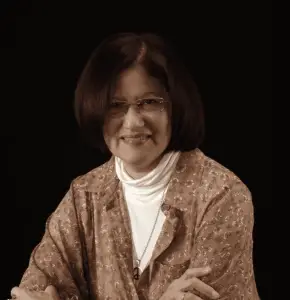 Maria del Carmen Rodriguez has been a full time, tenured faculty working for the Department of Counselor Education (Nathan Weiss Graduate College) in Union, NJ and a graduate of New York University. In her teaching, she has motivated new counselors to facilitate clients’ holistic healing. Her research examines the role of folk-healers in progressive mental health care and culturally inclusive counseling.
María del Carmen has presented her research in local, state, national and international counseling conferences. Her community involvement includes service as a state certified disaster response counselor, and mentor to doctorate students.
JOIN a FREE Training with Dr. Tori Olds
Introduction to Deliberate Practice in Psychotherapy
In this video series, you will learn:
The essential problem with most other therapy training programs.
Six myths about becoming a more effective therapist.
What Deliberate Practice is and why it is so important
The five steps on the roadmap for clinical excellence