
Dear Friends,
There is a question I have been sitting with for some time.
What is it that turns a competent clinician into someone who genuinely shapes the field? Not just someone who helps clients, but someone whose thinking, whose presence, whose life’s work leaves a mark on the profession itself?
Over the past several months, I have been quietly recording interviews with some of the extraordinary teachers in our community, including Janina Fisher, Ruth Cohn, Dafna Lender, Arielle Schwartz, and others who have shaped our field in subtle and powerful ways. These conversations will form the foundation of the Therapy Wisdom Podcast, launching in the coming week.
This weekend, I went back through the transcripts.
I was curious whether, beneath the different specialties and backgrounds, there were patterns. Not just what these teachers know, but how they evolved in order to have an even larger impact.
Here are the top ten themes.
They found mentors and were receptive to learning. Not casually, but deeply. Each apprenticed themselves to someone, or to several teachers, and allowed themselves to be shaped. None of them self-invented in isolation.
They were changed by their clients. Their models did not come from theory alone, their thinking evolved because clients confused them, challenged them, or revealed something missing. The work shaped the teacher.
They lived through a crucible. Every one of them had seasons of doubt, marginalization, professional isolation, or being ahead of the field. Their authority did not come from credentials alone, it came from surviving something.
They followed what disturbed them. They did not choose their specialty because it was trendy. They followed what troubled them. Why are we not talking about neglect (Ruth)? Why are we pathologizing parts (Janina)? Why are we missing attachment? Their careers grew from moral tension.
They tolerated being misunderstood. At some point, each held a view that was not mainstream. They endured skepticism, silence, or pushback. Longevity required resilience.
They kept learning, even at the peak. The most impressive quality I witnessed was humility. Especially watching faculty like Janina and her willingness to remain a student in conversations about race and microaggressions. Mastery did not harden them.
Their personal history informed their vision. Not in a confessional way, but in an integrated way. Attachment wounds, neglect, dissociation, cultural identity, migration… They did not escape their biography or rough childhood. They metabolized it (Sarah Burgamy).
They built slowly. No one became a respected voice overnight. There were decades of teaching small rooms (Susan Aposhyan), writing articles that perhaps few people read, refining language, and staying steady. These are long arcs, not spikes.
They integrated across disciplines. They read outside their lane. Psychodynamic and somatic. Attachment and neuroscience. Parts work and social context. They were interdisciplinary before it was fashionable.
They began to feel responsible for the field. At some point, their orientation shifted. Not just, how do I help my clients? But, what is missing in our profession (Akilah Richardson). They became stewards.
If I had to distill it into one sentence, it might be this: the therapists who shape the field are mentored, tested, misunderstood, patient, interdisciplinary, personally transformed, and unwilling to ignore what feels ethically unfinished.
When I created the Academy of Therapy Wisdom, I did so intentionally, wanting the presenters to be the stars (and the community the heroes). I have seen other platforms where the founder becomes the center of gravity, and that never felt right to me. Our faculty carry deep wisdom and insights. They deserve the spotlight.
There is also a more honest layer. I come from a lineage marked by Holocaust trauma. In my nervous system, invisibility feels safer than visibility. Staying behind the camera, building the platform, amplifying others, that was comfortable.
So this podcast is me stepping further out of my shell. I offer that as an invitation. If you have been waiting until you feel ready to share your voice, create content, or publicly tell your story, I understand that hesitation. You do not have to be fearless or feel confident to begin.
You just have to begin.
And please be merciful for my first hundred interviews as I find my sea legs.
My hope with the podcast is not to create celebrities. It’s to illuminate your own path.
If you are early in your career, may these stories reassure you that doubt and apprenticeship are part of the process. If you are mid-career, may they remind you that humility and integration matter. And if you have been quietly carrying wisdom for decades, may you feel seen.
I cannot wait to share these conversations with you.
With gratitude,
Brian
P.S. If these themes stirred something in you, the Therapy Wisdom Circle is where they come alive. Each month you get direct access to our extraordinary presenters, a growing library of over 50 hours of transformative learning, yoga, breathwork, and integration calls, and a dedicated community space for BIPOC therapists. This is mentorship, learning, and belonging, all in one place. All for $49/month, no contracts, no pressure. [Join us here.]
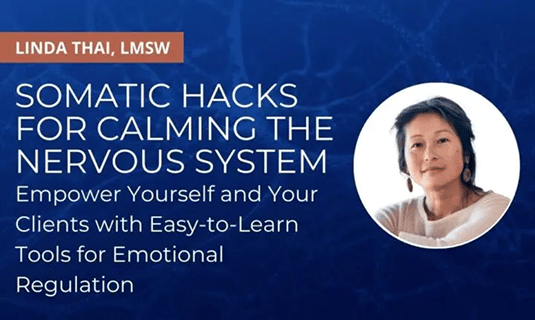
What you´ll learn:
- Vestibular Engagement for Emotional Regulation
- Using the Eyes to Hack the Stress Response System
- Subtle Sounds to Release the Peri-Trauma Response
- Effective Self-Holding and Self-Swaddling Techniques
- How and When to Apply Bilateral Stimulation
- Integration and Completing the Stress Response Cycle