

Each year we open submissions for our Annual Wise Therapy Spotlight to explore questions of vital importance to our therapist community. We are consistently moved by the depth and generosity of these unedited community voices.
For this 6th edition, we asked: How do we remain faithfully human in an increasingly automated world? Read more about our inspiration in the letter from the editors and Academy of Therapy Wisdom co-founders, Brian Spielmann and Ian McPherson.
Download Now: Wise Therapy Spotlight December 2025 Issue
We hope you enjoy the reflections of Jennifer Woodrome as much as we all did.
Therapy Wisdom Spotlight: Jennifer Woodrome MA. LPC.
Artificial intelligence works by predicting what comes next, the next word, the next image, the next likely response. The human brain does something similar, constantly forecasting what might happen so we can prepare and survive. The resemblance is striking, but the difference is crucial: one predicts from data; the other from the weight of memory, emotion, and relationship. As AI enters the field of mental health, we are invited to ask how these two predictive systems might meet, and what therapists will need to protect when they do.
At its core, both artificial intelligence and the human brain are pattern-makers. They learn by noticing regularities in the world and using those regularities to guess what comes next. When we read a sentence, our brains are already anticipating the next word. When we walk into a room, we’re predicting who might be there, what they’ll say, whether we’ll feel welcome. This continuous act of forecasting is what allows us to move smoothly through life without having to stop and relearn everything from scratch.
AI operates on the same principle, though stripped of embodiment and emotion. It consumes vast amounts of data, finds the most probable sequence, and produces an answer that fits the pattern. In that sense, this technology mirrors our own cognitive economy in that it avoids surprise, fills gaps, and strives for coherence. The parallel is elegant, even eerie. Both systems are built to minimize uncertainty.
But there is a quiet difference beneath the surface. When a human brain predicts, it does so from within a body that aches, remembers, and desires. Our forecasts are shaped by attachment histories, sensory experiences, and the longing to stay connected. The machine’s predictions, by contrast, have no context of care. They are calculations, not meanings. This is where the resemblance between AI and the mind ends, and where the conversation about therapy must begin.
“For all their shared logic, the purposes of human and machine prediction could not be more different. Artificial intelligence predicts to perform, while the brain predicts to survive. A model’s success is measured by accuracy, but a person’s success is measured by continuity. “
A person’s success is measured by whether the next moment feels coherent enough to keep existing in. The goal of the human mind is not precision but stability, a sense of being able to anticipate life well enough to remain in it.
When a machine encounters surprise, it simply updates its model. When a person encounters surprise, especially after trauma, the cost can be physiological: a racing heart, tightening muscles, a flood of chemicals signaling danger. Our predictive minds do not merely compute. They protect. They narrow perception when the world feels too unpredictable, constructing safety through expectation even when those expectations cause pain.
This is why a client who has endured chronic betrayal may anticipate rejection before connection ever has a chance to form. The prediction feels safer than uncertainty. It keeps the system coherent, even if lonely. Artificial intelligence can simulate this process, but it cannot feel its necessity. It does not live inside a nervous system that confuses the unknown with threat, nor can it mistake control for safety. While both systems aim to reduce uncertainty, only one pays for that reduction with emotion, embodiment, and memory. It is precisely this cost, the human cost of prediction, that therapy seeks to understand, honor, and, when possible, relieve.
At its heart, therapy is an encounter designed to update the brain’s expectations. When clients begin to sense that new outcomes are possible, that anger can be met with understanding, or silence with respect instead of abandonment, their predictive models start to shift. Each small moment of safety becomes evidence that the world may not always repeat itself. In this way, healing is not the erasure of the past but the gradual recalibration of what the nervous system believes will happen next.
Within this frame, the therapeutic relationship becomes a living corrective. It offers the embodied data that algorithms cannot: tone of voice, eye contact, breath, the unpredictable kindness that arrives at exactly the right moment. These experiences supply the kind of variability that a traumatized system needs to re-open its range of prediction. Where AI operates on probability, therapy operates on presence, the felt sense that something different might emerge and that the self will remain intact through it.
“For all their shared logic, the purposes of human and machine prediction could not be more different. Artificial intelligence predicts to perform, while the brain predicts to survive. A model’s success is measured by accuracy, but a person’s success is measured by continuity.”
If we view the mind as a predictive system, then every moment of therapy is an experiment in updating priors toward safety. The process is iterative, relational, and deeply human. It depends on the therapist’s capacity to offer stability without removing uncertainty altogether, a balance of coherence and surprise that no algorithm can replicate.
The rise of AI within mental health brings both promise and complexity. On one hand, predictive technologies can extend access to psychoeducation, support self-reflection between sessions, and offer language to those who struggle to find their own. On the other, the same predictive mechanisms that make AI useful also make it vulnerable to distortion. The system learns from whatever data it is given, regardless of accuracy or compassion. It reflects the world as it has been, not necessarily as it should be.
For clients, this can mean encountering a mirror that is responsive but not attuned. An AI can replicate empathy through pattern recognition, yet it cannot feel the resonance that empathy requires. It can simulate understanding but cannot participate in the mutual regulation that gives understanding its power to heal. Without the body, there is no co-regulation; without co-regulation, there is no safety. In this way, even the most sophisticated tools risk reinforcing cognitive insight without emotional integration.
There are also ethical and systemic dangers. Predictive systems carry the biases of their training data and the priorities of their creators. When these models enter the therapeutic landscape, they do so carrying unseen assumptions about normality, pathology, and value. If clinicians adopt them uncritically, the field risks outsourcing reflection itself, allowing algorithms to predict what matters most in the human story. The technology is not the threat; the loss of discernment is
The rise of AI does not diminish the need for therapists, it clarifies it. As technology learns to mirror language and pattern, the therapist’s role becomes to preserve what cannot be digitized” embodied presence, curiosity, and the capacity to stay with what has no clear resolution. Our work may increasingly involve helping clients discern between resonance and replication, between being seen and being simulated. These distinctions will matter more as the boundaries between human and artificial prediction continue to blur.
Yet there is reason for cautious optimism. If we approach AI not as a threat but as a mirror of our own predictive nature, it can deepen our understanding of the mind we already work with. It can help illuminate how expectation shapes perception, how coherence is maintained, and how healing occurs when those predictions are gently revised. The technology, in its strange way, reflects back the same lesson therapy has always taught: that prediction without presence is empty, but presence without prediction is chaos. Meaning arises when both are held together.
Therapists stand at that intersection. We are the interpreters of the predictive mind. We are the ones who hold uncertainty long enough for new possibilities to appear. In a world increasingly shaped by artificial intelligence, perhaps our task is not to compete with the machine, but to model what it cannot: the quiet art of being with another as the next moment unfolds, unpredicted but alive.
“The rise of AI does not diminish the need for therapists, it clarifies it. As technology learns to mirror language and pattern, the therapist’s role becomes to preserve what cannot be digitized”
In the end, both brains and machines are engaged in the same ancient act: trying to make sense of what comes next. One does it through code, the other through experience. What determines whether prediction becomes wisdom or repetition is not the precision of the model but the presence within it. That, perhaps, is the therapist’s enduring work, to help the mind remember that safety is not found in what we expect, but in who stays with us when our expectations begin to change.
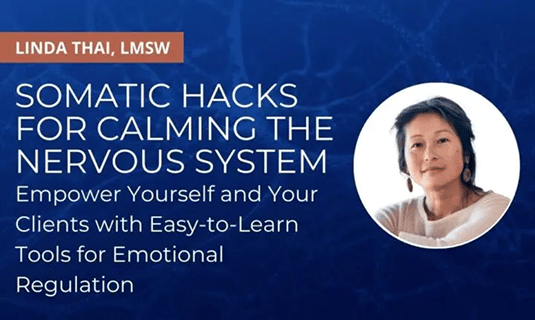
What you´ll learn:
- Vestibular Engagement for Emotional Regulation
- Using the Eyes to Hack the Stress Response System
- Subtle Sounds to Release the Peri-Trauma Response
- Effective Self-Holding and Self-Swaddling Techniques
- How and When to Apply Bilateral Stimulation
- Integration and Completing the Stress Response Cycle