
Dear friends,
Care is why most of us do this work.
It’s the reason you chose this profession, the thread running through every session, the promise you make: I will do what I can to ease your suffering.
At the Academy of Therapy Wisdom, care is at the heart of everything. Care for our presenters, our students, our staff, and ultimately, humanity itself. For years, we’ve devoted ourselves to understanding what genuine care looks like.
And then last week, hosting Bayo Akomolafé’s webinar, something cracked open.
Bayo asked us to consider something most of us have never questioned: Care feels warm and benevolent, but its actual history is far more complicated.
You can click here to watch it if you missed it.
In fact, the history of care in this world has been messy, painful, and deeply political in ways that challenge everything we thought we knew.
The Stories We Need to Hear
One example Bayo shared was the Tuskegee syphilis experiment.
Starting in 1932, Black men were recruited by health officials who told them they were receiving care for “bad blood.” Even after penicillin became widely available in the 1940s, these men were intentionally left untreated so researchers could study the long-term effects of syphilis.
For forty years.
Nurses offered checkups. Doctors smiled. They handed out meals. They called it care.
But it was care as a mask for control, exploitation, and the complete erasure of consent. The gesture looked like kindness. The result was devastating harm.
Here’s another. During the transatlantic slave trade, ship captains stretched nets along the sides of their vessels to prevent enslaved Africans from jumping into the ocean.
They called the nets “protection.” A form of care.
But this wasn’t care. It was captivity dressed up as concern, an attempt to preserve property, not people. Violence disguised as benevolence.
Why This Matters
I know these stories are hard to hold. They’re painful. But as therapists, you know something essential: healing begins when we face what lies beneath the surface.
Here’s the truth Bayo helped me see: Care has two faces.
One face soothes and supports. We know that one well. The other manages, contains, and sometimes inflicts harm while still calling itself benevolent.
This is the crack Bayo invites us to examine, not to shame or blame, but to truly see. The crack where our familiar definitions begin to tremble. Where we stop assuming we automatically know what care means. Where we notice that some of the practices we inherited may no longer hold the vitality they once did.
As Bayo put it so powerfully: “When care becomes closure, when care traps, when embrace becomes asphyxiation, then we take a look again at what care is doing.“
A New Way to See
Bayo offered us a unique framework that has my mind thinking: ghosts and souls.
Stay with me here.
A ghost, in his words, is a frozen accommodation. An arrangement that’s become trapped, persisting long past its usefulness.
Picture ants caught in a death spiral, going around and around in circles until they literally die of exhaustion. That’s a ghost.
Or think about this: When the forms of care we practice become forms of incarceration. When we help clients heal, then send them right back to the same toxic contexts that wounded them in the first place. They return to us, we treat them again, send them back… around and around. That’s a ghostly arrangement.
But then there’s the soul, and this is where hope lives.
The soul is the rupture. The leak. The crack in the accommodation.
The soul appears when we’re not sure anymore what care is doing. When we’re asking questions instead of having all the answers.
The soul is probably why you’re here right now. Sensing that something different wants to be born.
Listen to how beautifully Bayo describes it: “The soul is the experimental, playful inquiry of the universe itself, longing for other ways to be alive. It’s not what we have. It’s being spirited away.“
What This Moment Asks
This moment we’re living through? It’s a crack. Not just a crisis, but a revealing. A place where care itself is asking to be reimagined.
The new care that wants to emerge is:
- Political because it acknowledges power
- Ecological because it recognizes we’re all connected
- Ancestral because it remembers what was pushed aside
- Communal because it arises from relationship, not individual heroics
This care doesn’t rush to fix. It doesn’t chase after quick restoration. It listens carefully for what’s trying to be born at the edges.
And I know you feel this shift. Inside your sessions. Inside your body. Inside your exhaustion with models that try to heal people without questioning the world that keeps wounding them.
If You Want to Go Deeper
For those who felt something stirring here, Bayo is offering a five-week journey called Mbàrị: Arts, Bodies and Care at the End of the World, starting November 18 through December 16 2025
The word mbàrị comes from the Igbo people. It’s a sacred structure built to decay. Its cracks aren’t failures. They’re the whole point. They’re fulfillment.
A Final Thought
This course won’t fix everything. It won’t hand you a perfect model or a five-step protocol.
As Bayo reminds us: “To notice ghostly arrangements is already to work.“
This is about staying at the edges. Staying in the places where we don’t have all the answers. Leaning into forms of response that might not look like what we’ve been taught.
This is about making responsibility stranger and deeper than we ever imagined.
I’m grateful you’re here, asking these questions with us.
Thank you for the care you practice every day, and for your courage to question what care is becoming.
With deep respect,
Brian Spielmann
Academy of Therapy Wisdom
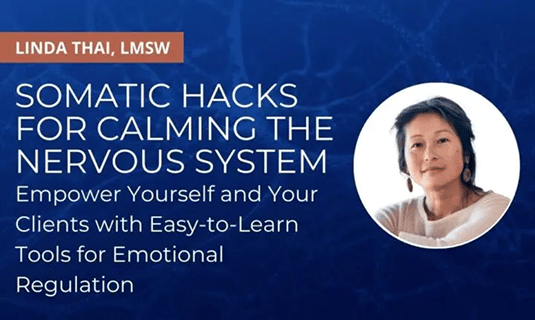
What you´ll learn:
- Vestibular Engagement for Emotional Regulation
- Using the Eyes to Hack the Stress Response System
- Subtle Sounds to Release the Peri-Trauma Response
- Effective Self-Holding and Self-Swaddling Techniques
- How and When to Apply Bilateral Stimulation
- Integration and Completing the Stress Response Cycle