

The longevity paradox: How an obsession with extending life keeps us from living.
Longevity seems to have become a cultural fixation. From documentaries tracking countries with the oldest populations to podcasts focused on improving random markers of “health,” in order to stave off aging, to the trillion dollar wellness industry (no joke, that is TRILLION) —there is tremendous attention on maximizing ways to extend one’s life.
The pinnacle of this fixation is without a doubt “biohacking”. In a nutshell, biohacking, refers to the practice of attempting to enhance one’s health by making changes and tracking practices in an effort to improve longevity.
Interestingly enough, the annual Biohacking Conference is held in my hometown of Austin, Texas. This was not at all surprising to me given the marriage of the biohacking and tech worlds. Austin is home to the headquarters of many technology-based companies like Tesla, Dell, and Oracle.
David Asprey, the “father of biohacking” essentially set out to use what he knew about technology and collecting data to affect health. The biohacking industries’ approaches towards the body can mirror how engineers work with computers, constantly working to improve coding to make things run “more efficiently” all in the name of working towards increasing longevity. In fact, Asprey, states he is aiming to live to 180 years old. The goal is to increase longevity, but also to run like a machine with predictability and input/output information. The problem is we are human; we aren’t machines.
As a licensed psychologist who specializes in working with disordered eating the fixation with treating the body like a machine is of great interest to me. I am fascinated by this cultural obsession. Mainly, I consider what type of life is lived when the main focus is constantly seeking ways to “improve.”
What is lost when we are obsessed with the idea of optimizing our bodies?
Coming to terms with our mortality is a way to stay connected to our humanness.
Many parts of the wellness industry, including biohacking, sells an illusion. It is an illusion of control. I am in no way anti-longevity practices. I love the idea of increasing the healthy years of my life. Given the nature of launching a career and achieving stability, many of us have had children older than previous generations. It would be lovely to be able to extend the good years and be able to possibly see my kids have their own kids and participate fully in their lives, but the reality is that these experiences are not guaranteed. No matter what.
In my work with clients, I often seek to deepen awareness around big life questions. I incorporate elements of existential therapy, which seeks to help clients uncover their own fears around death in an effort to live a more fulfilled life. This type of therapy asks clients to get oriented and well acquainted with their own anxieties about many of life’s inevitable difficulties. While I don’t solely practice existential therapy it underlies some of the work I do with clients around their intense urges to be in control.
Coming to terms with our own mortality is hard work. We might all understand this concept on an intellectual level, but being able to accept this emotionally is challenging. Despite the discomfort in unpacking our fears of dying, there is huge reward in this experience. Talking openly about the painful aspects of the human experience allows us to live a life of meaning. Getting connected to our inability to control the outcome of our lives lays the groundwork for being more accepting of other experiences that we have little to no control over.
When we die is actually one of the experiences we have no control over.
It might sound glib or somehow cavalier, but it is true. Obviously, this is nuanced. I am not a nihilist but I am a realist. I don’t think we lose anything by leaning into life’s painful truths, but there is much to gain. It can be incredibly freeing to build a sense of tolerance to painful realities we all face. We can biohack our way to perfect labs and impeccable abs, but we are still human. We are susceptible to loss at any moment. Not just loss of our own lives, but loss in general. Loss of people we love, loss of youth, and even independence. Building the capacity to handle these uncomfortable feelings impacts us in less tangible ways than working on improving metrics. The concretization of having something to improve upon may be part of the appeal.
There is absolutely a way to hold two separate and distinct truths. We can work towards improving our health and wellbeing so we might be able to enjoy our lives more fully AND accept that we do not know when we will die. There is so much life lost though when we hyper fixate on controlling the outcome. Rigidity might not be the best route to a life that is full.
I have recently come to love a neighborhood gym. I go to classes immediately after my children’s drop off and connect with some lovely parents who do the same. We talk, we exercise, we get coffee after. It is a version of a modern third space that allows me to build community. It is not perfect in any regard. It is pricey, my kids only sort of enjoy it, and it is overrun with biohacking messages.
I have come to appreciate some of the longevity dialogues that I am exposed to. I attend classes that advocate for functional movement, exercise that mirrors what we do in our day-to-day lives. This has improved my ability to play with my kids or get off the ground quickly from a seated position. All good things. But I also have heard many a conversation about the “benefits” of extremely rigid practices all in the name of improving one’s longevity. A cold plunge has just been installed and many of my friends enjoy the experience. One aspect of the cold plunge that is disheartening to see is just how many participants remain locked into their phone whilst plunging. There is an opportunity to connect in those moments with others but sadly I have mostly observed folks listening to their own phones and not engaging with others. Maybe that will change.
While the practices promoted in improving one’s longevity are not always backed by science, they are also incredibly expensive. Supplements, access to certain types of foods, gym memberships, these all cost tons of money.
Interestingly, we have far more research suggesting that connections and community build healthy lives than we do about cold plunges. But it is so appealing to have a sense of control over one’s health. And cold plunges aren’t bad…but maybe moving towards one another to deepen connections could actually be better.
That is where we come in. As clinicians we have the benefit of slowing our clients down and helping them to uncover what might motivate the supplement shopping spree. We get to challenge them by understanding their health pursuits and potentially pointing out that it is much harder to find a community and spend time with them than it is to attempt to biohack our way to “health.” We get to work with clients to be more willing to sit in the reality that life is messy, relationships are hard, and health is not completely measured by labs. Longevity pursuits should also reflect a sense of flexibility so we leave some space to actually live.
If you enjoy helping your clients get messy and pursue more fulfilling lives, you might enjoy our upcoming LIVE training with Academy of Therapy Wisdom where we will talk more about “artificial attachments” (which are all the things we do to stay away from the mess!).
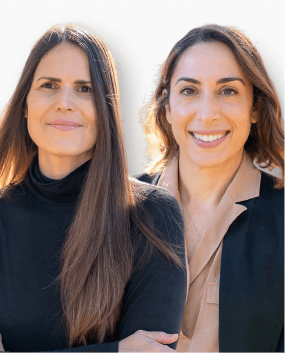
Join Vanessa Scaringi & Kathryn Garland for a FREE webinar
Reframing Food Addiction, Attachment Wounds and Eating Disorders in the Ozempic Era
In this free webinar, Vanessa Scaringi & Kathryn Garland You’ll Learn:
Attachment styles and eating disorders.
GLP-1 receptor agonists.
Dopamine and emotional regulation.
The cultural shift toward outsourcing internal wisdom to medication.
Our online Therapy Wisdom training “Hungry for Security” sheds light on how much we avoid when we are overly fixated on food and weight. In those course modules we spend a lot of time highlighting the importance of context in the therapeutic setting. You can start with our free webinar training Reframing Food Addiction, Attachment Wounds and Eating Disorders in the Ozempic Era.