

Juliane Taylor Shore, a seasoned psychotherapist who leads clients and students from a deep understanding of the interplay between neurobiology and psychology. Among her various online trainings here at Academy of Therapy Wisdom, her Experiential Therapy Techniques: A Neurobiological Approach to Self-Compassion Therapy is the go-to for psychotherapists who want to begin their work understanding and deepening into key neurobiology techniques. Shore often speaks to the transformative power of memory reconsolidation, especially the reconsolidation of traumatic memories. In her work, she illuminates how this process can fundamentally alter our emotional responses and behaviors, rooted in the neuroscientific principle that “anything that’s learned can be unlearned”.
VIDEO: Reconsolidation, Neurobiology, and Psychology with Juliane Taylor Shore
Video transcript (article continued below):
So if you look at that through the lens of memory reconsolidation and that idea about the psychological floor, whatever different threads of attachment experiences you have would live in your psychological floor. And so if it lives in your psychological floor, then it’s something that’s learned.
In memory reconsolidation, neuroscience would say, anything that’s learned can be unlearned. Remember the astronauts, even gravity can be unlearned. So what we would do then is help our clients discover what emotional knowings they have that live in an embodied way inside them that maybe cue them to expect certain things to happen when a relationship is under stress.
Now, there are some folks who I hear talking like in sort of pop culture land, especially not necessarily therapists or people who study this, but just in general, they would say, what attachment style are you? And I want to be really clear about how I think about this and what I’m reading in the research.
Attachment styles, it’s not like you have one. It’s more like you may have a lot of experiences, more in one category than another. And we’re going to look at the categories in a little bit more depth in just a minute. But if you have heard about attachment theory and your experience is, well, wait a second, I don’t fit under one category. I think I have like experiences in all these categories. And in this relationship, I act like this kind. I act avoidant and dismissive. But in this other one, I’m totally anxious and preoccupied. So which style am I?
If you’re having that experience, I am with you. I have experiences in every single one of the attachment categories. So I don’t identify with one more. My psychological floor holds all the different knowings. So let’s look at it from a memory reconsolidation perspective.

Join Juliane Taylor Shore for a FREE 90-minute webinar
Experiential Therapy Techniques: A Neurobiological Approach to Self-Compassion Therapy
During the webinar, you will learn:
A practice to increase self-compassion towards yourself as you do your work so you can both embody and benefit from self-acceptance.
The neurobiological difference between empathy and compassion so you keep use them judiciously in practice.
How to set up experiential practices so clients can discover and experience self-compassion.
The Neurobiological Process of Trauma Memory Reconsolidation
Jules Shore, in her online courses, in group trainings, and in private practice, explains how memory reconsolidation is a neurobiological process where existing memories are recalled and then modified with new information or perspectives before being stored again. This concept is pivotal in therapeutic settings, especially when addressing deeply ingrained emotional responses and behaviors that may not serve the individual well in their current context.
Shore draws analogy to astronauts learning to navigate in zero gravity to illustrate how even our most fundamental understandings, such as the force of gravity, can be relearned or unlearned under the right conditions. This analogy serves to highlight the brain’s remarkable plasticity and its ability to relearn and adapt to new environments, even in adulthood.
Shore’s Approach to Reconsolidation of Memories Formed in Response to Trauma
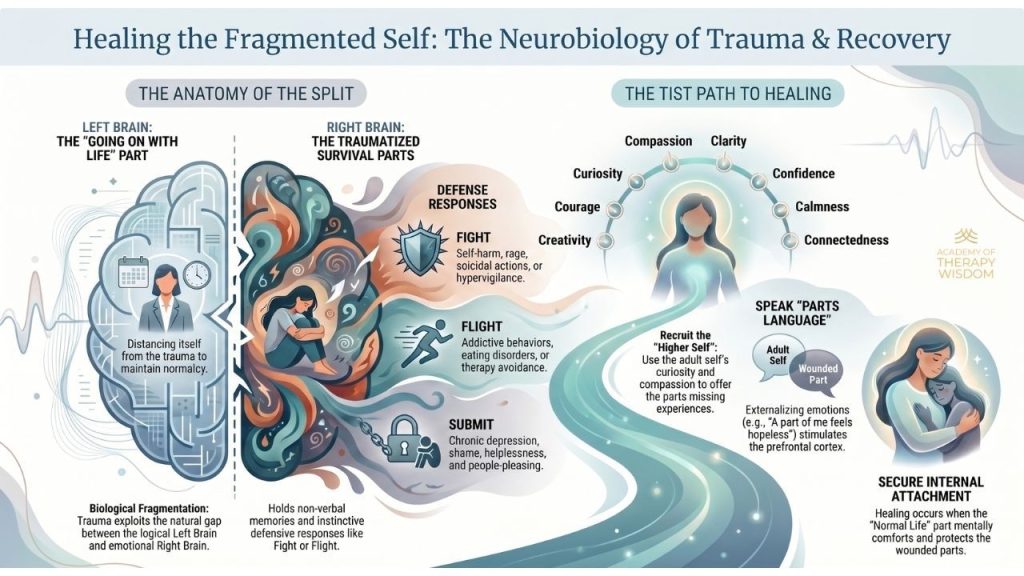
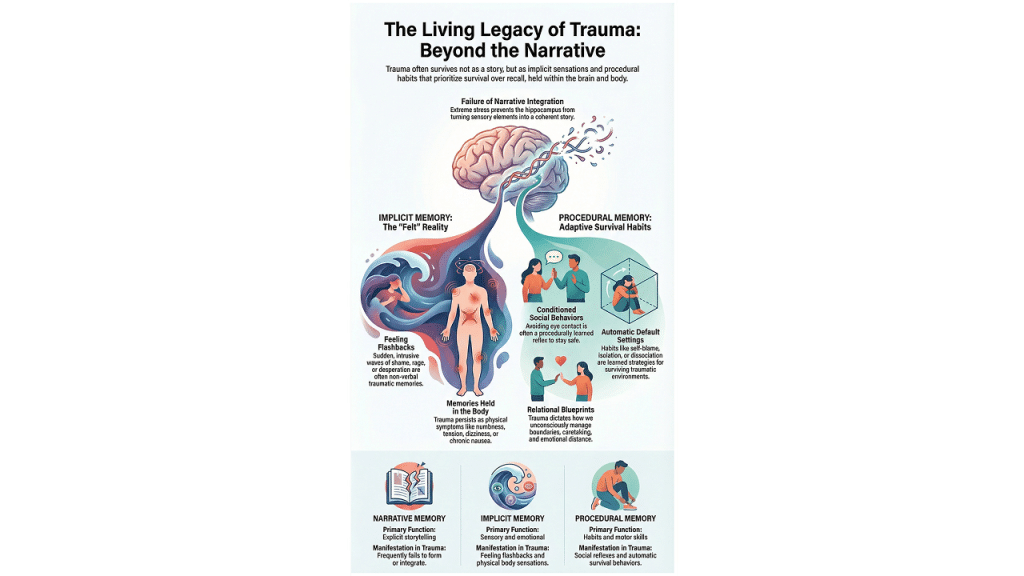
At the core of Shore’s approach is the belief that emotional memories formed in response to trauma or stress, reside not just in our minds but are embodied within us. These memories can trigger expectations and reactions in stressful situations, especially within the context of relationships. Through the lens of memory reconsolidation, Shore seeks to help her clients uncover these “emotional knowings” that are stored in their bodies. By bringing these memories to the surface and consciously engaging with them in a supportive therapeutic environment, clients are given the opportunity to reframe and reshape their emotional responses.
Creating a Safe Place for Trauma Clients to Experience Memory Reconsolidation
Shore’s methodology involves creating a safe space where clients can explore their emotional memories without the immediate pressure of their real-world triggers. This exploration is guided by the principles of neurobiology, which suggest that for memory reconsolidation to occur, a memory must be activated and then encountered with a disconfirming or novel experience. In practice, this might mean helping a client recall a distressing memory of relationship stress and then introducing new, more adaptive emotional responses or perspectives. Over time, this process aims to weaken the old neural pathways associated with the distressing memory and strengthen new pathways that support healthier emotional reactions.
The therapeutic journey, as envisioned by Shore, is deeply personal and varies significantly from one individual to another. It requires patience, trust, and a willingness to delve into the complexities of one’s emotional landscape. Shore emphasizes the importance of a collaborative therapist-client relationship, where both parties work together to identify the emotional learnings that need to be unlearned and reconsolidated.
In summary, Juliane Taylor Shore’s work with memory reconsolidation offers a hopeful perspective on human capacity for change. By leveraging the brain’s neuroplasticity, she helps clients reconfigure their emotional responses to stress and trauma, ultimately fostering healthier relationships and well-being. Her approach is a testament to the power of neuroscience in facilitating profound personal growth and healing.
Learn more from Jules Taylor Shore as she teaches us how to apply pivotal neurobiological findings to our everyday clinical practice setting. Watch the short, free, on-demand introductory training Experiential Therapy Techniques: A Neurobiological Approach to Self-Compassion Therapy where you will learn:
- How empathic distress shows up in the therapy room
- The intrinsic awareness rooted in compassion
- The four different brain states of compassion
- The magic question for assessing self-compassion
- Why it’s important to have gratitude for the ‘shame core’
- How to use the listening partner exercise to reduce stress
- What happens when you high-five yourself in the mirror
- A three-step process for helping clients gain more self-compassion
and we’ll see you on the other side!