
Moving Trauma Clients From Active Reactivity to True Somatic Integration
In our community of therapists, we frequently observe a profound turning point when a survivor stops actively reliving their history and begins gently sitting with it. For many of our clients, deep-seated wounds stay awake inside the physical body. These historical injuries show up not as distant cognitive memories, but as immediate somatic and relational realities.
True recovery takes root when an individual learns to observe their internal state with soft curiosity instead of falling into reflexive survival strategies. Our goal is to shift focus away from simple symptom management. Instead, we guide clinicians to help individuals form an entirely new internal dynamic built around safety, core connection, and self-leadership.
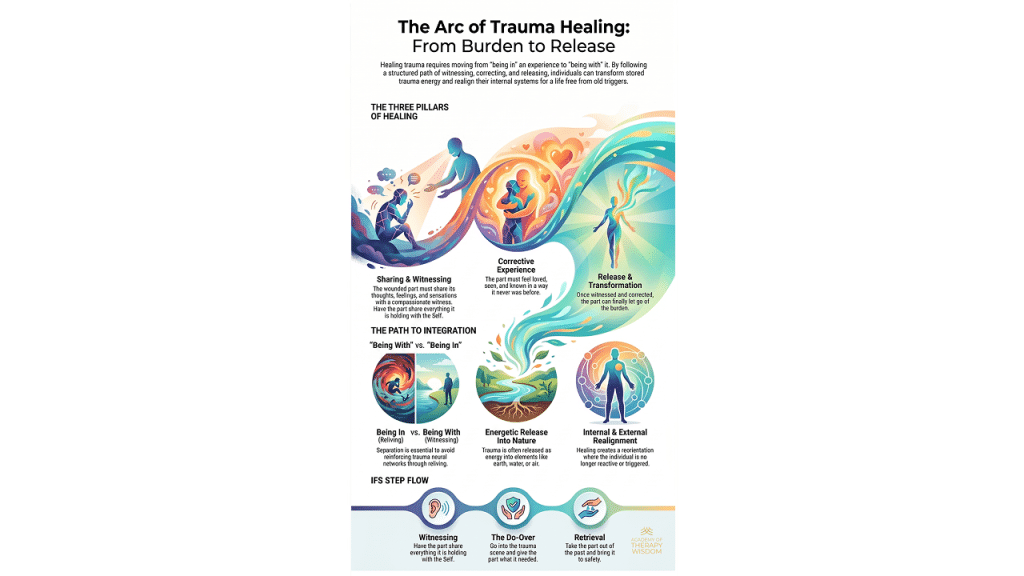
Q: How do clients move from being in trauma to being with it?
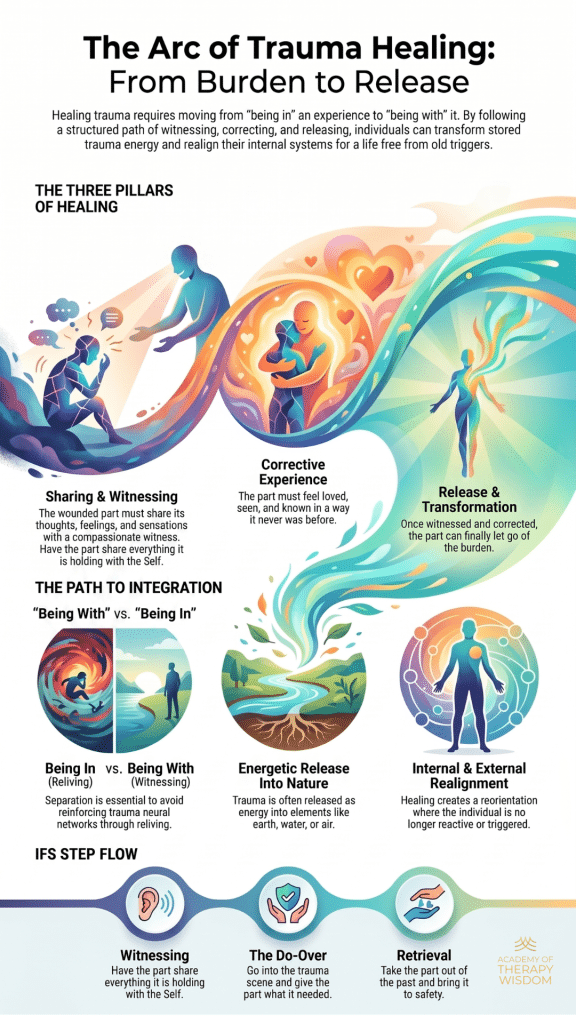
A: Clients make this shift by developing mindful awareness, which allows them to witness internal distress without becoming overwhelmed. Through somatic tracking and corrective emotional experiences, wounded parts of the self feel safely seen, allowing the nervous system to shift from survival loops into post-traumatic growth.
wounds into a space of mindful, self-led observation
is foundational to long-term post-traumatic growth.
The Therapeutic Arc of Compassionate Witnessing
When working with complex relational injuries, the somatic architecture of a client often remains locked in a state of high alert. This constant threat response colors their daily relationships and baseline emotional regulation. According to the American Psychological Association, chronic stress from early adversity radically alters nervous system wiring. To disrupt this loop, the clinical path must offer more than traditional talk therapy.
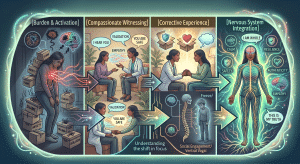
Our primary role is to co-create an environment where a client can look at their protective parts without judgment. When a survivor tracks their physical sensations from a grounded space, the active hold of the past begins to soften. This step shifts them out of the old loop of reactivity. It opens up room to explore hidden burdens safely.
Facilitating Corrective Emotional Experiences in the Session
Once an individual can witness their internal distress without flooding, the real work of transformation starts. Wounded parts of the self need to feel seen, understood, and deeply cared for in ways they missed out on during the original events. This structural shift relies heavily on the quality of our therapeutic presence.
By offering steady attunement, we provide a live somatic anchor. The client uses this anchor to face terrifying internal material safely. Research tracked by the Centers for Disease Control and Prevention highlights how early relational safety helps buffer long-term psychological distress. In practice, this presence helps rewire early attachment patterns, transforming how the client treats their own vulnerability.
Nervous System Reorganization and Somatic Release
True integration happens when a person can hold their historical material without slipping into autonomic collapse or hyperarousal. This stability allows the body to reorganize around deep somatic safety rather than raw survival.
We are not aiming to wipe away the memory of what happened. Instead, we want to change how that memory behaves in the present moment. As the body drops its defensive armor, clients experience a profound somatic release. This shifts their internal narrative from a story of stuck survival to one of active post-traumatic growth.
Bringing Internal Family Systems into Everyday Practice
This healing arc directly mirrors modern trauma frameworks, especially parts work and relational somatic interventions. Our community is honored to share the work of Frank Anderson, a leading expert in trauma treatment. His clinical models show how blended parts can safely unblend, giving clients access to their inherent clarity and calm.
By blending cognitive insight with targeted body awareness, we help clients step into authentic self-leadership. This dual approach ensures that healing is not just a passing state achieved in session, but a permanent structural shift inside the nervous system.
Frequently Asked Questions
- How does parts work help clients who are completely overwhelmed by their history? Parts work helps by creating intentional psychological distance between the client’s core identity and their intense emotional states. When a client learns to identify a reaction as a distinct, protective part of themselves, they can practice mindful tracking from a place of curious observation. This step reduces active flooding and opens the door for targeted somatic therapy interventions.
- What role does the therapist’s nervous system play in this healing process? The clinician’s nervous system serves as a live baseline for coregulation during moments of intense activation. Through steady presence and open tracking, the therapist sends subconscious signals of environmental safety directly to the client. This relational stability is vital for expanding a client’s baseline window of tolerance when processing old pain.
- Why is witnessing prioritized over traditional exposure methods in this framework? Traditional exposure can accidentally re-traumatize a fragile nervous system if the client lacks the regulatory capacity to hold the material. Compassionate witnessing emphasizes building a supportive, self-led relationship with the wound first. This approach ensures processing happens only when there is enough internal safety to support true memory reconsolidation.
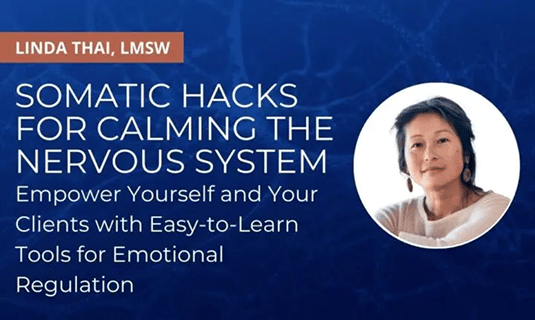
What you´ll learn:
- Vestibular Engagement for Emotional Regulation
- Using the Eyes to Hack the Stress Response System
- Subtle Sounds to Release the Peri-Trauma Response
- Effective Self-Holding and Self-Swaddling Techniques
- How and When to Apply Bilateral Stimulation
- Integration and Completing the Stress Response Cycle