
Dear Friends,
In modern society, we are so good at getting stuff done.
We build skyscrapers, supercomputers, and wind turbines. We optimize and we improve; an engine you almost can’t turn off.
In your profession, maybe you do something similar… You collect trainings, learn new modalities, refine interventions, deepen your clinical understanding, you work so hard to become better therapists, better healers, better humans.
This is wonderful.
Even in spiritual life, many of us approach practice this way. We want to understand the teachings, have breakthrough meditations, gain insight, make progress, and strive for the endpost of wisdom.
This, too, is a remarkable capacity of the mind.
But there is something else missing from modern consciousness…
Something not so measurable, but equally important.
Merit.
It’s not a word we talk about very much, and is something I struggle to grasp.
In Buddhist traditions, merit is not about deliberately earning points with the universe. It’s not moral bookkeeping. It points to something more mysterious, but like frequent flyer miles, impacts the quality of journey through life and death.
Merit is the goodness, the unseen benefit, the wholesome energy generated through intentions and actions rooted in care, compassion, discipline, and service.
Merit is created when you sit down to meditate, even if your mind is wild and restless for twenty minutes. I found that a relief because many of my meditations make the upside down rollercoaster at Magic Kingdom seem like a walk in the park.
There is merit in showing up. There is merit in trying. There is merit in restraining a harsh word. There is merit in feeding a stranger. There is merit in making tea for a tired partner. There is merit in dedicating one’s life to easing suffering.
And this is why the mental health profession is so unique, it’s already embedded with merit.
What is it, after all, to spend one’s life listening to pain, helping others metabolize trauma, sitting with grief, bearing witness to what has been unspeakable?
Even on the days when sessions feel messy or ineffective or like a heavy lift.
There is unknown merit in the sitting itself… There is merit in the effort to help, and in the vow, spoken or unspoken, to reduce suffering.
And perhaps we need this understanding now more than ever.
Because we live in a culture obsessed with measurable outcomes, productivity, performance, and results.
Merit reminds us that something profound may be happening beneath what can be measured. Something accumulates through sincere intention (with wisdom). Through acts of generosity. Through simply orienting toward love, over and over again.
In many Buddhist traditions, one does not simply generate merit for oneself. One dedicates merit. At the end of practice, one offers whatever goodness has arisen outward:
May whatever benefit came from this session with my client serve their family and all beings.
If we want to really stretch our heart, we can even include our so-called “enemies.”
Even our smallest efforts – cleaning the dishes, a five-minute meditation, letting another car proceed, offering a cup of coffee – can be dedicated outward.
What if you reframed your work as therapists this way?
That each act of listening potentially generates merit. That each compassionate intervention generates merit. That each moment you help reduce suffering contributes, however invisibly, to the healing of the whole.
That perhaps, consciously we can turn ordinary life into a spiritual practice of dedicating merit every day.
That is no small thing.
With warmth,
Brian Spielmann
P.S. I’d love to hear where you already sense merit in your work, even on the hard days. What accumulates through your effort that can’t quite be measured? Share your reflections with us in the free Therapy Wisdom Hub. [Join the conversation here.]
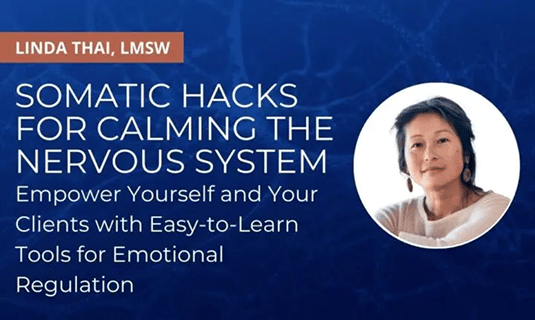
What you´ll learn:
- Vestibular Engagement for Emotional Regulation
- Using the Eyes to Hack the Stress Response System
- Subtle Sounds to Release the Peri-Trauma Response
- Effective Self-Holding and Self-Swaddling Techniques
- How and When to Apply Bilateral Stimulation
- Integration and Completing the Stress Response Cycle