
Dear Friends,
I’ve been so fortunate to meet, study, or share a road with so many incredible wisdom holders, from Buddhist and Jewish teachers, to Christian contemplatives, and Indigenous healers. I genuinely have no idea how I came to be this lucky.
As a teenager and young adult, my aspiration was to be an organic farmer. Then, during and after college, where I studied environmental engineering, I spent my first professional decade working in recycling, composting, energy recovery.
Life had other plans.
Last week I had the privilege of filming four days with Hedy Schleifer and Paul Browde. Four days bathed in love and elder wisdom from these two extraordinary beings.
And yet, the very next day, on a call with my friend Kim in Nepal, I found myself saying that despite all this goodness, I felt bewildered, and a little unsettled, which surprised me after such a beautiful week.
She reminded me of a core Buddhist teaching I’ve heard many times: like a bird, we need both wings to fly. Study and practice.
I’ve heard this so many times, but in that moment I realized with my busy to do list I have been neglecting my practice.
It’s a balance between study and practice. I journey from knowledge, to experience, into innate wisdom.
Across traditions, the same truth holds. From the Epistle of James “Be doers of the word, and not hearers only.”
The Talmud holds a beautiful tension: “Great is study, for it leads to action.”
The mussar teachers of Judaism insisted that ethical knowledge only becomes real when it shapes our character.
Indigenous elders draw a distinction between knowing about something and truly knowing it. The Desert Fathers said it simply: “Go, sit in your cell, and your cell will teach you everything.”
And in the Sufi tradition, Rumi warns that knowledge which doesn’t move us beyond ourselves may not be wisdom at all.
Practice can take many forms… It can look like sitting on a cushion in silence, praying and chanting, walking in nature, yoga, knitting, martial arts, movement, or dancing. It’s deeply personal and changes over time.
Bringing this bird analogy into the therapy space: we live in a time of nearly unlimited resources for study. Podcasts, trainings, books, conferences, AI. We can have tremendous knowledge of trauma, attachment, the nervous system, nonduality, and relational neuroscience at a level that would have been unimaginable ten years ago.
And yet,do we pause long enough for any of it to land? To actually change us; not just enter our brilliant thinking brain, but our pacing, our listening, our hearts?
For those of us in the helping professions, this question feels especially alive. Because your work doesn’t ultimately depend on what you know. It depends on who you are when you sit down with another human being.
Can we stay? Can we soften? Can we notice when we’ve left, and gently return?
That’s the culmination of both study and practice; where the two wings meet.
I’ve been wondering how much of the quiet burnout many therapists carry comes from holding knowledge that hasn’t yet had space to land in the body. Wisdom that hasn’t been metabolized through breath, through relationship, through silence, through simply living.
So wherever you find yourself on the spectrum, this is an invitation to notice which wing needs strengthening.
Some of us have deeply integrated what we’ve learned and may be feeling a little stale, hungry for new study. Others are carrying more than they’ve had time to embody, and what’s needed isn’t more input but more practice. Even ten minutes.
A bigger exhale, or a moment of genuine presence with a client, a partner, a friend…
In the end, it’s not so much the quantity of wisdom we’ve been exposed to that shapes our lives, it’s what we’ve metabolized.
With warmth,
Brian Spielmann
P.S. Where do you find yourself on the spectrum right now, in your spiritual or professional life? Leaning toward more study, or toward deeper integration and practice? And what are the modalities that actually help you land? I’d love to hear. Share your reflections with each other in the Therapy Wisdom Hub.
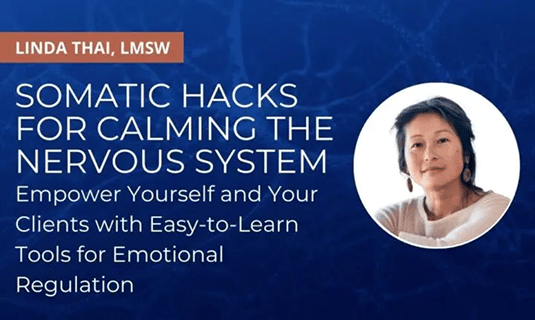
What you´ll learn:
- Vestibular Engagement for Emotional Regulation
- Using the Eyes to Hack the Stress Response System
- Subtle Sounds to Release the Peri-Trauma Response
- Effective Self-Holding and Self-Swaddling Techniques
- How and When to Apply Bilateral Stimulation
- Integration and Completing the Stress Response Cycle