

Dear Friends,
Last week we hosted a webinar called The Healing Power of Yoga, with Matthew Sanford and my wife, De West.
Looking at their lives side by side, I was struck by something unexpected.
Both experienced automobile accidents that changed the course of their lives forever.
Matthew was only 13 when the accident took the lives of his father and sister and left him paralyzed. Twelve years later, he discovered the healing power of yoga and eventually became one of the pioneers in adaptive yoga.
De’s journey was different, but followed a similar arc. After being hit by a truck on her bike, she spent years searching the medical world for answers. She too discovered the healing power of yoga. Then, as a cancer thriver carrying her own medical trauma, she integrated the body-mind connection through yoga at a whole new level. Today she helps others who have experienced medical trauma reconnect with their bodies.
As I listened to them, I realized I wasn’t inspired simply because they were courageous.
I was fascinated because neither of them could have planned the life they are now living. And neither started out wanting to be a teacher.
The same theme has appeared again and again as I’ve been interviewing many of our favorite teachers for the Therapy Wisdom Podcast.
Manuela Mischke-Reeds was an intern at CIIS when her mentor invited her into a clinic at San Francisco General Hospital. The clinic worked with refugees who were torture survivors from Cambodia and Nicaragua. PTSD wasn’t well understood yet, and no one really knew what to do with them. So they put the young clinician in a room with them. Manuela used what she had. Her Naropa training, movement and her mindfulness training. She didn’t set out to become an expert in working with severe trauma, life quietly placed her there.
Kimberly May wanted to be a therapist from age 10. In graduate school, a friend told her about his job at a methadone clinic. He described it as “doing therapy on a pirate ship.” Kim said, “I don’t know what that means, but I want to do that.” She got hired on the spot and stayed almost five years. That single phrase from a friend set the course for her entire career in addiction work and harm reduction.
Sara Nasserzadeh was giving a talk at Oxford. Afterward, her host invited her to lunch. A stranger walked into the cafe and was asked to join them. The woman looked at Sara and asked, “What would be your dream?” Sara told her: a big, credible platform to teach. Sara had no idea she was sitting with a BBC commissioner. Two months later, Sara had her own radio show. It was called The Whispers, a program for Persian speakers in Iran, Afghanistan, and the diaspora about the questions no one was allowed to ask out loud. It won BBC’s Innovation of the Year. Millions listened. Sara still says, “When you put yourself out there to the service of others, the road comes. The path becomes.”
Jan Winhall didn’t go looking for trauma work either. She applied for a job at a hospital in her twenties, and the job placed her in a group of young women carrying generational poverty, sexual abuse, and addiction. “It wasn’t something I kind of sought out,” she told me. But she fell in love with the women. She saw their agony and their potential. They endured terrible things together. Years later, Jan was introduced to Steve Porges, and the felt sense work she had been quietly practicing for decades met polyvagal theory. Today, in her seventies, she has built the Felt Sense Polyvagal Model Institute. None of it was planned.
Over and over I hear the same story.
Apologies to all the career planners, but very few of these remarkable teachers followed a carefully designed career plan.
Instead, they followed what life kept placing in front of them and saying yes.
Carl Jung called these moments synchronicities. Meaningful coincidences that seem to carry us toward something larger than our conscious plans.
Looking backward, the dots readily connect.
But looking forward, they never do.
There have been many times in my own life when I thought a door closing meant failure, only to realize years later it was quietly redirecting me toward work that fit far more deeply than anything I could have imagined.
Perhaps the invitation is not to have a perfect five-year plan.
Perhaps it is to pay closer attention…
To notice what keeps calling us.
To notice the people who keep appearing.
To notice the experiences that continue to shape us long after we thought they were over.
Sometimes our calling isn’t something we choose.
Sometimes it slowly chooses us.
As mentioned in previous newsletters, I have an environmental engineering background. I had a satisfying career in recycling, energy recovery, and composting and have been able to work throughout the US and in Botswana for USAID.
And at the same time, I was hungry to bring spiritual teachers to my home, at that time in Minneapolis. I knew nothing about marketing. I was dyslexic, so I couldn’t write. I had no design sense. And yet I kept filling the room, including a large stadium, with each teacher who flew in. It’s still a mystery.
I’d love to hear about one of those moments in your own life.
What unexpected turn ended up changing everything? Click HERE to share about it in our free Therapy Wisdom Network.
Thanks for reading.
With warmth,
Brian Spielmann
What you´ll learn:
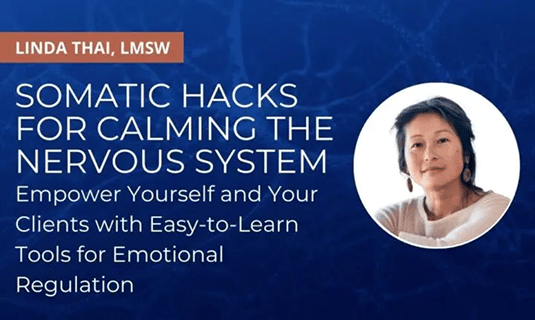
- Vestibular Engagement for Emotional Regulation
- Using the Eyes to Hack the Stress Response System
- Subtle Sounds to Release the Peri-Trauma Response
- Effective Self-Holding and Self-Swaddling Techniques
- How and When to Apply Bilateral Stimulation
- Integration and Completing the Stress Response Cycle