
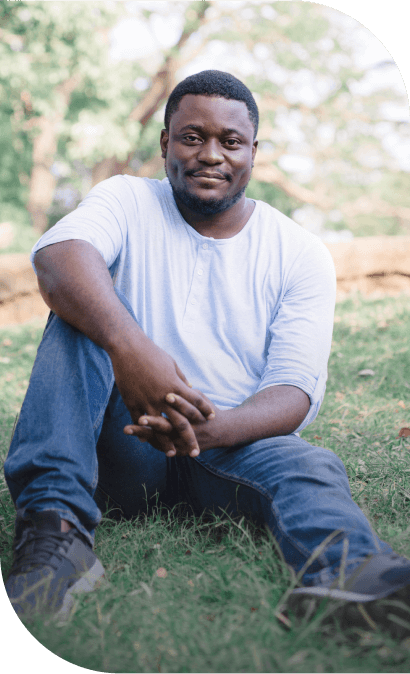
Báyò Akómoláfé, Ph.D., presenting
Báyò Akómoláfé, Ph.D., presenting
Many of us in the healing professions have shared a growing sense of needing to go beyond our traditional training to meet the unique challenges of our times.
There's a feeling of being confined by current therapeutic practices.
You might have even found yourself thinking:
While this is anecdotal, it suggests that we are in a period of significant change and questioning.
As one-who-cares, it could be that these questions feel irrelevant to you in such a time of crises. But the hospital itself is ill, my friend. Only you can truly assess the real impact of your care on those you help.
I am here to facilitate a mutual co-inquiry into the factors affecting care and well-being, and what this means for your practice and the traditional therapeutic relationship.
This course explores the concepts of healing and challenges current clinical practices. It's not about providing new tools or techniques, but about addressing the underlying tensions present in modern healing practices that often go unacknowledged.
Over five weeks, you will be provided a series of video modules I recorded, which explore themes that I have titled:
And in five additional, 2-hour recorded conversations, you and I will go much deeper together into the material presented.
This course does not provide specific solutions. Instead, in an era where quick fixes are often inadequate, we focus on the healing process itself. I invite you to join a global exploration of the challenges we face as healers today, so we can collectively redefine our roles and approaches.
Warmly,
Báyò Akómoláfé &
Academy of Therapy Wisdom
"We are at a point in our work together as a species where we have to notice how entangled these concepts are. So our approach here is to think through a web of mattering, to connect myth, poetry, politics, spirituality, theology, psychology, epistemology and philosophy together to create confusion-so that we might travel through that and embrace new ways of knowing the world."
- Bayo Akomolafe


Báyò Akómoláfé is a widely celebrated international speaker, posthumanist thinker, poet, teacher, public intellectual, essayist, and author of two books, These Wilds Beyond our Fences: Letters to My Daughter on Humanity's Search for Home, and We Will Tell our Own Story: The Lions of Africa Speak.
Báyò is the Founder of The Emergence Network and host of the online postactivist course, 'We Will Dance with Mountains'. He currently lectures at Pacifica Graduate Institute, California, and University of Vermont, Burlington, Vermont. He sits on the Board of many organizations including Science and Non-Duality (US) and Local Futures (Australia).
Each module will challenge you. You will emerge on the other side with a different sense of yourself and your profession.
If you are ready to sit in inquiry, this opportunity is one you need to register for. Join us for a five-week exploration where you will revisit your basic assumptions about the practice of therapy
You'll receive instant access to all of Báyò's video modules and recorded teaching sessions.


Join Bayo on a journey through the Empire of Trauma, its keepers, demons, cracks and alternatives.
Each module is designed to challenge your current understanding and provide new insights, helping you develop a more nuanced and effective therapeutic practice.
Join a global community across time and space in these five pre-recorded sessions where you will:

These on-demand calls are designed to deepen your engagement with the course material, fostering a sense of community and collective inquiry that enriches your learning experience.

Audio recordings, transcripts, handouts and more allow you to revisit the material on your schedule. Our dedicated support team is here to help with any questions.
Get all your course content organized in one easily accessible place to reinforce consistent learning.

Thomas Hübl, PhD, is a renowned teacher, author, and international facilitator who works within the complexity of systems and cultural change by integrating the core insights of the great wisdom traditions and mysticism with the discoveries of science. Since 2004, he has taught and facilitated programs with more than 100,000 people worldwide, including online courses which he began offering in 2013. He is the author of Attuned: Practicing Interdependence to Heal Our Trauma-and Our World (2023) and Healing Collective Trauma: A Process for Integrating Our Intergenerational and Cultural Wounds (2020), which was featured in Oprah Daily as one of "10 Books to Help with Old, Painful Traumas". He has published articles in Harvard Health and the Journal of Awareness-Based Systems Change.


Sanah Ahsan is an award-winning poet, writer, clinical psychologist and educator. Sanah works in the cracks, revering our messy emotional landscapes, and the wild edges of falling apart. Their psychological practice is rooted in liberation and community psychology, drawing on embodiment, therapeutics and poetics as life-affirming practices, to support racialised and marginalised people. Their published research is on the deconstruction of whiteness within UK clinical psychology. Sanah is the lead psychologist at several healing justice-led organisations, such as Art Against Knives and Beyond Equality.
Tyson Yunkaporta is an academic, an art critic, and a researcher who is a member of the Apalech Clan in far north Queensland. He is an Aboriginal scholar, founder of the Indigenous Knowledge Systems Lab at Deakin University in Melbourne, and author of Sand Talk. His work focuses on applying Indigenous methods of inquiry to resolve complex issues and explore global crises. He carves traditional tools and weapons and also works as a senior lecturer in Indigenous Knowledges at Deakin University in Melbourne. His first book, Sand Talk: How Indigenous Thinking Can Change the World, was awarded the Ansari Institute's Nasr Book Prize on Religion & the World awarded to an author who explores global issues using Indigenous perspectives. He lives in Melbourne, Australia.


Akilah Riley-Richardson, MSW, CCTP is a published researcher, Relational Healing Facilitator, STAIR Method Certified clinician, couples therapist and Certified Clinical Trauma Professional. She has been a helping professional for seventeen years and has experience working with couples and persons practicing consensual non monogamy, both in the Caribbean and internationally. Akilah also specialises in work with sexual minorities and racial minorities. As an educator and facilitator, she has provided consultancy services to organizations such as NASTAD (National Alliance for State and Territorial AIDS directors), I-TECH (International Training and Education Center for Health) and CVC (Caribbean Vulnerable Communities). She has presented in various spaces including the Psychotherapy Networker Symposium, the Academy of Therapy Wisdom and the Black Mental health Symposium. She has been a Social Work Educator at the University of the Southern Caribbean since 2012. She is the founder of the Relational Healing Institute and creator of the P.R.I.D.E model.
Since 2005 Amy Elizabeth Fox has served as one of the founders and Chief Executive Officer of Mobius Executive Leadership, a global transformational leadership firm. For the last twenty years she has served as a leadership and culture change advisor to eminent professional services firms and Fortune 500 companies and facilitated immersive executive development programs for senior leaders.
Mobius offers top team intervention, business mediation, executive coaching and transformational leadership programs all aimed at unlocking potential and building deeper trust, intimacy and connection within a company's top tier. Mobius also sponsors a professional development arm for maturing transformational practitioners called the Next Practice Institute.
Since 2013 Mobius has had the privilege of partnering with the premier leadership advisory firm, Egon Zehnder, together offering sessions for leaders from around the world. Amy serves as the lead faculty for the quarterly Executive Discovery program offered jointly to C-suite leaders. Amy is also guest faculty for African Leadership Institute's Desmond Tutu Fellows program at Oxford. Amy has a Masters in Counseling from Lesley College and a BA in Psychology from Wesleyan University.


our courses are
WE BELIEVE LEARNING SHOULD CHALLENGE YOU AND CHANGE YOU.
Below is an outline of the key themes and topics covered in each video module. Each module is complemented by a 2-hour recorded inquiry session to deepen your understanding.
Module 1
In this foundational module, Bayo Akomolafe challenges you to radically rethink the traditional therapeutic relationship. By exploring the dynamic and interconnected nature of care, you will gain new perspectives on how to navigate the complexities of well-being in our crisis-ridden world. This module sets the stage for a transformative journey, equipping you with innovative approaches to therapy that respond to the urgent needs of our times.

module1
1 - The Anthropocene and Afroscene:
2 - The Loss of White Stability:
3 - Enter the Posthuman:
4 - The Client is Ecological and Therefore Postponed:
5 - Psychology as the Policeman of Capitalism:

module2
Module 2
In this provocative second module, Bayo challenges us to critically examine the inherent limitations and potential harm within conventional healing practices. By exploring the intersections of diagnosis, therapy, and societal norms, participants will gain a deeper understanding of how current therapeutic frameworks might perpetuate the very issues they aim to resolve. This module challenges practitioners to rethink and innovate their approaches to care in order to cultivate a more nuanced and effective practice.
1 - Therapy Today: Stories of Dissent:
2 - Prometheus and Procrustes:
3 - The Iatropolis: When Therapy Becomes Iatrogenic:
4 - Diagnosis: Normopathy, Safety, and the Quest for Categoricity:
5 - The Limitations of Healing and Solidarity:
Module 3
In this module, Bayo Akomolafe invites you to deeply examine and challenge the conventional understandings of trauma. Through rich historical context, cross-cultural insights, and philosophical interrogations, this module aims to expand your toolkit by including broader, relational perspectives on trauma and harm. This journey will equip you with a nuanced comprehension of trauma's political, cultural, and ecological dimensions, encouraging innovative therapeutic approaches.

module3
1 - Where is the Body? The Local and the Virtual:
2 - A Strange History of Trauma:
3 - A Transversal, Transjective Theory of Trauma:
4 - Interrogating the Notion of Harm:
5 - Yoruba Indigenous Explorations of Trauma:

module4
Module 4
In this module, Bayo takes you on an enlightening journey through schizoanalysis and the complex landscape of human desire. This exploration will challenge conventional frameworks and open new avenues for understanding therapy and well-being. By delving into the works of notable philosophers and examining critical historical and cultural contexts, you will gain fresh perspectives on the interplay between individual and collective psyches.
1 - The Problem with the Individual:
2 - Institutional Psychotherapy:
3 - Desire as Lack, Desire as Flow:
4 - Schizoanalysis:
5 - Fernand Deligny: A Departure:
Module 5
In this final module, Bayo encourages you to explore innovative and transformative approaches to care. By engaging with new materialities and practices, you will learn to embrace uncertainty and foster sanctuary in therapeutic spaces. This module invites a deep reconsideration of how care is structured and delivered, offering fresh perspectives that challenge conventional frameworks.

module5
1 - Deligny: The Slightest Gesture:
2 - Autistic Lines of Flight:
3 - Abtherapy: A Politics within Cracks:
4 - What Might New Materialities of Care Look Like?:
5 - Making Sanctuary and Embracing Uncertainty:
Join us today for

5-Module course with 5 on-demand calls and 5 bonus interviews,
valued over:
$997
Get Lifetime Access Now for:
$497

If you are a BIPOC or queer helping professional,
please accept our discounted enrollment price for this course by clicking here.
We are glad to have you with us!
Imagine a future where our therapeutic practices remain unchanged, untouched by critical inquiry. What might happen if we don't challenge our current frameworks?
These questions invite us to consider the profound impact of our work and the potential consequences of remaining static.
This course offers a unique opportunity to explore these vital questions and ensure our profession continues to evolve and thrive.
Join us in this transformative journey and be part of the change.
Get Access Now for:
$497
Who will take on the challenge of sitting in discomfort and evaluating the system if not you? Who will step forward to question, reflect, and innovate for the betterment of our profession and the people we serve?
The responsibility lies with each of us. If not you, then who?

We are confident you will learn new skills in this online training. However, if 7 days after the first live call (or 7 days after purchase, whichever is later), you don't believe you will learn anything to apply with your clients, please contact our support team at support@therapywisdom.com and we will give you a full refund, no questions asked.