
I’ve noticed that more and more therapists share with us their concern about increasing demands, compassion fatigue, and burnout. Finding effective self-care strategies has never been more crucial and I think trauma-informed yoga poses can be a real game changer in your practice. A recent study in the Journal of Clinical Psychology revealed that mental health professionals who incorporate body-based practices like trauma-informed therapist training in therapeutic yoga experience significantly lower burnout rates and improved client outcomes (Norcross & VandenBos, 2023). This intersection of somatic awareness and self-care for therapists has become increasingly important in our field, especially as we navigate the complex needs of trauma survivors. When I first encountered De West’s approach to trauma-informed yoga, I was struck by how accessible yet powerful these techniques are. I have found them helpful personally, and though using yoga may sound simple, even passe, I know De´s approach could provide you with the powerful, quick reset you are looking for.
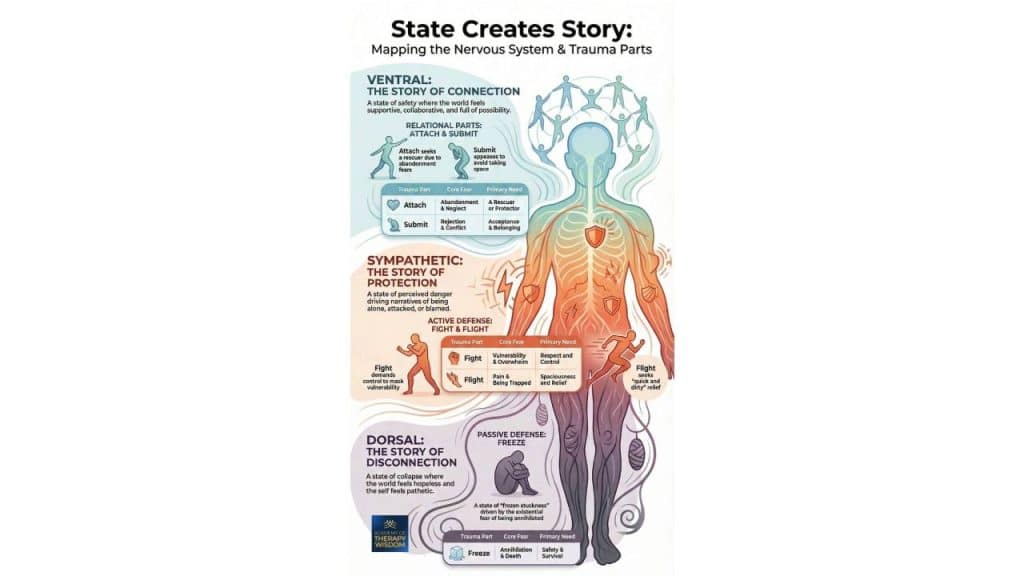
In the video above, De West demonstrates how simple yoga poses can facilitate emotional release through intentional movement and breath. What’s particularly striking is how she emphasizes the connection between physical postures and the nervous system’s response to trauma. These aren’t just exercises—they’re pathways to regulation that honor the body’s wisdom and natural healing capacity.
The beauty of De West’s approach lies in its simplicity and accessibility. You don’t need to be a yoga expert to incorporate these trauma-informed yoga practices into your daily routine or clinical work. As therapists, we often focus heavily on cognitive approaches to regulation, but these somatic techniques offer a complementary pathway that can reach parts of the nervous system that talk therapy alone often miss.

Join Free webinar with De West, C-IAYT, RYT Self-Care for Therapists
What to Do Between Therapy Sessions to Refresh Yourself By De West
During the webinar, you will learn:
Mindfulness techniques to enhance mental clarity and focus, helping you stay present and attentive with your clients while managing your own mental health.
Simple, therapeutic yoga practices you can incorporate into your daily routine, focusing on alleviating physical strain and improving overall body awareness.
Breathing exercises that help regulate the nervous system, reduce stress and foster emotional resilience — crucial for therapists who regularly engage in emotionally charged sessions.
The Science Behind Trauma-informed Yoga for Healing
The effectiveness of trauma-informed yoga extends beyond anecdotal evidence. Research published in the American Journal of Psychiatry demonstrates that yoga practices specifically designed for trauma survivors can significantly reduce PTSD symptoms (van der Kolk et al., 2014). According to a 2022 meta-analysis in Clinical Psychology Review, body-centered interventions that include mindful movement show particular promise for trauma recovery, with participants reporting improved emotional regulation and decreased hyperarousal symptoms (Thompson et al., 2022).
What makes this approach unique is its intentional focus on creating safety, choice, and empowerment—elements often stripped away during traumatic experiences. De West, a certified yoga teacher and somatic practitioner with over 20 years of experience working with trauma survivors, has developed her approach through extensive training at the BE Center and Naropa University, where she now teaches therapeutic applications of yoga.
Traditional yoga classes may inadvertently trigger trauma responses through unexpected adjustments, dimmed lighting, or closed eyes instructions. In contrast, trauma-informed approaches prioritize predictability, invitation rather than demand, and continuous orientation to present-moment safety.
Key Elements of Trauma-informed Yoga Practice
- Language of invitation: Using phrases like “if you choose” or “when you’re ready” rather than commands
- Predictable sequencing: Clearly explaining what comes next to reduce surprise
- Choice-making opportunities: Offering modifications and alternatives for every pose
- Present-moment orientation: Gentle reminders to notice sensations in the here and now
- Respect for boundaries: No hands-on adjustments without explicit permission
Yoga Poses for Emotional Release and Regulation
We often store emotions physically in our bodies. According to Dr. Bessel van der Kolk, author of “The Body Keeps the Score,” trauma is fundamentally “a disorder of arousal regulation.” Trauma-informed yoga poses can help release this stored tension while simultaneously supporting nervous system regulation.
“The body is the bridge between our thinking mind and our emotional brain. When we move intentionally with awareness, we create pathways for healing that talking alone cannot access.” – De West
De West’s approach emphasizes several key poses that specifically target emotional release while maintaining safety. These poses work by activating the vagus nerve, releasing tension in areas where emotions are commonly stored, and creating space for gentle processing. Her work at the Drala Mountain Center, formerly Shambhala Mountain Center, has helped bring these practices to therapists seeking both personal and professional development tools for therapeutic yoga applications.
Forward Folds for Anxiety Relief
Forward folds create a natural calming response in the nervous system. When practiced with trauma awareness, these poses can be particularly effective for anxiety and overwhelm.
Standing Forward Fold (Uttanasana)
Begin standing with feet hip-width apart. Exhale as you hinge at the hips, allowing your upper body to fold forward. Bend knees generously to reduce strain. Let your head hang heavy, releasing tension in your neck and shoulders. Stay for 5-10 breaths, noticing the sensation of letting go.
Seated Forward Fold Variation
Sit with legs extended or in a comfortable position. Place a bolster or pillow on your thighs and fold forward only as far as feels supportive. Rest your head and allow your back to soften. This variation creates a gentle compression that activates the parasympathetic nervous system.
Hip Openers for Stored Emotions
The hips are known as emotional storage centers in the body. Trauma-informed hip openers approach these potentially sensitive areas with care and respect for boundaries.
Reclined Figure Four
Lie on your back with knees bent, feet flat on the floor. Cross your right ankle over your left thigh, creating a figure-four shape. If comfortable, draw your left knee toward your chest, keeping your head on the floor. Hold for 1-2 minutes, then switch sides. This gentle approach to hip opening allows for release without vulnerability.
Supported Child’s Pose
Kneel with knees wide apart, big toes touching. Place a bolster or folded blanket between your thighs and rest your torso and head on the support. Arms can rest alongside your body. This restorative pose opens the hips while providing the comfort of support and containment.
Integrating Breath with Movement for Deeper Healing
We know that breath is a powerful tool for nervous system regulation. When combined with intentional movement, it becomes even more effective for emotional processing and release.
De West emphasizes the importance of breath-centered yoga practices that help clients reconnect with their bodies safely. This approach is particularly valuable because many trauma survivors experience disconnection from bodily sensations as a protective mechanism.
Trauma-informed Breathing Techniques
- Box Breathing: Inhale for a count of 4, hold for 4, exhale for 4, hold for 4
- Wave Breath: Visualize breath moving like a wave through the body, starting at the base of the spine and flowing upward
- Resource Breathing: Pairing the breath with visualization of a safe place or person
Movement Sequences for Emotional Release
Gentle Spinal Waves
Begin on hands and knees in a tabletop position. Inhale as you drop your belly, lifting your chest and gaze slightly (cow pose). Exhale as you round your spine, drawing your navel toward your spine (cat pose). Move slowly between these positions, following your breath. This sequence helps release tension along the entire spine, where emotions are often held.
Standing Side Bends
Stand with feet hip-width apart. Inhale and reach both arms overhead. Exhale and bend to the right, keeping both feet grounded. Inhale to center, then exhale and bend to the left. Repeat 3-5 times on each side. Side bends help release tension in the often-neglected lateral body and stimulate lymphatic flow.
Gentle Twists
Seated on a chair or the floor, inhale to lengthen your spine. Exhale and gently twist to the right, placing your left hand on your right knee and your right hand behind you. Hold for 3-5 breaths, then switch sides. Twists help release tension in the back and stimulate digestive organs, where anxiety is often felt.
Applying Trauma-informed Yoga in Clinical Settings
We’ve seen remarkable results when therapists incorporate these techniques into their clinical work. According to a study published in Professional Psychology: Research and Practice, therapists who integrated somatic practices like trauma-informed yoga reported increased client engagement and faster progress in trauma processing (Davis et al., 2023).
“When we invite clients to notice their bodies without judgment, we open a doorway to healing that goes beyond cognitive understanding. The body has its own wisdom and timeline for processing trauma.” – De West
De West’s work at the BE Center has pioneered approaches that allow therapists to safely introduce body-based interventions even with highly dysregulated clients. Her methodology emphasizes meeting clients where they are and gradually building capacity for embodiment.
Guidelines for Therapist Implementation
- Start small: Begin with brief 2-3 minute interventions within a session
- Follow the client’s lead: Notice what brings ease versus tension
- Use props liberally: Blankets, bolsters, and chairs create accessibility
- Normalize variation: Emphasize that there’s no “perfect pose”
- Practice co-regulation: Breathe alongside your client to create safety
Creating a Trauma-sensitive Environment
Physical Space Considerations
Create a clinical space that supports embodiment by ensuring adequate lighting, comfortable temperature, and minimal unexpected noises. Offer options for seating and positioning, and keep props visible but not imposing.
Language and Pacing
Use invitational language that emphasizes choice and agency. Speak clearly and at a measured pace, allowing time for integration between instructions. Normalize pausing, resting, or modifying at any point.
Boundaries and Consent
Always obtain clear consent before introducing somatic practices. Establish signals for pausing or stopping, and check in regularly about comfort levels. Remember that embodiment work can bring up unexpected emotions or memories.
Next Steps: Deepening Your Practice
Trauma-informed yoga is most effective when practiced regularly and with attention to individual needs. Consider starting with just 5-10 minutes daily, focusing on the poses that feel most supportive to your nervous system. Remember that healing isn’t linear—some days may require more gentle approaches than others.
Where we excel at Academy of Therapy Wisdom vs. PESI and others is how we care for the caregiver not only with course curriculums that equip you to live and work in balance, but also with our commitment to superior customer service and providing community cohorts where you can connect in a meaningful way with the peers learning alongside you. You´ll have lifelong access to your course material and peer cohorts. De West is a treasured teacher, among a host of inspiring, world-renowned faculty who teach on our platform. one of the
De West demonstrates several yoga poses specifically designed for emotional release and trauma healing. She begins by explaining the importance of creating safety in the practice, emphasizing that all movements should be done with awareness and permission from your body. She demonstrates forward folds with supported variations, gentle hip openers, and breathing techniques that help regulate the nervous system. Throughout the demonstration, she reminds viewers to move at their own pace and honor their body’s boundaries. De West concludes by explaining how these practices can be incorporated into daily life or clinical practice to support ongoing nervous system regulation and emotional processing.
If you’re interested in learning more about integrating these techniques into your practice or self-care routine, I encourage you to explore De West’s comprehensive training on self-care for therapists. Her unique approach to somatic awareness, mindfulness, and trauma-informed principles gives you the tools to create a personalized, sustainable practice that nourishes both you and your clients. By taking care of your own nervous system, you’ll be better equipped to hold space for others’ healing journeys.
Remember, our well-being is not just a luxury—it’s an essential component of ethical and effective therapeutic work.
Let’s each take a moment today to try one of these trauma-informed yoga poses between sessions, and see what a difference it makes.
Warmly,
Heather