
This month we´re gearing up for an amazing trauma focused therapy training for a method that, since I first encountered it, has made me think differently about how I think of trauma work. In my work with Academy of Therapy Wisdom helping to connect mental health professionals with innovative training opportunities, I`ve noticed how psychotherapists often express frustration with traditional, outdated approaches.
Recent research confirms what many of us have suspected – conventional therapeutic methods often aren’t enough to heal complex trauma and give clients the quality of life they hope for (Courtois & Ford, 2013). That’s why I am genuinely excited about helping therapists discover our Janina Fisher Training opportunities, and the TIST methodology. This is something that has actually changed how we help trauma survivors and is making a difference in the lives of clients and their therapists.
In this short video presentation, Dr. Fisher challenges what most mental health practitioners have learned in our training. She introduces a fresh perspective on trauma treatment, showing how viewing “unsafe behavior” as an attempt at a solution rather than a problem can completely change our therapeutic approach. This aligns with current research emphasizing the importance of understanding adaptive survival mechanisms in trauma responses (Cloitre et al., 2012).
A Fresh Look at Trauma Treatment
It is widely supported that the way we think about trauma treatment approaches has needed to shift, and in fact has been shifting in recent years. The latest findings suggest we need to move beyond the traditional therapist-client dynamic and look at trauma work in a whole new way (Resick et al., 2014).
What’s Changed in Trauma Treatment
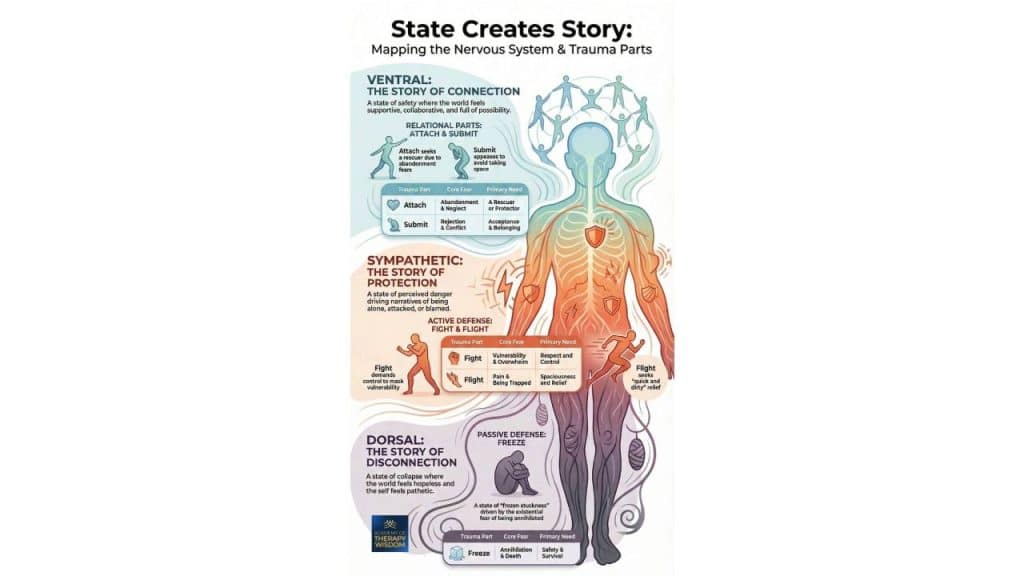
- We now understand how different parts of the self work together
- We see survival responses in a new light
- Training has become more hands-on and practical
Learning TIST Through Certification
The field of trauma-informed therapy keeps growing, and TIST certification offers a very practical way to develop these skills. What most professionals love about Dr. Fisher’s program is how it combines real practice with expert guidance – you’re never left trying to figure things out on your own.
What Makes TIST Training Different
- Small Group Practice: You work with just five other therapists
- Real Expert Support: Learn from therapists who’ve worked directly with Dr. Fisher
- Practical Skill Building: Regular chances to practice and get feedback
Join a Community: Connect with other trauma therapists worldwide

Join Dr. Janina Fisher for a FREE webinar
Healing the Fragmented Selves of Trauma Survivors
In this free webinar, Dr. Janina Fisher will help you:
How to identify and work with fragmented selves in trauma survivors.
How to stabilize chronically at-risk clients using TIST principles.
How to address self-alienation and dissociation to foster self-acceptance.
How to navigate therapeutic gridlock and work effectively with resistant, stuck, or emotionally overwhelmed clients.
Growing Your Practice with TIST
What’s exciting about this trauma focused therapy training is how it can transform both your practice and your confidence as a therapist.
Video Transcript:
“We’ve all been trained, or most of us have been trained, in what I call ‘I-thou’ models, meaning the client says ‘I’ and we say ‘you.’ All of us were trained—in my psychodynamic training, I was not trained to see fragmentation. I was certainly trained to take a history, to see the client in the light of that history. I learned, as I got more and more into my graduate program, to diagnose, to use the DSM. And certainly in my hospital internship, I was trained to see unsafe behavior as a problem. It would never occur to anybody to see unsafe behavior as an attempt at a solution.
And to become fluent in this and consistent in using it changes a lot of those therapeutic habits. We have to learn to practice therapy in a different way, and rather than having to think ‘what should I do,’ it’s so much easier when it’s automatic and just natural. That requires practice and coaching. And so that’s what the certification training is all about—the opportunity for coaching and practicing until you get TIST.
Now as we get those skills more in our bones and they become more nuanced and flow more easily, it’s actually more fun to be a trauma therapist. And that’s another thing that I love about TIST—it’s more fun to be a trauma therapist. Your ability to track the parts becomes better and better with practice, especially that combination of practice and coaching. And you’re much more creative if you’re not constantly thinking ‘what am I supposed to do next.’
Let me tell you how certification training works. Each TIST Level 3 student signs up for a practice group—a group of six participants who meet six times with the help of a senior TIST facilitator. I have this amazing group of senior facilitators. They are trusted colleagues with whom I’ve worked for many, many years. Many of them have been in supervision with me. We have shared cases. We have a long history—I think the shortest relationship I have with any of the senior facilitators is 10 years.
At each meeting, your group of six will meet for two hours. In those sessions, you will be asked to practice one or two particular skills using your fellow group members as clients. The facilitator has a chance to coach you and mentor you. Alternating with those group meetings, we have live sessions that help to support those certification sessions—talk more about the skills of the week. You’ll have a chance to ask your clinical questions about applying TIST methods in clinical practice because the practice groups are focused on skills practice and using TIST in a mock session.
The wonderful thing about getting certified—first of all, there’s the satisfaction that comes from owning your skills and reaching that milestone, but also you become part of a literally worldwide community of certified TIST therapists. You can list your certification on your website as a professional credential, and you will also get a special medallion in the TIST therapist directory. Unlike some training programs, certification is meant to demonstrate the basic skills. It’s not asking you to be excellent—it’s asking you to be able to deliver the treatment.”
I’ve seen firsthand how this approach can change everything – both for therapists and their clients. If you’re ready to take your trauma work to the next level, I really encourage you to check out the our Free Janina Fisher training that helps give you a sense of her work in the certification program. You’ll learn practical skills you can use right away and join a supportive community of professionals who share your passion for this work.
Warmly,
Heather.