
It is safe to say that most therapists want to better understand trauma healing, and may be asking, “How does trauma affect attachment?” and “How can I help my trauma therapy clients heal?”
New Access to Trauma Training Videos
Our Therapy Wisdom online therapist trainings come with multiple bonus teachings where we bring together course faculty with additional experts in their field for valuable training conversations. One such bonus is especially helpful in understanding trauma work and how trauma affects attachment, as it brings together two of the top experts in these fields, Diane Poole Heller and Janina Fisher.
Trauma and Attachment Video Excerpt
Please enjoy this excerpt from this Janina Fisher TIST trauma training bonus video, also available on its own in our Wise Conversations store.
Deepen your understanding with the full conversation. [GET ACCESS NOW] A Spiritual and Psychological Approach to Healing the Wounds That Shatter the Hidden Gift In Trauma with Diane Poole Heller, Ph.D. and Janina Fisher, Ph.D.
Excerpt transcript
Diane Poole Heller: As a therapist working with clients, you often notice a noticeable increase in their radiance as they progress in their healing journey. In my approach, I combine various elements that I have synthesized over time. One of the key areas I focus on is attachment, recognizing different attachment categories, and applying appropriate corrective experiences to help individuals heal from their attachment injuries.
Trauma is often defined as a broken connection, so our aim is to mend those broken connections. This can involve restoring connection to oneself, to others, to the grounding elements of life, and to spirituality. As these connections heal, essential parts of our humanity are reintegrated. Combining attachment work with trauma work is particularly helpful, and I primarily draw from Peter Levine’s somatic experiencing, which is a body-centered approach that emphasizes nervous system regulation, resourcing, completion of defensive impulses, and trauma resolution.
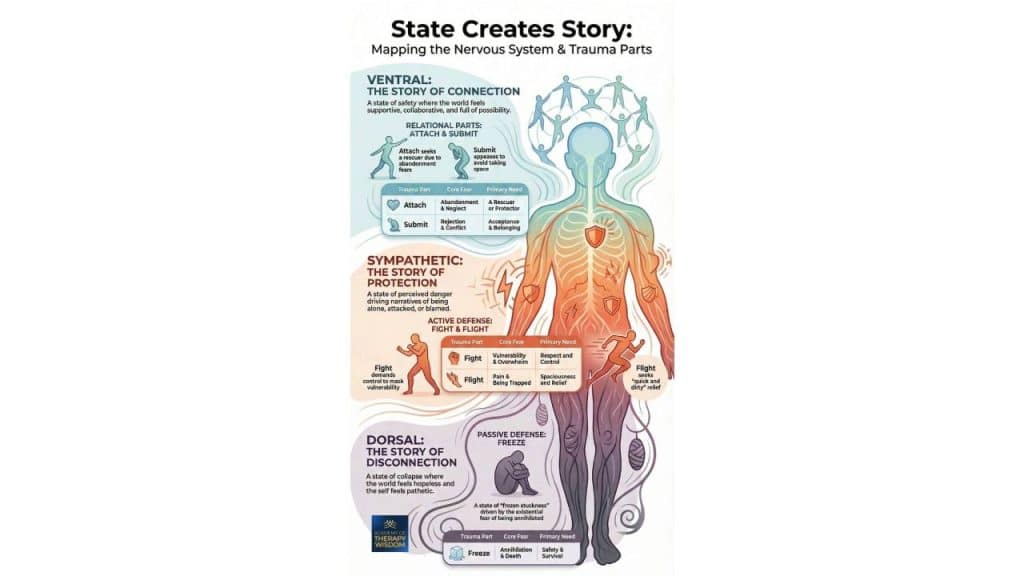
Another influential aspect in my approach is the work of Stephen Porges and his research on the polyvagal system. Understanding the physiological responses related to feeling safe, engaging with others, and experiencing threat helps us navigate the process of reconnecting with ourselves and others. We explore how our nervous system responds to danger, from mobilization to immobilization, and learn to climb back out of these responses to regain our capacity for social engagement, trust, connection, and vitality. I have also studied the Diamond Approach, a psychological and spiritual inquiry that I have been immersed in since the late 70s.
This approach combines psychology and spiritual exploration, providing further depth to the healing process. In summary, I bring together elements of attachment work, trauma resolution, somatic experiencing, polyvagal theory, and spiritual inquiry to assist individuals in integrating trauma, healing attachment wounds, and reconnecting with their true nature and essential selves. When trauma occurs, it can have a lightning-like effect, disrupting our cognitive and ego structures in significant ways.
Diane Poole Heller shares:
As a therapist working with clients, you often notice a noticeable increase in their radiance as they progress in their healing journey. In my approach, I combine various elements that I have synthesized over time. One of the key areas I focus on is attachment, recognizing different attachment categories, and applying appropriate corrective experiences to help individuals heal from their attachment injuries.
Connection, Trauma, and Attachment Work
Trauma is often defined as a broken connection, so our aim is to mend those broken connections. This can involve restoring connection to oneself, to others, to the grounding elements of life, and to spirituality. As these connections heal, essential parts of our humanity are reintegrated.
The Benefits of Combining Attachment Work with Trauma Work
Combining attachment work with trauma work is particularly helpful, and I primarily draw from Peter Levine’s somatic experiencing, which is a body-centered approach that emphasizes nervous system regulation, resourcing, completion of defensive impulses, and trauma resolution.
Trauma, Attachment, and Polyvagal Theory
Another influential aspect in my approach is the work of Stephen Porges and his research on the polyvagal system. Understanding the physiological responses related to feeling safe, engaging with others, and experiencing threat helps us navigate the process of reconnecting with ourselves and others. We explore how our nervous system responds to danger, from mobilization to immobilization, and learn to climb back out of these responses to regain our capacity for social engagement, trust, connection, and vitality.
Combining Psychology and Spiritual Healing
I have also studied the Diamond Approach, a psychological and spiritual inquiry that I have been immersed in since the late 70s. This approach combines psychology and spiritual exploration, providing further depth to the healing process.
Five Ways to Heal Trauma and Attachment Wounds
In summary, I bring together elements of…
- Attachment work
- Trauma resolution
- Somatic experiencing
- Polyvagal theory
- Spiritual inquiry
…to assist individuals in integrating trauma, healing attachment wounds, and reconnecting with their true nature and essential selves. When trauma occurs, it can have a lightning-like effect, disrupting our cognitive and ego structures in significant ways.
 [GET ACCESS NOW] A Spiritual and Psychological Approach to Healing the Wounds That Shatter the Hidden Gift In Trauma with Diane Poole Heller, Ph.D. and Janina Fisher, Ph.D.