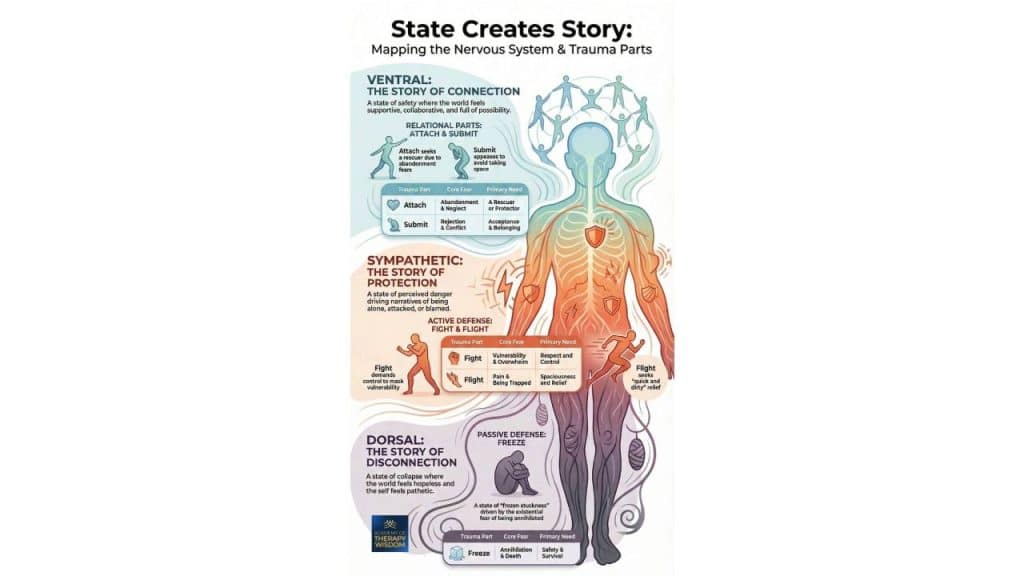


World-renowned trauma therapist, Janina Fisher, Ph.D. posits a unique approach to understanding and how to treat trauma and addiction. Her astute observations and practical methodologies have illuminated the path for therapists worldwide. Fisher boldly claims that “Using continuous bilateral stimulation in any modality that increases focus can be a game-changer in the treatment of trauma.”
Building upon this groundwork, she developed Trauma-informed Stabilization Technique (TIST) as a potent and effective modality in addressing trauma-induced addiction. TIST encourages practitioners to move beyond the traditional realm of symptom management, embracing a more adaptive perspective, one that acknowledges the protective mechanisms individuals cultivate to survive trauma.

Join Trauma Informed Stabilization Treatment Webinar by Dr. Janina Fisher
Helping Trauma Survivors Get Unstuck: A Fragmented Selves Approach in Therapy
In This NEW Janina Fisher Webinar you will learn:
How to understand perplexing clients using the TIST perspective so you can see the fragmented selves at work.
How to organize a treatment plan using the TIST model so you have an effective approach to care.
How TIST helps shift even the most stuck clients so they can finally make progress.
How to relieve your frustration and prevent burnout with more effective trauma treatment.
on April 4, 9-10am PDT / noon-1pm EDT / 5-6pm BST
Implementing TIST Techniques: A Shift in Perspective
The core of the TIST psychotherapy modality lies in its shift from viewing trauma responses as pathological to adaptive strategies for survival, an ethos perfectly aligned with Fisher’s philosophy. She has often asserted that mental health and substance abuse services need to incorporate a deeper understanding of trauma and traumatic stress. TIST elegantly serves this purpose, diving into the layers of trauma’s impact on an individual and the consequential addiction as a mode of self-preservation.
The Healing Power of TIST Trauma Work
According to Janina Fisher, the transformative difference in managing trauma and addiction becomes apparent “when we use modalities that increase focus.” TIST is one such modality. Its immersion approach shines a light on the individual’s adaptive survival mechanisms while coaxing them towards healthier coping strategies. TIST therapists intertwine safety with self-awareness, as they navigate their clients´ healing journeys.
Connecting Generations Through Transformation
Fisher acknowledges the potential of trauma to be passed down through generations if left untreated. TIST, with its deep understanding of trauma and addiction, assists therapists in identifying and treating these generational traumas, assisting in breaking this cycle.
Recovery and Resilience
Through effectively applying TIST techniques, therapists can support patients on their journey to recovery, embodying Dr. Fisher’s teaching which emphasizes the resilience of the human spirit. For Fisher, and those who follow her teachings, an effective trauma treatment transcends symptomatic relief. It’s about transformation and empowering individuals to live fully, resiliently, and authentically, healing the wounds of trauma and addiction over time.
In addressing addiction, widely seen as a by-product of unresolved trauma, TIST focuses on creating an environment of safety, depicted in Fisher’s quotes as integral to recovery, while unravelling the coping mechanisms the patient has built. By recognizing and acknowledging these coping strategies, therapists learn to treat the trauma alongside the addiction, tackling the root cause.
Trauma Healing Through Secure Attachment
Moreover, TIST’s approach imbues the essence of another of Fisher’s insights: the transforming power of secure attachments. She suggests, “human beings can transform the implicit memories and explicit narrative of the past by internalizing healthy adult attachment experiences until they achieve the benefits conferred by secure attachment.”
TIST actively integrates this principle, fostering a therapeutic alliance that enables patients to rebuild trust, seeking to transform patterns of disrupted attachment prevalent among trauma victims. This relational approach is a particularly potent way to break the cycle of generational trauma.
The Transforming Power of Trauma-informed Stabilization Technique
Therapists trained well in trauma-informed addiction treatment are torchbearers, guiding their patients not only towards healing but also an empowered transformation. As Fisher articulates, “Curiously enough, if we primarily try to shield ourselves from discomfort, we suffer. Yet when we don’t close off and we let our hearts break, we discover our kinship with all beings.” This quote encapsulates the essence of TIST’s patient-centered ethos – gently guiding individuals to tap into their innate resilience.
Ultimately, Dr. Fisher underscores that TIST trauma treatment transcends simply mitigating symptoms. It’s about empowering individuals to regain control, fostering resilience, and nurturing an environment that fuels long-term recovery and reinstates faith in the universe.