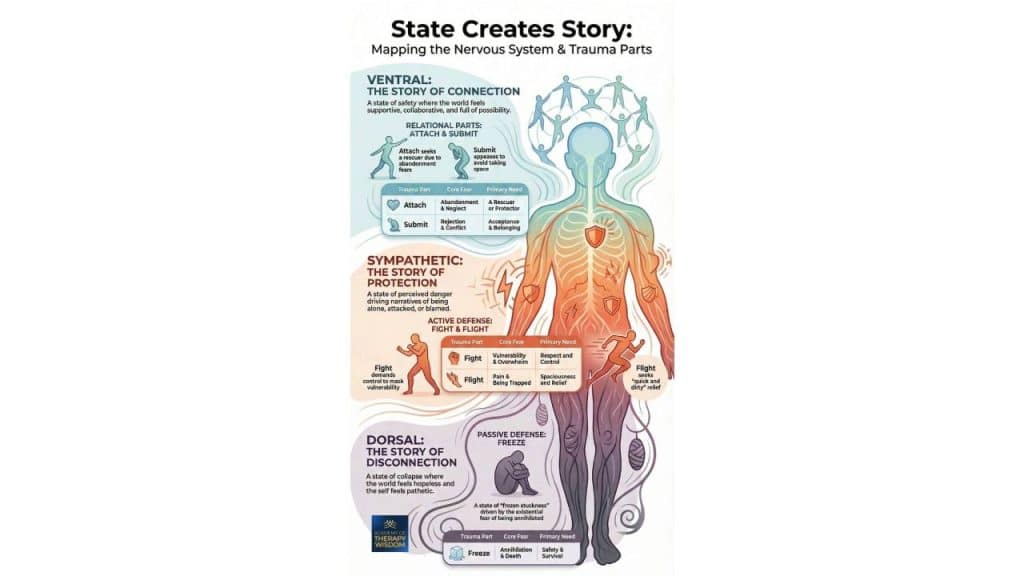


There are a few therapeutic approaches that have been gaining significant momentum in the field in recent years, and one stands out consistently: training in somatic therapy. As mental health professionals express the need more effective ways to address emotional dysregulation, become more committed to trauma-informed continuing education, and seek out body-centered mental health techniques, including nervous system regulation therapy, somatic approaches consistently prove to be transformative.
As counseling fields evolve, staying current with emerging modalities is essential for providing optimal client care. Let’s explore how somatic therapy training can revolutionize your practice and provide the skills needed to address stress and trauma at their physiological roots.
The Rising Demand for Somatic Approaches in Therapy
Why therapists are increasingly turning to body-based interventions
The field of psychotherapy is experiencing a paradigm shift. While traditional talk therapy remains valuable, research increasingly supports what somatic practitioners have long understood: trauma lives in the body. According to research published in the European Journal of Psychotraumatology, body-oriented approaches like Somatic Experiencing show promising effectiveness in treating trauma-related conditions by addressing the physiological components that cognitive approaches alone may miss (Kuhfuß et al., 2021).
This growing body of evidence explains why somatic therapy has become essential for forward-thinking clinicians. As client expectations evolve and neuroscience advances our understanding of trauma, therapists equipped with somatic skills can offer more comprehensive care.
Key Benefits of Somatic Training for Mental Health Professionals
- Enhanced assessment capabilities – Recognize physical manifestations of psychological distress
- Expanded intervention options – Move beyond cognitive approaches when clients are stuck
- Increased therapeutic presence – Develop greater attunement to subtle bodily cues
- Improved client outcomes – Address trauma where it’s stored—in the nervous system
_____________________________________________________________
Linda Thai, a trauma specialist with over 16 years of experience, brings unique expertise to somatic approaches. Her comprehensive understanding of nervous system regulation has helped countless therapists enhance their practice. At the Academy of Therapy Wisdom, we’ve seen firsthand how her methods provide clinicians with practical skills they can immediately implement.

Join Linda Thai, LMSW, for a FREE webinar
Join Linda Thai, LMSW, for a FREE webinar
Bottom-Up Strategies for Trauma Stabilization: A Phase-Oriented Approach
During the webinar, Linda will show you:
A road map detailing a 3-phase, sequential (but non-linear!) process that starts with safety, stabilization, and coping skills.
The creative use of various treatment modalities and interventions.
When and how to address specific symptom sets with your modalities.
How to plan and navigate your professional development to maximize client outcomes.
Understanding the Nervous System’s Role in Healing Trauma
The autonomic nervous system serves as the foundation for our emotional responses and trauma reactions. Traditional therapy approaches often focus primarily on cognitive restructuring, potentially missing the physiological aspects of trauma that remain locked in the body.
As Linda Thai shares with us in her training, “Understanding the nervous system is key to effective trauma work. With the right tools, therapists can help clients regulate their physiological responses and create lasting change.”
The Limitations of Traditional Talk Therapy Approaches
Traditional approaches to therapy have made significant contributions to mental health treatment. However, they face inherent limitations when addressing trauma:
“The body keeps the score: If the memory of trauma is encoded in the viscera, in heartbreaking and gut-wrenching emotions, in autoimmune disorders and skeletal/muscular problems, and if mind and brain are inextricably linked, then talk therapy will always be limited in its effectiveness.”
— Bessel van der Kolk, M.D.
Why Cognitive Approaches Alone May Not Be Sufficient
Trauma’s Neurobiological Impact
When trauma occurs, it affects the brain’s limbic system and brainstem—areas that don’t primarily process language. This explains why many clients can intellectually understand their trauma but still feel emotionally triggered and physiologically dysregulated.
The Disconnect Between Cognition and Sensation
Many clients experience a disconnect between what they “know” and what they “feel.” They may cognitively understand that they’re safe, yet their bodies continue to respond as if danger is present. This disconnect highlights the need for interventions that directly address the nervous system.
The Challenge of Accessing Traumatic Memories
Traumatic memories are often stored implicitly rather than explicitly, making them difficult to access through traditional talk therapy. Somatic approaches provide alternative pathways to healing by working with bodily sensations and movements.
The Need for Bottom-Up Processing
Working with the Body First
The right continuing education in somatic techniques teaches clinicians to work from the bottom up—starting with bodily sensations and the nervous system rather than with cognitions. This approach honors the natural processing of traumatic experiences and can lead to more integrated healing.
Comprehensive Benefits of Somatic Therapy Training for Your Practice
How somatic skills enhance therapeutic effectiveness
Investing in somatic therapy training offers multiple benefits that extend beyond adding techniques to your toolkit. Let’s explore how these skills can transform your practice and professional identity.
Expanded Clinical Competence
Somatic training equips therapists with skills to:
- Recognize autonomic nervous system states in real-time during sessions
- Facilitate nervous system regulation when clients become dysregulated
- Identify when clients dissociate and guide them back to presence
- Work effectively with trauma without retraumatizing clients
Enhanced Therapeutic Relationship
The quality of the therapeutic relationship is consistently identified as one of the strongest predictors of positive outcomes. According to research published in the Journal of Consulting and Clinical Psychology, the therapeutic alliance accounts for approximately 30% of treatment outcome variance, regardless of the specific intervention used (Flückiger et al., 2018). Somatic training strengthens this relationship by:
- Deepening embodied presence with clients
- Increasing attunement to subtle nonverbal cues
- Building trust through demonstrating understanding of body-based experiences
- Creating safety by helping clients regulate their nervous systems
Professional Growth and Specialization
In today’s competitive mental health landscape, specialization is increasingly important. Somatic therapy training offers:
- Differentiation from other providers in your area
- Expanded referral sources seeking body-based trauma approaches
- Higher client retention through more effective interventions
- Potential for higher reimbursement rates for specialized trauma treatment
Linda Thai’s Approach to Somatic Therapy Training
A unique integration of neuroscience, trauma theory, and embodied practice
Linda Thai’s approach to body-based, somatic therapy stands out for its comprehensive integration of cutting-edge neuroscience, developmental trauma theory, and practical somatic techniques. Her certification program, “Befriending the Nervous System: Strategies for Trauma, Sensory Processing, and Developmental Wounds,” offers a unique framework that addresses multiple dimensions of trauma healing.
The Five Pillars of Linda’s Training Methodology
Trauma-Informed Nervous System Regulation
Linda’s approach begins with a thorough understanding of how traumatic stress impacts the autonomic nervous system. Participants learn to identify different nervous system states, including the often-overlooked freeze response and dorsal vagal shutdown that many trauma survivors experience.
Sensory Processing Integration
A distinctive feature of Linda’s training is her focus on sensory processing differences and their relationship to trauma. This component helps therapists understand how sensory preferences and sensitivities influence trauma responses and recovery.
Developmental Trauma Framework
Linda’s training addresses the specific challenges of developmental trauma, including the “missing experiences” that create gaps in healthy development. This framework helps therapists understand how early attachment disruptions manifest in adult presentations.
Cultural and Intergenerational Trauma Awareness
Drawing from her diverse background and professional experience, Linda incorporates cultural considerations and intergenerational trauma patterns into her training. This perspective is particularly valuable for therapists working with diverse populations.
Practical Embodied Intervention Strategies
Linda emphasizes practical, applicable techniques that therapists can immediately integrate into their practice, including:
- Grounding techniques for different sensory profiles
- Nervous system regulation exercises for various states of dysregulation
- Trauma-sensitive movement practices that promote embodiment
- Self-regulation tools for therapist self-care
Therapist Self-Regulation as a Clinical Tool
A cornerstone of Linda’s approach is the recognition that therapist self-regulation directly impacts client outcomes. The training includes specific practices for therapists to maintain their own nervous system regulation while working with dysregulated clients.
Phase-Oriented Treatment Planning
Linda’s training provides a clear roadmap for implementing somatic approaches within a phase-oriented trauma treatment model, helping therapists understand when and how to introduce different somatic interventions based on client readiness and stability.
Addressing Transference and Countertransference Somatically
The training offers innovative perspectives on recognizing and working with transference and countertransference through a somatic lens, enhancing therapists’ ability to use their own bodily responses as clinical information.
Practical Implementation: Integrating Somatic Approaches into Your Current Practice
Starting with Simple Somatic Interventions
Training in somatic therapy doesn’t require completely overhauling your practice. Begin by incorporating these accessible interventions:
- Orienting to the present moment through sensory awareness
- Tracking physical sensations during emotional activation
- Introducing grounding techniques at the beginning and end of sessions
- Noticing posture and movement patterns as data about emotional states
Creating a Somatic-Friendly Environment
Consider how your physical space supports or hinders somatic work:
- Comfortable seating that allows for movement and shifting
- Options for standing or moving during sessions
- Minimal visual distractions that might overwhelm sensitive clients
- Temperature regulation for comfort and safety
Client Education and Preparation
Successfully implementing somatic approaches requires preparing clients for this shift in methodology:
- Explain the mind-body connection in accessible language
- Normalize physical sensations as valuable information
- Start with brief somatic experiments to build comfort
- Obtain informed consent for body-oriented interventions
The Future of Somatic Therapy in Mental Health Treatment
The evolving landscape of trauma-informed care
As research in neurobiology and trauma continues to advance, somatic therapy is positioned to become an increasingly central component of effective mental health treatment. Recent studies published in the Journal of Traumatic Stress demonstrate that somatic approaches like Somatic Experiencing show promising results for reducing PTSD symptoms (Brom et al., 2017).
A 2021 review in Clinical Psychology Review found that body-oriented psychotherapy approaches show particular promise for treating complex trauma, with improvements in affect regulation, body awareness, and dissociative symptoms (Schäfer et al., 2021).
The integration of somatic approaches is already influencing major treatment modalities, with elements of body awareness being incorporated into evidence-based practices like DBT, ACT, and even traditional CBT. This trend suggests that tomorrow’s therapists will need somatic skills to remain current and effective.
Preparing for the Future of Trauma Treatment
To position yourself at the forefront of this evolving field:
- Invest in comprehensive somatic training from respected providers
- Stay current with research on body-oriented interventions
- Build a network of somatically-oriented colleagues for consultation
- Develop specialized expertise in applying somatic approaches to specific populations
Taking the Next Step in Your Professional Development
How to begin your somatic therapy training journey
If you’re ready to expand your therapeutic toolkit by getting trained in somatic therapy techniques, there are several pathways to consider:
- Start with foundational education about the nervous system and trauma
- Attend introductory workshops to experience somatic techniques firsthand
- Engage in personal somatic practice to deepen your embodied understanding
- Pursue comprehensive certification programs with supervised practice
Begin Your Journey with Linda Thai’s Free Training
The most accessible way to explore whether Linda´s somatic approaches resonate with you is to participate in her free training here at Academy of Therapy Wisdom, “Bottom-Up Strategies for Trauma Stabilization: A Phase-Oriented Approach.” This on-demand webinar offers a practical introduction to somatic concepts and techniques that can immediately enhance your clinical effectiveness.
In this training, Linda shares:
- A clear roadmap for phase-oriented trauma treatment
- Practical guidance on when to introduce different modalities
- Specific techniques for nervous system regulation
- Strategies for addressing complex trauma presentations
At Academy of Therapy Wisdom, we’ve seen how somatic approaches have transformed many of the therapeutic practices taught in our online CE therapy courses. The integration of body-based interventions has opened new pathways to healing that honor the wisdom of the body and provide therapists with powerful tools for addressing trauma.
Are you ready to expand your therapeutic toolkit and transform your practice with somatic approaches? Join Linda Thai for her nervous system regulation therapy free training and take the first step toward becoming a more effective, embodied therapist. Looking forward to seeing you there!
Warmly,
Heather