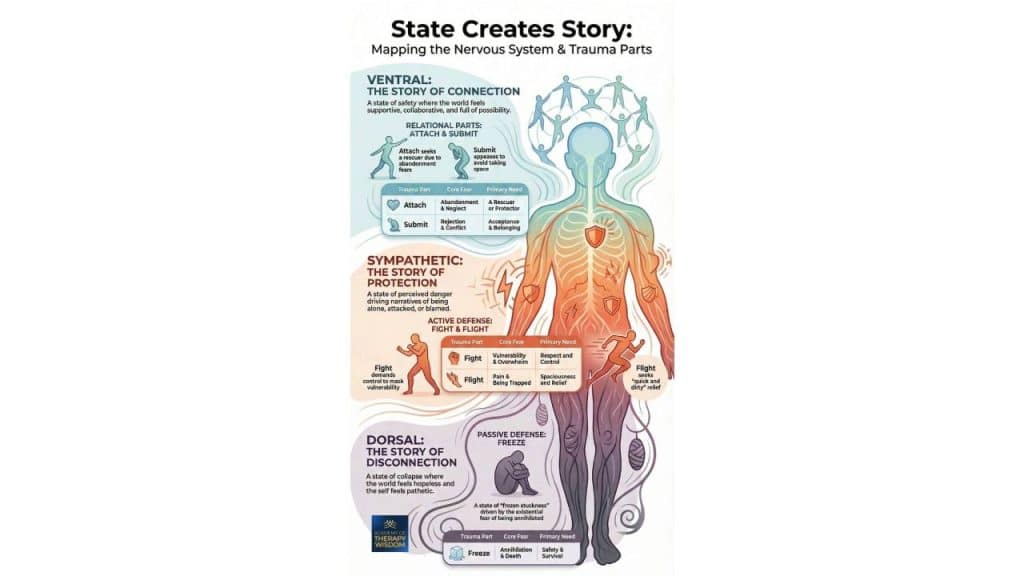

I’ve been reflecting on how much we now know about the profound impact of trauma on the nervous system, especially as we continue to witness global events that expose individuals and communities to various forms of trauma. The Therapy Wisdom team works closely with therapists, and we´re all consistently impressed by their dedication to helping clients navigate the complexities of trauma. Many therapists like you recognize that somatics and trauma are critically linked, and you are seeking effective tools and somatic trauma training to better support your clients (and avoid burnout in your own lives).
I was particularly struck by a recent article in the American Psychologist discussing the importance of body-awareness in trauma recovery, and essentially the link between somatics and trauma. This resonates deeply with me, as I’ve witnessed firsthand myself how somatic experiences can be transformative for both clients and therapists. At Academy of Therapy Wisdom, we are committed to providing therapists with cutting-edge training in evidence-based practices like somatic trauma therapy. Because so many therapists are seeking support in their own self-care and regulation practices to avoid burnout and stay resourced while they work with clients who have experienced trauma, we prioritize offering programs that can also help you find the balance you need to thrive in your work and life. I believe that the work of Dr. Arielle Schwartz is a beautiful and powerful resource for you.
In the video above, Arielle Schwartz, a licensed clinical psychologist specializing in somatic psychology and trauma therapy, eloquently explains the connection between trauma and the somatic nervous system. She emphasizes the importance of not just talking about trauma, but also working with the body’s felt sense experiences. This approach recognizes that trauma is not just a mental or emotional experience; it’s held within the body and can manifest as physical symptoms, emotional dysregulation, and behavioral patterns.
While traditional talk therapy can be helpful for processing thoughts and emotions, it often falls short when it comes to addressing the deeply ingrained somatic imprints of trauma. Talk therapy may focus primarily on the narrative of the trauma, neglecting the physical and energetic components that contribute to ongoing suffering. Clients may struggle to articulate their bodily experiences or connect them to their emotional and psychological states. This is where somatic nervous system exercises become essential, offering a pathway to healing that goes beyond cognitive processing and engages the body’s innate wisdom.

Watch this FREE video by Arielle Schwartz, PhD
Post-Traumatic Growth: How a resilience-informed approach helps both client and therapist
In this free video you’ll learn:
How trauma gets trapped in the body and why somatic therapy excels in profound healing compared to talk therapy.
Key techniques like safe-havening and bilateral movement for establishing a sense of safety in therapy.
Explore how somatic therapy taps into the body’s wisdom, benefiting both clients and therapists.
Understand the significance of incorporating the vagus nerve in therapy to expedite the healing process.
Why Traditional Regulation Techniques Fall Short
Traditional therapeutic approaches often emphasize cognitive processing and emotional regulation, which can be helpful for certain aspects of trauma recovery. However, these methods may not fully address the physical and somatic components of trauma. For example, a client might be able to identify and label their emotions, but still feel overwhelmed by physical sensations like trembling, tightness in the chest, or difficulty breathing. These somatic responses can perpetuate the cycle of trauma, even when cognitive understanding has been achieved. (Ogden, P., Minton, K., & Pain, C. (2006). Trauma and the body: A sensorimotor approach to psychotherapy. Guilford Press.)
Limitations of Talk Therapy in Trauma Treatment
- Difficulty accessing and processing body-based sensations
- Limited capacity for emotional regulation through cognitive means alone
- Inability to address the underlying physiological responses to trauma
The Power of Somatic Experiencing
“Trauma is not just an event that happened in the past, it’s also a physiological experience that continues to live in the body.” – Bessel van der Kolk, The Body Keeps the Score
Arielle´s approach integrates somatic experiencing, a therapeutic modality developed by Peter Levine, which emphasizes the importance of working with the body’s felt sense to process and release traumatic experiences. She is also the author of The Complex PTSD Workbook: A Mind-Body Approach to Regaining Emotional Control and Becoming Whole (The Complex PTSD Workbook) and several other books on the topic of trauma.
3 Foundations of Somatic Interventions for Trauma
Grounding Techniques
Grounding techniques help individuals connect with the present moment and regulate their nervous system by bringing awareness to physical sensations and the environment. Examples include focusing on the feeling of the feet on the ground, noticing the sounds and sights around you, or engaging in mindful movement.
Breathwork Exercises
Conscious breathing practices can regulate the autonomic nervous system and reduce the physiological symptoms of trauma. Slow, deep breaths can activate the parasympathetic nervous system, promoting a sense of calm and safety.
Movement and Body Awareness Practices
Movement-based therapies, such as yoga, tai chi, or dance, can help individuals reconnect with their bodies, release tension, and improve body awareness. These practices can also facilitate emotional expression and processing.
Integrating Somatics into Your Practice
Integrating somatic techniques into your existing therapeutic framework can profoundly enhance your work with trauma survivors. Somatic approaches offer a holistic lens, addressing not only the psychological and emotional aspects of trauma, but also the physical and energetic imprints it leaves on the body. This integrated approach empowers clients to access and process their trauma in a way that feels safe, embodied, and empowering. For example, when working with a client experiencing a panic attack, grounding techniques, such as focusing on the sensation of the feet on the floor, can help anchor them in the present moment. Simple breathwork exercises, like box breathing (inhale for 4, hold for 4, exhale for 4, hold for 4), can regulate the nervous system and ease the physiological grip of anxiety. These are just a couple of many tools Arielle teaches therapists to use with their clients (and selves).
By incorporating clear, effective somatic tools, you can facilitate deeper and more sustainable healing for your clients. To deepen your understanding of how trauma impacts the nervous system, explore our blog post on resilience-informed trauma therapy. For additional resources and insights into somatic psychology, visit Dr. Arielle Schwartz’s website. You can also find valuable resources on resilience-informed somatic trauma therapy here at Therapy Wisdom.
Benefits of Somatic Trauma Therapy
- Increased Body Awareness: Develop a deeper understanding of your body’s signals and sensations. This increased awareness can help clients recognize early warning signs of dysregulation and take proactive steps to manage their responses.
- Emotional Regulation: Learn to regulate your emotions through somatic practices. By working with the body’s felt sense, clients can develop more effective coping mechanisms for managing difficult emotions.
- Trauma Resolution: Process and release traumatic experiences stored in the body. Somatic therapies provide a safe and supportive environment for clients to access and process traumatic memories held within the body.
- Improved Self-Care: Cultivate practices that support your overall well-being. Somatic techniques can empower clients to take an active role in their healing journey and develop self-care practices that nourish their mind, body, and spirit.
Hello, and welcome. I’m Arielle Schwartz, and today we’re going to be talking about how to use somatic psychology to heal trauma. So, if you are a therapist, or if you’re somebody who’s interested in healing trauma, I imagine that you’ve already learned about how trauma impacts the nervous system, and you’ve probably already begun to experiment with some nervous system regulation skills. And while those skills are helpful, you might find that sometimes they’re just not enough. So, in this video, we’re going to talk about how to use somatic psychology to go deeper into the places where trauma is held in the body.
So, if you’re ready, let’s dive in. So, the first thing to understand about somatic psychology is that it’s all about working with the felt sense. So, what do I mean by felt sense? Felt sense is your direct experience of your inner world. It’s the sensations, the emotions, the images, the thoughts, the memories that are present in your body right now. And when we work with trauma, it’s really important to work with the felt sense because trauma is stored in the body. It’s not just something that happens in your mind.
So, when we talk about working with the felt sense, we’re talking about bringing awareness to the sensations in your body. We’re talking about noticing the emotions that are present. We’re talking about being curious about the images and the thoughts that arise. And we’re talking about creating a safe space to explore the memories that are held in the body. So, how do we do this? Well, there are many different somatic psychology techniques that you can use. Some of these techniques include things like mindfulness, breathwork, movement, and touch. And all of these techniques are designed to help you connect with your body and to work with the felt sense.
Now, when you’re working with trauma, it’s really important to go slowly and to be gentle with yourself. Trauma can be a very difficult experience, and it’s important to honor your own pace. If you find yourself getting overwhelmed, it’s okay to take a break. You can always come back to the practice later. So, I hope this gives you a little bit of an introduction to somatic psychology and how to use it to heal trauma. If you’re interested in learning more, I encourage you to explore some of the resources that I’ve listed below. And I wish you all the best on your healing journey.
Next Steps: Deepening Your Somatic Practice
We want to help you deepen your understanding of somatics and trauma by providing you with a free somatic trauma training with Dr. Arielle Schwartz. This comprehensive training provides practical tools and techniques to integrate somatic approaches into your work with clients, including specific exercises for grounding, breathwork, and movement. Whether you’re new to somatic therapy or looking to expand your existing skillset, this training will empower you to create a more embodied and holistic approach to trauma treatment. Join us today and discover the power of embodied healing!
Warmly,
Heather