
Resistance And Stuckness:
Trauma-Informed Strategies for Breakthrough
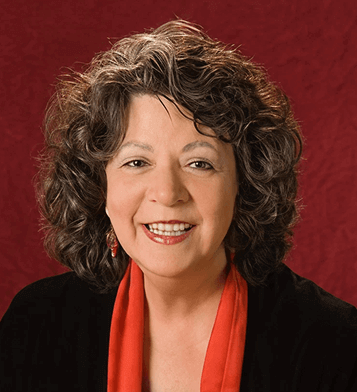
Janina Fisher, Ph.D.
Dear Colleague,
Over the past 20 years, I’ve heard countless therapists express a familiar and painful frustration: “My client says they want help, but they refuse the help I offer. They avoid sessions, reject interventions, or smile and nod and say they’re fine.” Sometimes we see them as stuck and sometimes as resistant, but whatever we call it, it creates an impassable wall—between us and the client, between the client and their healing.
But I want to offer you a different perspective. One that has guided and transformed my work over the years.
Resistance is not opposition. It’s protection.
When a client has lived through abuse, abandonment, or humiliation, seeking help is not simply an act of courage—it is also an act that activates survival responses. The vulnerability required to trust a therapist can feel as dangerous as the traumas they endured. Their nervous systems, shaped by threat and fear, are doing exactly what they were designed to do: protect.
Even when clients deeply want our help, parts of them may be terrified of what that help might require. They may fight, flee, or freeze in response to the therapeutic relationship itself. This is not resistance in the traditional sense—it is the body’s memory of danger playing out in the present.
That’s why I created this course: Transforming Trauma-Related Resistance and Stuckness. In this live series, we will explore how to recognize and reframe resistance—not as a therapeutic failure, but as an internal conflict rooted in trauma. We will draw from Internal Family Systems, Sensorimotor Psychotherapy, and mindfulness-based approaches to understand how some parts of our clients long for healing while others remain committed to keeping them safe at all costs.
We’ll examine how therapy itself can evoke survival defense responses, and how to respond in ways that foster collaboration, curiosity, and compassion.
When we learn to befriend resistance—ours and our clients’—therapy begins to shift. We stop pushing against the stuckness, and instead, we begin working with it. Therapy becomes less about “getting past” obstacles and more about creating safety, choice, and relationship—so that our clients can gradually experience what once felt impossible: connection without danger.
In today’s world, with so much collective trauma and so many people struggling to regulate their nervous systems, these dynamics are emerging more frequently and with greater intensity. That’s why now is the perfect time to deepen our skills and expand our understanding. This course is not just about theory—it’s about practical, embodied strategies for working through the most challenging moments in therapy, and for staying grounded and engaged as clinicians, even when the work feels stuck.
I hope you’ll join me in this series. Let’s explore how, by shifting our lens, we can avoid becoming another threat to the client’s system, and instead be an ally, helping them build a new relationship to their pain and to themselves.
Warmly,
Janina Fisher, PhD
Academy of Therapy Wisdom

“I’ve had a lot of time to think, ‘who are we’? I’ve realized that our commonality is a deep, deep, deep drive to help, to be of service, to relieve suffering. And that urgency to help is a plus and a minus, because it’s beautiful when we can help… But when we can’t help, we feel frustrated, we feel inadequate, we suffer because the client is still suffering. Sometimes we question ourselves, sometimes we question the client… when the client is stuck we are stuck, and that’s never a good feeling…”
— Janina Fisher, Ph.D.
Meet Your Presenter...
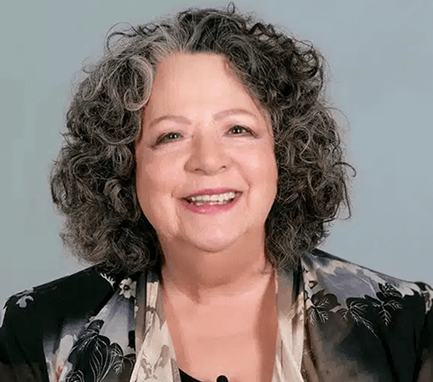
Janina Fisher, Ph.D.
Janina Fisher, Ph.D. is clinical psychologist, former instructor at Harvard Medical School, board member of the Trauma Research Institute, and a patron of the John Bowlby Centre, as well as an international expert on the treatment of trauma and dissociation. She is the author of Healing the Fragmented Selves of Trauma Survivors: Overcoming Self-Alienation (2017), Transforming the Living Legacy of Trauma: a Workbook for Survivors and Therapists (2021), and the Living Legacy Instructional Flip Chart (2022). Best known for her work on integrating newer neurobiologically-informed interventions into traditional psychotherapy approaches, she is the co-author with Pat Ogden of Sensorimotor Psychotherapy: Interventions for Attachment and Trauma (2015).
Who Is This Course For—and Why Now?
If you’ve ever sat across from a client who says they want help but seems unreachable…
If you’ve felt your own frustration rise as a session stalls in silence, shutdown, or subtle defiance…
If you’ve wondered whether you’re doing something wrong—or whether your client is just “resistant”…
This course is for you.
Transforming Trauma-Related Resistance and Stuckness is designed for psychotherapists, counselors, social workers, psychologists, and other mental health professionals who work with trauma survivors—whether you’re newly trained or have decades of experience.
If you practice from a somatic, relational, parts-based, or trauma-informed framework, you’ll find practical strategies and clinical insights that enhance the work you’re already doing. And if you’re encountering more clients who appear stuck, disengaged, or oppositional despite sincere efforts to heal, this training will help you decode those impasses—and transform them into moments of connection and movement.
We are living in a time of collective overwhelm. The aftershocks of pandemic stress, cultural unrest, and mounting uncertainty have reignited trauma responses for many clients. You’re surely seeing the impact in your sessions—more shutdown, more ambivalence, more difficulty establishing trust and safety.
Traditional interventions often fall short when clients’ survival systems are in control. To meet this moment skillfully, you need tools that honor the protective function of resistance, address it with compassion, and help clients feel empowered—not pathologized—when they struggle to engage.
This course will give you the framework, language, and interventions to do just that. You’ll walk away with renewed confidence, a deeper sense of attunement, and powerful techniques drawn from Internal Family Systems, Sensorimotor Psychotherapy, and other integrative approaches.
When resistance stops being a problem to fix—and becomes a part to understand—your entire clinical experience shifts.
Now is the time to expand your capacity to meet your clients in their most protected places… and help them find their way forward.

“I love the de-pathologizing of trauma symptoms through Janina’s IFS-influenced approach. Being very spiritually myself, I have found myself at odds with the diagnostic/ medically influenced view of human behavior as pathological, bad or wrong. IFS and Janina’s approach is such a breath of fresh air. In my younger days I was terrified of working with certain diagnosis, ie, BPD. Using this approach is so affirming and gentle, true and real that I now find working with this population easier and so much more effective.”
- Cyndi W

“I am so happy. I will be a better therapist from having sat at Janina’s feet.”
- Susan S.
“I am in love with Janina’s model. It is body-based, collaborative, and anti-oppressive. It has helped me develop more compassion for my clients’ parts, my own parts, and family members’ parts too.”
- Natashia M.
Here’s What You’ll Learn in Each Live Session
This course unfolds over five live, 2-hour sessions—each one designed to help you work more skillfully with trauma-related resistance and therapeutic stuckness. You’ll gain new insight into the internal conflicts behind client impasses and walk away with practical strategies you can apply immediately in your sessions.

Session 1
Understanding Resistance as Defensive, Not Offensive
We begin by challenging the traditional view of resistance. Rather than seeing it as opposition, you’ll learn how to recognize it as a protective survival response—an instinctive defense rooted in trauma. We’ll explore the many forms resistance can take in the therapy room: the help-rejecting client, the compliant-but-disengaged one, and the individuals who appear hopeless, shut down, or highly controlling. You’ll also learn how therapy itself can unintentionally evoke animal defense responses—such as fight, flight, freeze, or submission—and how to work skillfully with those reactions without reinforcing them.
Session 2
Conceptualizing Resistance and Stuckness as a Parts Problem
In this session, we’ll reframe resistance through the lens of parts work and structural dissociation. Rather than asking why a client isn’t cooperating, we’ll learn to ask: Which part of them is resisting, and why? You’ll gain a practical understanding of how to map and make sense of clients’ internal conflicts—where some parts seek connection and healing, while others are still protecting against past danger. By shifting from confrontation to collaboration with protective parts, you’ll discover how to reduce power struggles and help clients feel more integrated, empowered, and safe.


Session 3
Overcoming the Therapist’s Resistance to Resistance
This session turns the focus inward—on our own countertransference. As therapists, we too can feel resistant: resistant to clients who refuse our help, challenge our expertise, or seem to sabotage their own progress. You’ll learn how to notice and regulate your own nervous system responses in the face of therapeutic impasse. We’ll explore how to navigate the client’s fear of both closeness and distance, and how to use moments of tension as opportunities for growth. You’ll also discover how playfulness and curiosity can soften resistance and reintroduce movement into seemingly stuck dynamics.
Session 4
Healing the Wounds of the Past
In this call, we turn toward the deeper healing work: the trauma wounds at the core of resistance and stuckness. You’ll learn how to help clients soothe the parts of themselves that are still in survival mode—without rushing the process or bypassing their defenses. We’ll explore techniques to facilitate inner dialogue, negotiate with protective parts, and support self-compassion as a path to integration. This session is about shifting from protection to connection, and from internal conflict to internal cooperation.


Session 5
Integration and Application
In this final session, we bring it all together. You’ll have the opportunity to reflect on how your understanding of resistance has shifted, ask questions about applying what you’ve learned in your own practice, and explore real-world clinical examples with your peers. Janina will guide you through an integration process that helps consolidate the tools, frameworks, and insights from the previous sessions—so you can carry them confidently into your therapeutic work.
Plus you’ll get these incredible bonuses…
On-Demand Yoga Sessions
Tune into a 30 minute therapeutic yoga session with Trauma-Informed Yoga Therapist De West


Exclusive access to a bonus interview between Janina and Ruth Cohn, MFT

4 Worksheets (from Janina's upcoming book) that will help you put into action what you learn from this course:
- Parts in Conflict
- Mindfully Noticing Internal Struggles
- Blending With Parts
- Unblending
Our courses are at the intersection of psychotherapy, spirituality and social change.
We know you have options for learning and Continuing Education. Here’s what sets us apart:

Emphasis on Your Learning
We offer a friendly, intuitive learning portal designed specifically so you can easily find your course content, connect with your colleagues, and have fun actually completing it!

Professional Production Quality
A real camera crew with high-end equipment, a deeply involved content director who works closely with every presenter, and a top-notch editing team with over 200 courses produced to date all make our video lessons second-to-none. Each learning module is split into digestible video segments so they are easy to watch and reflect on.

Unparalleled Customer Service
We’re proud to maintain a customer happiness rating of over 90%, with 85% of inquiries responded to within 6 hours. We’re here for you, every step of the way.
We ensure that your learning experience is not just adequate, but exceptional.
We believe learning should challenge and change you.
You Know This Work Matters…
You wouldn’t still be reading if some part of you didn’t already feel the pull.
The pull to understand your clients more deeply. To meet their resistance with compassion instead of frustration. To help them move forward—even when every instinct tells them to shut down, withdraw, or push you away.
This is your moment to expand your clinical wisdom—and your capacity for healing connection. To become the therapist your clients long to trust… even when trust feels impossible. To turn therapeutic stuckness into an opportunity for transformation.
Click below to claim your seat in this live course with Janina Fisher— and take your place among the therapists redefining what’s possible in trauma treatment.
Because the sooner you learn to work with resistance, the sooner your clients can stop fighting themselves—and start healing.
Wait too long, and the cycle continues.

Join us today for
Resistance And Stuckness: Trauma-Informed Strategies for Breakthrough


If you are a BIPOC helping professional,
please accept our discounted enrollment price for this course by clicking here.
We are glad to have you with us!

100% Risk-Free Money-Back Guarantee
We are confident you will learn new skills in this online training. However, if 7 days after the first live call (or 7 days after purchase, whichever is later), you don’t believe you will learn anything to apply with your clients, please contact our support team at support@therapywisdom.com and we will give you a full refund, no questions asked.
Frequently Asked Questions
Q: Is this course pre-recorded, or is it live where I can ask questions?
This is a LIVE online course. In each live session, Janina will teach new material (leaving session 5 for integration) and leave time for you to ask questions. Each live call is 2 hours long.
Q: Can I get CEs for this course?
Yes, CEs are available for this course. Click here for more information: https://learn.therapywisdom.com/ce-page-ras/
Q: Do you offer scholarships or discounts?
Academy of Therapy Wisdom does not offer full scholarships for its courses but we do invite BIPOC healing professionals to enroll at our discounted rate as one way to address the economic impacts of systemic oppression and generational wealth gaps on Black, Indigenous, and People of Color.
Our discounted enrollment rate is also available to those with a financial hardship, disability or health condition, or who live in countries with a very high exchange rate for the US Dollar. If one of these applies to you, please email support@therapywisdom.com for more information.
Academy of Therapy Wisdom creates world-class learning experiences for the global therapy community, integrating spirituality and social justice to help cultivate a more just, enlightened, and compassionate world. Our courses are immensely valuable, but we don’t want the cost to be a barrier to your learning and personal growth.
Q: What is Academy of Therapy Wisdom?
The Academy of Therapy Wisdom is an inspiring, multidimensional platform for learning, with courses & videos that are easy to use, access & digest. Our goal is to help you become a more confident, capable & compassionate therapist who works with their clients in a new way.

© 2025 Academy of Therapy Wisdom | Privacy Policy