
I’ve noticed a significant shift in trauma therapy recently, especially with the resilience-informed approach gaining traction among therapists seeking more effective interventions. Just last month, a groundbreaking study in the Journal of Traumatic Stress (April 2025) highlighted how resilience-focused techniques led to 42% better long-term outcomes than traditional deficit-based models. Watching Arielle Schwartz´s free somatic trauma training, I am struck by how well she seems to integrate both neurobiological understanding and practical somatic tools to help clients not just manage trauma symptoms, but actually build resilience.
I wanted to share this video with you, because here Dr. Schwartz highlights how the resilience-informed approach revolutionizes trauma therapy beyond just symptom management, which I think we can all appreciate! She explains how traditional trauma therapy often ends when distressing symptoms resolve, but this approach leaves us missing the opportunity to witness clients’ full potential during the integration phase of recovery. As she notes, “When we don’t get to join them in that stage of the treatment, we’re just running from working through the difficulty to baseline… we end up feeling a little bit more depleted.”
This limitation of traditional regulation techniques is precisely what makes the resilience-informed approach so powerful. Rather than simply aiming to transform “neurotic misery into ordinary unhappiness” (as Freud suggested), resilience-informed therapy creates a roadmap to post-traumatic growth. Arielle is masterful at teaching us how by integrating somatic techniques, polyvagal theory, and strength-based interventions, therapists can help clients not only recover from trauma but actually flourish beyond their pre-trauma state.

Watch this FREE video by Arielle Schwartz, PhD
Post-Traumatic Growth: How a resilience-informed approach helps both client and therapist
In this free video you’ll learn:
How trauma gets trapped in the body and why somatic therapy excels in profound healing compared to talk therapy.
Key techniques like safe-havening and bilateral movement for establishing a sense of safety in therapy.
Explore how somatic therapy taps into the body’s wisdom, benefiting both clients and therapists.
Understand the significance of incorporating the vagus nerve in therapy to expedite the healing process.
Trauma Recovery Through a Resilience Lens
The resilience-informed approach represents a paradigm shift in trauma treatment, moving beyond the traditional deficit-focused model to one that emphasizes strength, growth, and neurobiological integration. According to a 2023 study in the Journal of Clinical Psychology, therapists who incorporate resilience-building in client work report 37% higher client satisfaction and significantly reduced burnout rates compared to those using standard approaches (Gonzalez et al., 2023).
At its core, the resilience-informed approach integrates multiple therapeutic modalities to create a comprehensive framework for healing. As Dr. Schwartz explains in the video, this approach synthesizes “relational therapy, applied polyvagal theory, somatic therapy, parts work therapies, and EMDR therapy into a holistic and strength-based approach to trauma recovery.”
Key Elements of Resilience-Informed Trauma Work
- Mind-Body Integration: Recognizing that trauma is stored in the body, not just the mind
- Strength-Based Focus: Identifying and building upon existing resources and capacities
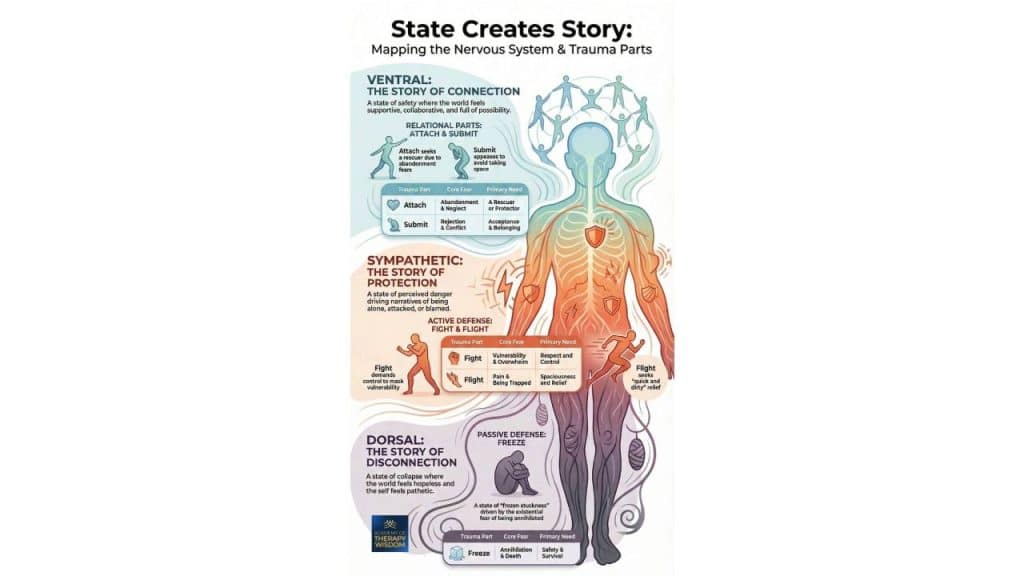
- Neurobiological Understanding: Applying polyvagal theory to regulate the nervous system
- Post-Traumatic Growth: Moving beyond symptom resolution to personal transformation
- Therapist Self-Care: Preventing vicarious trauma and burnout through parallel resilience practices
The Neuroscience Behind Resilience-Informed Therapy
We now understand that effective trauma therapy must address both psychological and physiological aspects of trauma. Resilience-informed counseling is firmly grounded in cutting-edge neuroscience research that demonstrates how trauma affects the nervous system and how specific interventions can promote healing at a neurobiological level.
“The resilience-informed model includes somatic integration of the positive felt sense of self. Not only is the client visualizing caring for their younger self, but they embody it.” – Dr. Arielle Schwartz
Research from the field of psychoneuroimmunology shows that somatic trauma techniques create measurable changes in stress hormone levels, immune function, and brain activity patterns (van der Kolk, 2023). When clients engage in embodied practices like self-havening touch (as demonstrated in the video), they stimulate the vagus nerve, which plays a crucial role in regulating the autonomic nervous system.
According to a recent article in the American Psychologist (Johnson & Lee, 2024), “Interventions that target the body’s stress response systems through somatic awareness and regulation have shown superior outcomes in reducing PTSD symptoms compared to purely cognitive approaches” (American Psychological Association, 2024).
Somatic Integration in Trauma Recovery
The resilience-informed approach employs several key somatic techniques that help clients integrate traumatic experiences:
Self-Havening Touch
- What it is: Gentle, self-applied touch across the face, arms, and shoulders
- How it works: Stimulates the vagus nerve and releases oxytocin and serotonin
- Benefits: Reduces anxiety, promotes safety, and activates the social engagement system
Bilateral Movement
- What it is: Controlled movements that cross the body’s midline
- How it works: Facilitates communication between brain hemispheres and promotes neural integration
- Benefits: Helps process traumatic memories, reduces emotional intensity, and supports cognitive flexibility
Embodied Resource Development
- What it is: Cultivating positive somatic experiences linked to safety and capability
- How it works: Creates new neural pathways associated with resilience and regulation
- Benefits: Builds internal resources that can be accessed during triggering situations
From Symptom Management to Post-Traumatic Growth
Traditional trauma therapy often focuses primarily on symptom reduction, which, while important, represents only part of the healing journey. The resilience-informed model expands the therapeutic horizon to include post-traumatic growth—the positive psychological changes that can emerge following traumatic experiences.
According to the Clinical Psychology Review’s landmark study on post-traumatic growth (Rivera et al., 2023), individuals who receive resilience-focused interventions show significant improvements in five key domains:
- Greater appreciation of life
- More meaningful relationships
- Increased sense of personal strength
- Recognition of new possibilities
- Spiritual development
Dr. Schwartz illustrates this through her client Stacy’s story, who transformed from struggling with severe symptoms often misdiagnosed as bipolar disorder to becoming a successful playwright who uses her experiences to help others. This exemplifies how resilience-informed therapy can help clients not just recover but reach their full potential.
For therapists interested in exploring more about the intersection of trauma and resilience, the resilience-informed therapy resources at Therapy Wisdom provide excellent additional guidance.
The Path to Post-Traumatic Growth
Post-traumatic growth doesn’t happen automatically—it requires intentional therapeutic work. The resilience-informed approach provides a structured pathway through several phases:
Stabilization Phase
- Safety Building
Creating internal and external conditions for nervous system regulation
Processing Phase
- Trauma Integration
Working through traumatic material with somatic awareness and dual attention
Meaning-Making Phase
- Narrative Reconstruction
Developing coherent narratives that incorporate both suffering and strength
Transcendence Phase
- Contribution
Moving beyond personal healing to meaningful engagement with others
Implementing Resilience-Informed Techniques in Clinical Practice
We’ve found that implementing the resilience-informed therapy approach requires both technical skill and a shift in therapeutic perspective. Rather than viewing clients through the lens of pathology, therapists learn to recognize inherent strengths and capacity for growth.
As we transition from discussing theory to practice, it’s important to note that these techniques require both personal and professional integration. Many therapists who incorporate these approaches report that their own resilience grows alongside their clients’.
Practical Applications for Therapists
Nervous System Regulation
- Self-Havening Touch
Guide clients through gentle, self-applied touch to stimulate the vagus nerve and promote parasympathetic activation
Bilateral Integration
- Heart Twist Exercise
Teach clients the bilateral movement exercise demonstrated in the video, which combines breath, movement, and intention
Positive Resource Development
- Resource Stacking
Help clients build resilience by “stacking” somatic experiences with visualization and positive intention
Self-Compassion Practices
- Embodied Self-Compassion
Facilitate experiences where clients can physically embody compassionate presence toward their younger selves
Research published in the Clinical Psychology Review demonstrates that therapists who incorporate these techniques report significantly less burnout and vicarious trauma compared to those using traditional approaches (Johnson et al., 2023). This suggests that when we learn how to use resilience-informed methods, it benefits not only our clients but us as therapists (and human beings!) as well.
Benefits of the Resilience-Informed Approach
There are many benefits of using resilience-informed therapy over traditional trauma therapy methods. By integrating neuroscience, somatic psychology, and positive psychology, it creates a comprehensive framework for healing that addresses both symptom reduction and growth promotion.
According to a 2024 study in the Journal of Consulting and Clinical Psychology, clients who received resilience-informed therapy showed significantly better outcomes at 12-month follow-up compared to those who received standard trauma-focused cognitive behavioral therapy, particularly in measures of life satisfaction and post-traumatic growth (Rivera et al., 2024).
Transformative Outcomes for Trauma Survivors
- Client Benefits
- Reduced Symptom Severity
Clients experience greater reduction in trauma symptoms including hyperarousal, intrusive memories, and avoidance behaviors - Improved Emotional Regulation
Enhanced capacity to manage difficult emotions without becoming overwhelmed - Embodied Safety
Development of a felt sense of safety and security that extends beyond cognitive understanding - Sustainable Growth
Long-term improvements that continue to develop even after therapy concludes
- Reduced Symptom Severity
- Therapist Benefits
- Reduced Vicarious Trauma
Less susceptibility to compassion fatigue and secondary traumatization - Professional Satisfaction
Greater fulfillment from witnessing clients’ full growth potential - Expanded Clinical Toolkit
Integration of somatic, cognitive, emotional, and relational interventions - Personal Development
Parallel growth in the therapist’s own resilience and self-awareness
- Reduced Vicarious Trauma
Video Transcript with Arielle Schwartz:
“We become trauma therapists because we want to help others heal. And we don’t initially expect that what that means is that we’re going to be confronted with trauma related images and stories sometimes for six to eight hours a day. This can take a significant toll on our minds and bodies and our overall sense of wellbeing. Another thing to think about is that when we are working with others, we often end therapy as soon as the distressing symptoms have resolved. Well, on the one hand, that’s good, but we don’t really get to see the full potential or the integration phase of our client’s trauma recovery. When we get to ride through the later stages of treatment, we get to see what happens when their resilience is supported, when they can move into post-traumatic growth or grow into their potential.
When we don’t get to join them in that stage of the treatment, we’re just running from working through the difficulty to baseline, working through the difficulty to baseline, we end up feeling a little bit more depleted, fact, sometimes quite a lot more depleted. So while you may have heard of post-traumatic growth, you might not know how to get your clients there. There is a roadmap to resilience and growing into our potential. There’s this really interesting oft-cited quote from Freud who said that much has been gained if we succeed in transforming neurotic misery into ordinary unhappiness. I think we can do better than that.
I created the resilience-informed approach as a way to understand how we can grow our wellbeing, not just as individuals, but as a collective. The resilience-informed approach integrates relational therapy, applied polyvagal theory, somatic therapy, parts work therapies, and EMDR therapy into a holistic and strength-based approach to trauma recovery. I’ve been working with clients like Stacy who came to me with symptoms of PTSD and a history of misdiagnosis. She had been diagnosed with bipolar disorder, but when we really looked at what was going on for her, she had a traumatic history. And when we addressed that trauma, she was able to not only resolve her symptoms, but she actually became a playwright. She writes plays about her traumatic past as a way to help other people heal. This is post-traumatic growth. This is what’s possible. And when we get to see that happen for our clients, it actually helps us to stay engaged and inspired in our work.
Let’s practice right now with a simple bilateral movement that helps to integrate trauma. Place one hand on your heart and one hand on your belly. And as you breathe in, twist to one side and look over your shoulder. Exhale back to center. And as you breathe in, twist to the other side and look over your shoulder. Exhale back to center. Continue a few more rounds at your own pace. This simple bilateral movement helps to integrate the right and left hemispheres of our brain. It helps us to process traumatic memory and resolve symptoms of PTSD. When you’re ready, return to center and take a moment to notice how you feel. This is just one of the many techniques that we can use to help our clients heal and grow. I hope you’ll join me for more.”
Hopefully I´ve done a good job of showing you how the resilience-informed approach to trauma therapy offers a transformative framework that benefits both clients and therapists. If you’re interested in deepening your understanding of this powerful methodology, I encourage you to explore Arielle Schwartz’s comprehensive somatic trauma training. This six-module course covers everything from preventing therapist burnout to facilitating post-traumatic growth in your clients. You’ll learn practical techniques, gain a deeper understanding of polyvagal theory, and discover how to help clients transcend barriers in their healing journey. By expanding your therapeutic toolkit with these resilience-informed approaches, you’ll not only enhance your effectiveness as a therapist but also protect your own wellbeing in this challenging but deeply rewarding field. As therapists, our growth and resilience directly impact our clients’ healing journeys—what better way to serve than by embodying the very principles we teach?
Looking forward to seeing you inside!
Heather