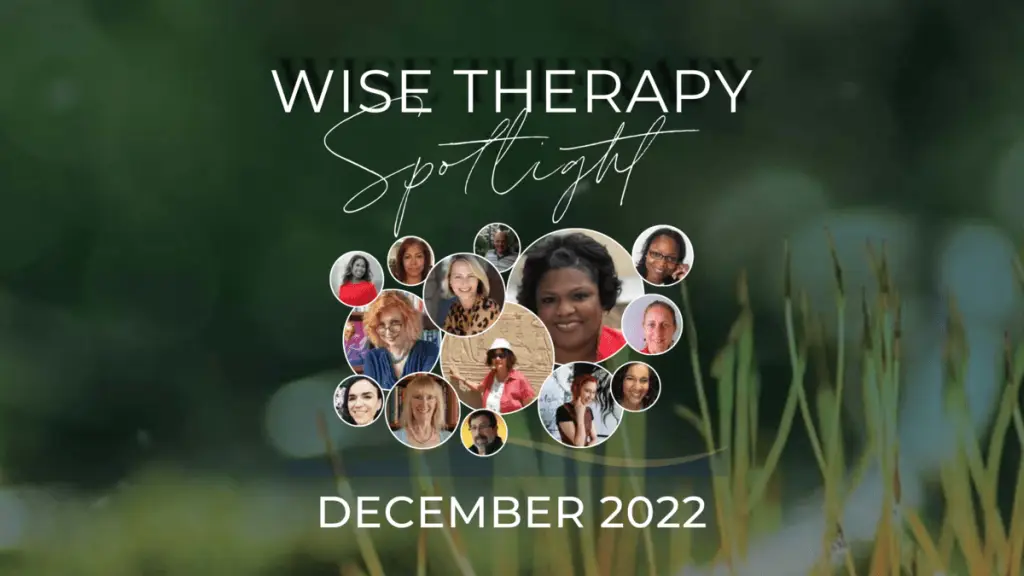

In addition to our online therapist training, we publish an annual collection of essays and artwork from the therapist community. Our third edition of Wise Therapy Spotlight was published in December 2022. One way we support therapist collaboration is to compile a variety of voices from the greater psychotherapy community in response to an emerging and poignant topic.
This year’s call for submissions asked, “How do you sustain hope and resilience?”
Enjoy this essay response by Peter Barraclough. Download the full PDF publication here: Wise Therapy Spotlight December 2022 Issue
My Journey of Recovery from a Stroke
By Peter Barraclough
Dick Schwartz said that as therapists we need to be merchants of hope.
But how do we sell something that we might not ourselves possess? If your therapist role was taken away from you what would remain? Hope is not something just for our work but is intrinsic to the fabric of the universe, coexisting alongside the reality of daily catastrophes and disasters. It is in the very nature of life that hope exists; it is an existential reality distinct from ourselves. Deep in the heart of our consciousness, our felt sense of self, it can be embodied.
I want to share about my own story of recovery from a stroke at the end of July. It occurred out of the blue one evening when I collapsed on the dance floor – my right hand side was paralyzed and I was unable to speak. With 90 minutes I was being assessed and treated in a Sheffield hospital stroke unit. Two weeks later I had a pulmonary embolism in each lung. I was completely helpless and totally reliant on hospital staff for everything. My role as a therapist was suddenly on hold and I needed other resources to sustain me through a period of testing.
However, less than 5 weeks later I was back home and now, as I write 4 months later, I am 90% recovered and I can both walk and talk.
I want to explain how three aspects of hope and resilience played a major role in my recovery, in the face of suffering.
1. A Support Community is Vital
I became overwhelmed by the love of family, friends and fellow professionals as I was bombarded by practical expressions of concern and good wishes through cards, visits and messages of hope. More than this, I had time to reflect and space to digest the undeniable truth that others had experienced shock and loss because of what had happened to me. In other words, I was seeing the impact and value of my past life on others, previously unexpressed, and this brought about a profound change in perspective for me. I was truly loved and I couldn’t doubt it.
I received over 35 Get Well cards; a day never went by without a visit from family or friends who were dear to me; I was upheld by a great throng of prayer from various connected groups and churches as far afield as Eritrea and Nigeria. Most of all I felt profound connection with my wife, who expressed devotion to me every day by attending to my practical needs and wants, even to the extent of bringing me my favourite hot meals, and also my daughter who happened to be staying with us at the time of the stroke and delayed her return to London.
Also my recovery would never have happened without timely medical interventions. I live in Sheffield, UK, where the system has a special approach to treating strokes. Following assessment and monitoring in a hospital ward that is devoted to stroke survivors, you are then transferred to a stroke rehabilitation centre that is equipped with specially trained staff who work with you to create a programme of rehabilitation. The building is situated in beautiful grounds where patients can sit with their family and friends, enhancing the recovery process.
After three weeks of physiotherapy, I discovered that my ability to walk had returned when, under the supervision of my physiotherapists, I tentatively walked five lengths of the gym and then walked back to my room. However, the joy of my family and friends had an even greater impact on me, thus reinforcing my sense of being loved. In my mind’s eye I pictured myself being held by my wife and daughter, but underneath we were cradled by a great throng of family and praying friends.
Less than five weeks after the stroke I could return home and receive the support of the community stroke team for the next three months, who paid regular visits to our house. Experiencing quality time with professionals whose sole purpose was my rehabilitation reinforced my sense of hope and purpose. I estimate that at least 200 medical staff contributed to my care.
2. Own Your Beliefs and Values
One of the commonest responses from friends that I heard was ‘That must have felt so scary’ but, to be truthful, throughout the whole experience I never lost my sense of well being, peace and calmness. Other people were shocked (they bore it on my behalf!), but I stayed relaxed and always felt that God was with me, even while laid on the floor whilst others around me panicked and called for emergency services.
Somehow I intuitively sensed that there would be a purpose that would reveal itself over time; my response was to patiently accept and entrust myself to the care of the doctors, nurses and therapists. Also, part of me was determined to get better, and I embraced all the therapies that ensued.
Even when I had the pulmonary embolisms, I was not worried; the fact that the doctors were on my case was enough and I could leave it to them.
It was also significant that I was part of a community who shared the same beliefs and values. I had already established friends with whom I had cultivated open, honest and committed relationships; we had a history of meeting both formally and informally for intentional spiritual growth. Therefore support was instinctive because it was already practised in our communal life together.
3. Where Appropriate, Practise What You Teach Your Clients
The basis of stroke treatment takes advantage of the brain’s neuroplasticity and its ability to form new neural pathways around the element of the brain that has died. The principle is repetition, repetition, repetition. The parallels with trauma treatment are remarkable!
I have been teaching my clients about neuroplasticity for 6 years, thanks to Janina Fisher’s training, and now I had to put it into practice for myself!
This gave me extra confidence with the different exercises but also I realised that I had to be committed to the hard work of repeating again and again, and to be patient and persistent.
Secondly, the practice of mindful observation enabling me to be in touch with my body has been particularly valuable with respect to refining, for example, the way my foot moves in my affected leg, compared to my unaffected side.
This also applies to simple tasks which now feel complicated. For example, the act of buttering toast was simple if I trusted my pre-stroke memory, but when my brain made the decision to act I noticed my right hand moving towards the butter, and then I realised that I had neglected to get the knife from the drawer and plate from the cupboard! Each task required pausing and noticing before acting. My occupational therapist had told me: ‘Plan for everything to take twice as long.’ I could hear Janina Fisher’s voice say: ‘slower is faster’; what applies to trauma treatment was also true for stroke recovery.
Thirdly, I discovered there were parallels in my treatment with the practice of ‘bottom-up’ regulation in sensorimotor psychotherapy. To overcome limb paralysis caused by the stroke, muscles need to be ‘woken up’ by making use of ‘body to brain’ feedback within the nervous system.
Future Hope
Suffering produces perseverance; and perseverance, character; and character, hope.’ (St. Paul)Spiritual growth has an end; I believe that hope does not end at death; in fact my home is ultimately not in this world; I belong to God.
Meanwhile my belief and values make a difference to how I conduct myself in the here and now. My friends have been inspired by the speed of my recovery; it has given them hope. I do not know when I shall return to practice, but I will.
What I have learnt, and the insights I have gained, can only serve to enhance the work with my clients and, I believe, be a more authentic ‘merchant of hope.’
‘If God is for us, who can be against us?
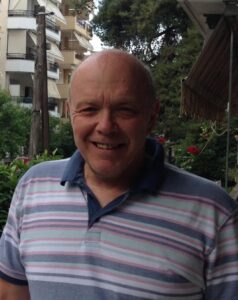
Peter Barraclough
LTh, AdvDip, RegMACC
If this essay touched you and you would like to be in touch with Peter, you are welcome to send him an email to peter.barraclough16@gmail.com. We invite you to download the PDF of our December 2022 Wise Therapy Spotlight issue for more inspiring essays and artwork.
[Click to Download] Wise Therapy Spotlight December 2022 Issue
We invite you to download the PDF of our December 2022 Wise Therapy Spotlight issue for more inspiring essays and artwork.