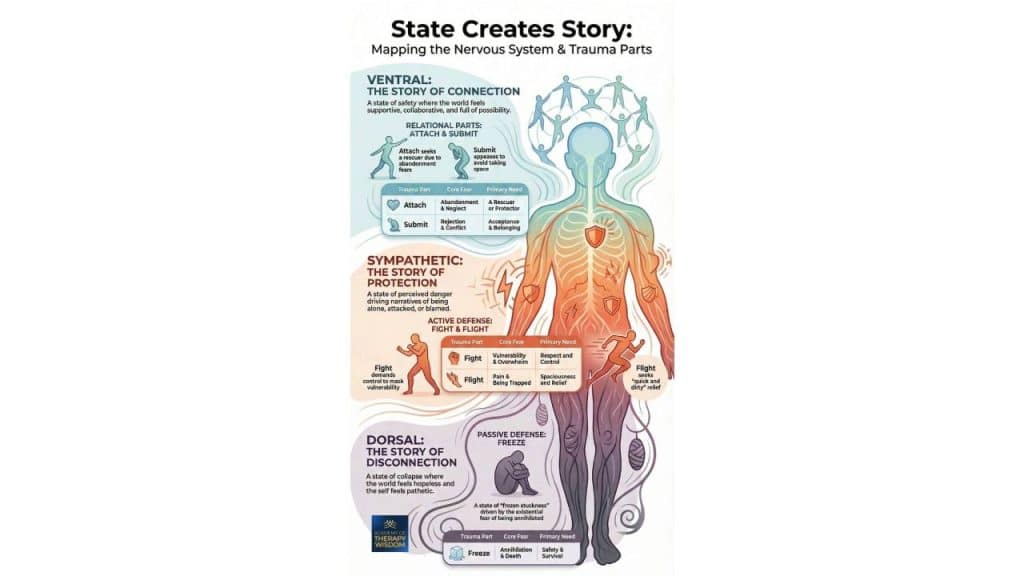


Welcome to a profound exploration of treating the fragmented selves of trauma survivors who exhibit resistance in therapy sessions, inspired by Janina Fisher’s exclusive Level 1 course on trauma-informed stabilization treatment. This article, tailored for psychotherapists, delves into the nuances of addressing the complexities encountered in clinical practice with trauma-impacted clients. To get a stronger experience of being trained by Dr. Fisher and hear some of her direct insights into questions to ask a resistant client, join the free Trauma Informed Stabilization Treatment (TIST) Introductory Webinar led by Dr. Janina Fisher titled Stuckness and Resistance: A Fragmented Selves Approach to Challenging Clients.
Understanding a Resistant Client and What to Ask
Therapists often encounter clients who appear ‘stuck’ or ‘resistant’ to treatment, labels that may inhibit deeper inquiry into the underlying issues. Janina Fisher emphasizes the importance of distinguishing between various forms of resistance to effectively support clients in overcoming their challenges.
Diagnosing Stuckness: A Critical Step
A common pitfall in therapy is assuming that clients can engage in mindful introspection when their capacity to feel may be compromised due to past trauma. Fisher suggests that an absence of feeling often indicates an overwhelming influx of suppressed emotions.
“The absence of feeling doesn’t mean that we’re not feeling. The absence of feeling means that we’re feeling too much, just as overwhelmed means we’re feeling too much.” – Dr. Janina Fisher

Join Trauma Informed Stabilization Treatment Webinar by Dr. Janina Fisher
Helping Trauma Survivors Get Unstuck: A Fragmented Selves Approach in Therapy
In This NEW Janina Fisher Webinar you will learn:
How to understand perplexing clients using the TIST perspective so you can see the fragmented selves at work.
How to organize a treatment plan using the TIST model so you have an effective approach to care.
How TIST helps shift even the most stuck clients so they can finally make progress.
How to relieve your frustration and prevent burnout with more effective trauma treatment.
on April 4, 9-10am PDT / noon-1pm EDT / 5-6pm BST
The Role of the Therapist When a Client Feels “Stuck”: Attunement and Support
The therapeutic relationship is pivotal in creating a safe space for clients. Fisher stresses the importance of attunement to the client’s needs, questioning whether the therapist is providing the right kind of support or inadvertently triggering the client’s trauma responses. Here is a quick priority list for supporting your client who may be resistant or shut down.
1. Embrace Small Steps in Therapy
Starting with manageable, small steps can significantly enhance the therapeutic process for trauma survivors. This approach builds client confidence and facilitates a gradual engagement with more challenging emotional experiences.
“It’s far better when working with traumatized clients if we start with very tiny baby steps so that their experience is ‘Oh, therapy’s not so hard. I can do this.’ And then they can build on the confidence.” – Dr. Janina Fisher
2. Address Structural Dissociation
Fisher points out that many therapists might overlook the extent of a client’s structural dissociation, which can hinder the progress of therapy. Recognizing and addressing this fragmentation is crucial for effective treatment.
Structural dissociation describes how an individual’s personality can become divided into separate parts, often as a result of trauma. This division is not just a metaphorical splitting but represents a lack of integration among different aspects of the self, which can manifest in various ways, depending on the severity and nature of the trauma – thus our “parts work” to support our clients to have more integrative experience of life.
Ways a therapist might recognize structural dissociation include:
- Observing Inconsistent Behavior: Clients may exhibit markedly different behaviors, emotions, and attitudes that seem incongruent or unrelated from one moment to the next, indicating different parts of the personality are in control at different times.
- Identifying Absence of Narrative Coherence: Clients might struggle to produce a coherent life narrative, with gaps or contradictions in their personal history that suggest dissociated parts of the self.
- Noticing Emotional Numbing: A client’s ability to feel emotions might be impaired or inconsistent, suggesting that some parts of the self may be disconnected from emotional experiences.
- Detecting Sudden Shifts in Self-Perception: Clients may express sudden, drastic changes in how they view themselves, which could indicate the emergence of different parts of their personality.
- Recognizing Signs of Inner Conflict: Clients might describe feeling torn between conflicting desires or impulses, which could represent the differing agendas or needs of dissociated parts.
Understanding and recognizing these signs can help therapists provide targeted and effective treatment for individuals experiencing structural dissociation, facilitating a more integrated and cohesive sense of self.
3. Use the System of Parts with Resistant Clients: A Holistic View
Therapists are encouraged to view clients as systems of parts rather than unified wholes. This perspective helps in identifying which part is present in therapy sessions and tailoring interventions accordingly.
The Therapist’s Role in Navigating Attachment and Resistance
Fisher discusses the delicate balance of addressing clients’ attachment needs and their resistance to vulnerability. Therapists should aim to empower clients, helping them develop mastery over their emotions and increase their window of tolerance.
1. Ensure Safety and Build Trust with Your Client First
Establishing a sense of safety is foundational in therapy, especially for trauma survivors. Therapists should focus on building a trusting relationship, where the client feels secure to explore their feelings and experiences. Take time building this trust and gradually ease into the healing work you will do with them only as the sense of safety builds.
2. Recognize and Validate the Client’s Experiences
Acknowledging the client’s experiences and feelings fosters a validating environment. Therapists should aim to understand the client’s perspective without judgment, emphasizing their experiences’ legitimacy. Parts work, as taught in the TIST trauma modality, fills out our therapist toolbox in such a way that clients can thrive in the validity of their experiences while making it less stressful for the therapist to provide this support.
3. Employ a Trauma-Informed Approach
Utilizing TIST, therapists can provide a structured framework that acknowledges the impact of trauma on an individual’s life, focusing on stabilization and addressing self-destructive behaviors in a supportive way that allows the client to acknowledge and appreciate these “parts” as an integral step in relaxing their harmful grip on their lives.
4. Facilitate the Development of Coping Strategies
We can continue to innovate while assisting clients in developing effective coping mechanisms to manage their emotional responses, enhancing their resilience and ability to handle stress. Janina Fisher does an especially good job at training us to support our clients in this way.
5. Encourage Gradual Exposure to Difficult Emotions
Instead of pushing the client to confront traumatic memories or intense emotions abruptly, it is strongly suggested that the therapist encourage a gradual approach, allowing the client to build tolerance and resilience over time.
6. Promote Attachment Awareness
Therapists should be aware of their attachment patterns and how they may influence the therapy process. Understanding your own attachment style and its potential impact on the therapeutic relationship can enhance the alliance and outcomes.
7. Support the Client’s Autonomy
While providing support and guidance, therapists should also encourage clients to take active roles in their healing journey, fostering a sense of empowerment and self-efficacy.
8. Address Resistance Compassionately
Resistance is a natural part of the therapeutic process, especially for trauma survivors. Therapists should approach resistance with curiosity and compassion, seeking to understand its underlying causes rather than confronting it directly.
By integrating these approaches, therapists can effectively navigate the challenges of attachment and resistance, supporting their clients in achieving healing and growth.
Ask Yourself, Ask Your “Resistant” Client
When considering what may be causing a therapy client to seem resistant and shut down, Janina Fisher suggests asking yourself questions like…
- Am I assuming the client is more aware or focused than they might be?
- Do I understand and connect with what the client needs right now?
- Am I giving too much or too little support, or perhaps the wrong kind?
- Are my methods too overwhelming or scary for the client?
- Am I trying to do too much too quickly?
- Do I fully understand how the client’s experiences are affecting them?
- Am I getting ahead of myself in wanting to help?
- Have I become the main source of calm for the client instead of helping them find it themselves?
- Am I making the client too reliant on me for comfort?
- Am I focusing too much on the client’s vulnerabilities too soon?
You may see an opening to ask your client for direct feedback during the session. Here are some questions to consider:
- How are you feeling right now? Can you describe it?
- Is there anything you´d like me to do that could help you feel more comfortable here?
- Is there something you feel is missing in our sessions?
- Do our discussions make you feel uneasy or scared at times?
- What are your thoughts on the pace of our sessions? Do you feel like we could be moving too fast?
- What helps you feel calm and safe?
- How do you feel about discussing that [difficult or sensitive topic]?
Conclusion: Towards a More Effective Treatment
By understanding the intricate dynamics of treating trauma survivors and getting deeper support to build your skills in this area, you can better navigate the challenges and complexities of the client experience and achieve better outcomes with less stress. Considering what to ask a client who is resistant during sessions is just one small part of supporting important healing and integration for your clients. Fisher’s insights provide valuable guidance on how to approach therapy with empathy, precision, and a deep understanding of the fragmented selves of trauma survivors.