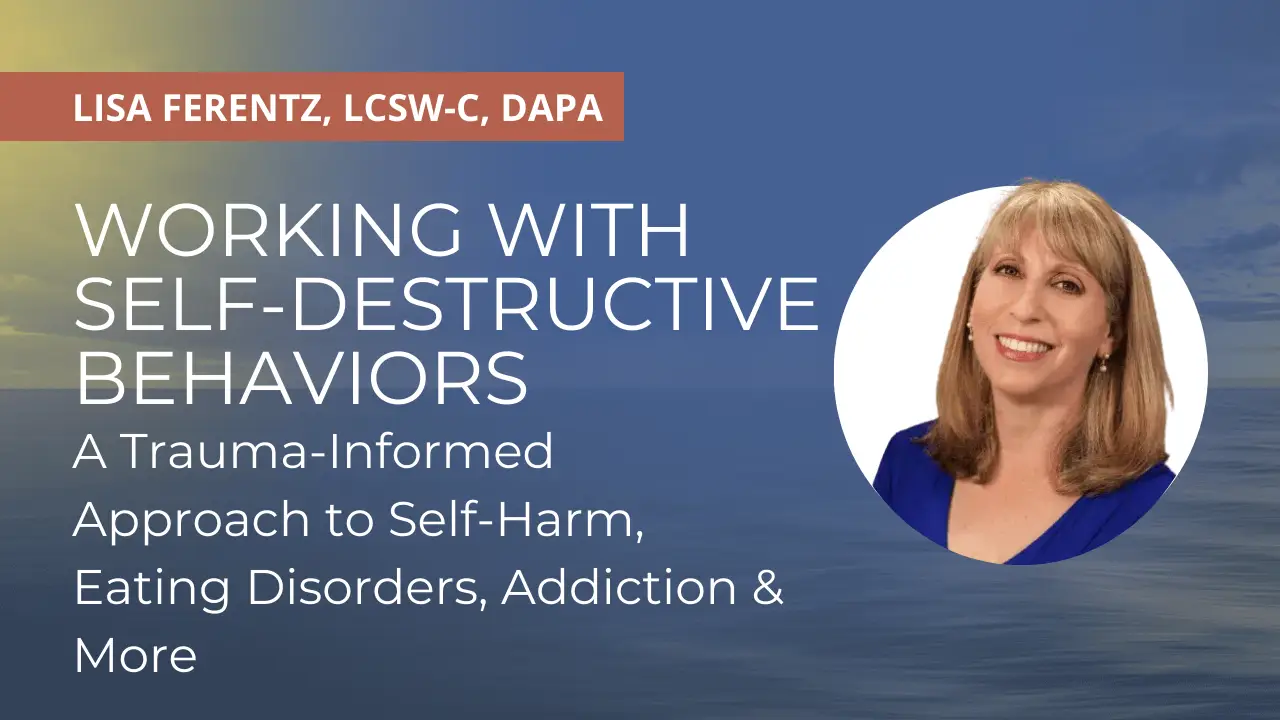
Working with Self-Destructive Behaviors: A Trauma-Informed Approach to Self-Harm, Eating Disorders, Addiction & More

$197.00

6 CEs. Learn more about the approach below and how it will teach you to help your clients get through their most vulnerable moments.

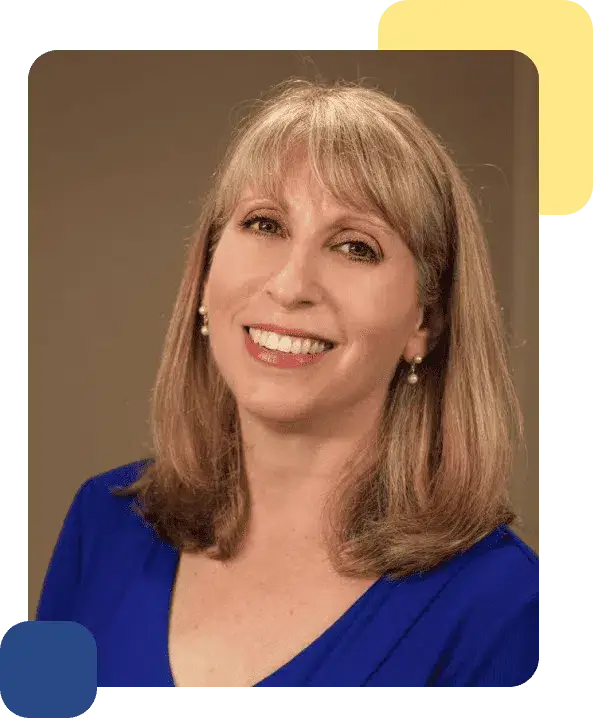
Lisa Ferentz, LCSW-C, DAPA

Dear Therapist

Being in this profession can feel like a double-edged sword…especially when dealing with challenging cases like clients who self-harm.

On one side, you have the opportunity to make a profound impact on your clients’ lives, offering support and guidance through difficult times…

On the other side, you may face your own fears and uncertainties, particularly when confronted with complex cases that may be outside of your comfort zone or area of expertise.

I want you to ask yourself these questions and answer honestly…

When a client discloses that they are self-harming, what is your immediate emotional response? Do you feel equipped to handle the situation?

When dealing with challenging cases of self-harm, what fears or anxieties surface for you as a therapist?

Have you ever referred your client to another therapist out of fear or doubt?

Look, feeling overwhelmed or uncertain when facing clients with self-harm behaviors is a natural reaction…

It’s a testament to your care and commitment to your clients’ well-being.

But I’d like to challenge you to reframe the way you look at self harm and the traditional approaches to it.

I’d like you to think of self harming behaviors as tools that are actually helping your client to mask something more painful: the effects of trauma, guilt, and shame.

I’ve developed a protocol called CARESS which was designed to give clients something else to do to cope.

It’s a strengths-based approach that doesn’t equate self-destructive behaviors with Borderline Personality Disorder or inherent pathology.

I’m inviting you to join me in exploring the CARESS approach inside of my new course – Working with Self-Destructive Behaviors.

Learn more about the approach below and how it will teach you to help your clients get through their most vulnerable moments (and yours too!).

5 In-Depth Training Modules

5 In-Depth Training Modules

5 Pre-Recorded Training Calls

5 Pre-Recorded Training Calls

Downloadable Course Materials

Downloadable Course Materials

Private Member Dashboard

Private Member Dashboard

Here’s What You’ll Receive

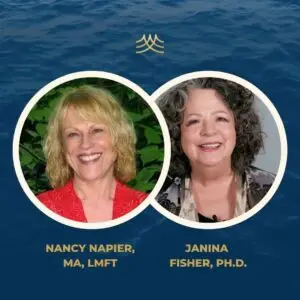
Interview with Janina Fisher — Beyond Borderline: De-Pathologizing Complex Trauma
Interview with Janina Fisher — Beyond Borderline: De-Pathologizing Complex Trauma

Bonus Video: Guidelines for Processing Clients’ Artwork
Bonus Video: Guidelines for Processing Clients’ Artwork

Bonus Video: Taking Care of Ourselves: Addressing Vicarious Traumatization & Burnout
Bonus Video: Taking Care of Ourselves: Addressing Vicarious Traumatization & Burnout

Bonus Video: What Does it Really Mean to be Trauma-Informed?
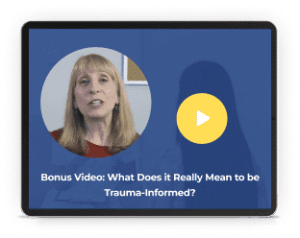
Bonus Video: What Does it Really Mean to be Trauma-Informed?
Plus, These Special Bonuses

What’s Included in Each Module?

Meet Our Presenter

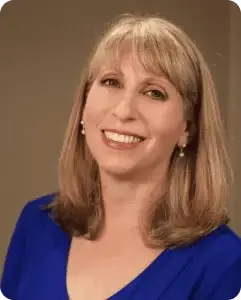
Lisa Ferentz

Lisa Ferentz, MSW, LCSW-C, DAPA, has been a recognized expert in the strengths-based, de-pathologized treatment of trauma for over 40 years. She presents workshops and keynote addresses nationally and internationally, and is a clinical consultant to practitioners and mental health agencies in the United States, Canada, the UK, and Ireland.

Lisa has been an Adjunct Faculty member at several Universities, and is the founder of The Ferentz Institute, now in its seventeenth year providing continuing education to mental health professionals and graduating over 3000 clinicians from Certificate Programs in Advanced Trauma Treatment. Lisa is the author of Treating Self-Destructive Behaviors in Traumatized Clients: A Clinician’s Guide, Letting Go of Self-Destructive Behaviors: A Workbook of Hope and Healing, and Finding Your Ruby Slippers: Transformative Life Lessons From the Therapist’s Couch. Lisa is also a radio show host, blogger, writer, and teacher on self-harm and self-care.  
CE Information

This program has been approved for 6 distance learning CEs by the following organizations: CAMFT, NBCC, NASW MA Chapter, NYSED MHC.

Complete CE info can be found by clicking here.

Reviews

There are no reviews yet.

Be the first to review “Working with Self-Destructive Behaviors: A Trauma-Informed Approach to Self-Harm, Eating Disorders, Addiction & More”

Your email address will not be published. Required fields are marked *

Free Access Now