What Do We Mean When We Say Boundaries?
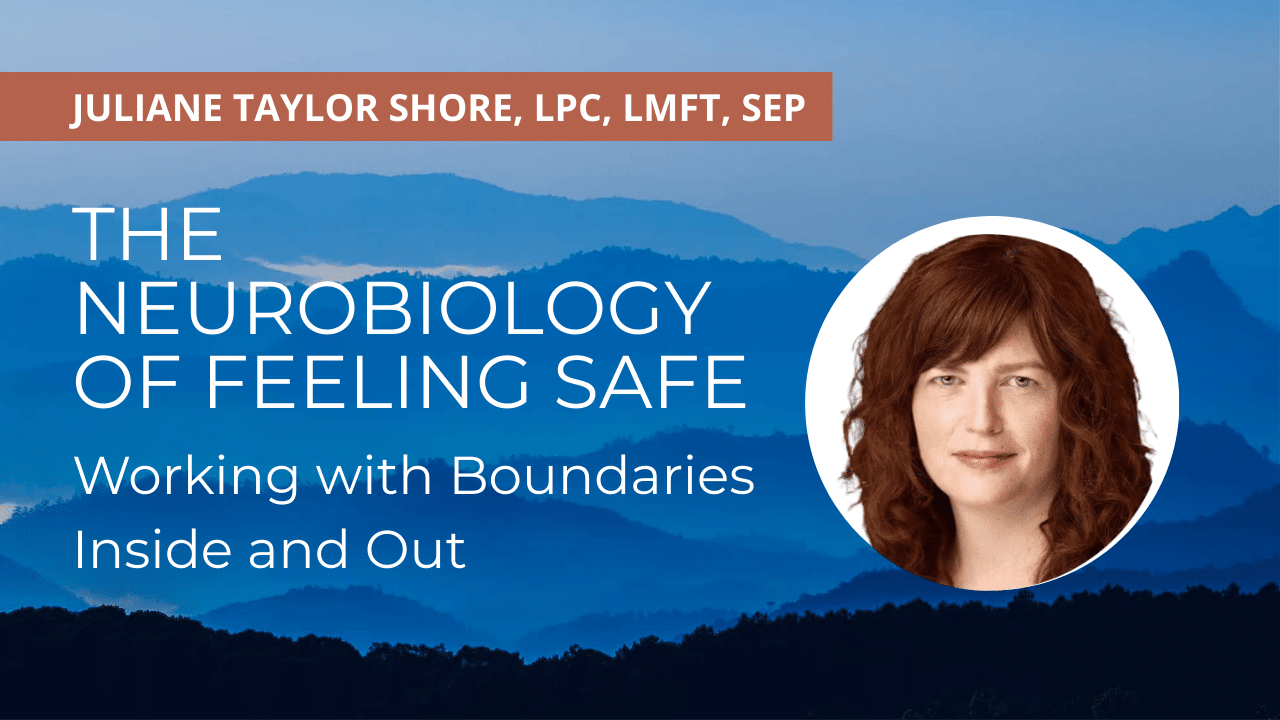
In this session, we will define four different kinds of boundaries, learn to assess and discern which kind of boundaries your client needs to focus on, and begin to explore pathways in the brain that support boundary work. We’ll also dissect clinical work with clients to take the ideas out of the classroom and into session.
In this module, we’ll:
- Explore how boundary work is helpful to clients
- Define four types of boundary work
- Define pathways in the brain that support boundaries
- Assess which type of boundary work a client needs
- Learn contracting techniques to help clients feel clear, respected, and empowered
Finding Interpersonal Peace Through Your Psychological Boundary
In this session, we will dive deeply into the work of increasing Psychological Boundary. We will define the brain regions involved and use this knowledge to inform clinical interventions. You will leave with the ability to differentiate between common adaptations clients deploy when they do not have Psychological Boundary and with practices your clients can execute right away to begin changing their brains now. We’ll see clinical work with clients to take the ideas out of the classroom and into session.
Learning objectives:
- Define Psychological Boundary
- Understand the parts of the brain involved in the creation of Psychological Boundary
- Define how Psychological Boundary improves relationships
- Identify common adaptations to boundary deficiency in this type of boundary
- Understand how neural networks change in the brain
- Learn practices that clients can use to increase their Psychological Boundary
Living in Integrity with Your Containing Boundary
In this session, we will dive deeply into the work of increasing Containing Boundary. We will define the brain regions involved and use this knowledge to inform clinical interventions. You will leave with the ability to identify a lack of Containing Boundary and learn how to hold clients in finding clarity about their true integrity and work with them to live with accountability and moderation. We’ll look at clinical work with clients to take the ideas out of the classroom and into session.
Learning objectives:
- Define Containing Boundary
- Understand the parts of the brain involved in the creation of Containing Boundary
- Define how Containing Boundary improves relationships with others and self
- Identify common adaptations to boundary deficiency in this type of boundary
- Understand how neural networks change in the brain
- Learn practices that clients can use to increase their Containing Boundary and increase accountability to themselves and others
Executing Boundaries Interpersonally
In this session, we will work with healthy Executed Boundaries. You will leave with the ability to guide clients through a six-step process of healthy boundary execution. We will explore issues that often stop clients from executing boundaries in healthy ways, such as fearing disappointment, longing to control outcome, and longing to have boundaries to be answered in a specific way. We’ll examine clinical work with clients to take the ideas out of the classroom and into session.
Learning objectives:
- Define Executed Boundary
- Learn six steps that you can teach clients to guide healthy boundary setting
- Define ways of thinking that get in the way of executing boundary well
- Identify common adaptations to boundary deficiency in this type of boundary
- Understand how the skills of Psychological and Containing Boundary are essential to support the Executed Boundary
- Learn practices that clients can use to create healthy Executed Boundaries in their relationships
Deepening Boundary Work: Safety and Grief
In this session, we will work with the repair of physical boundaries when they have been violated and with the grief that is an inherent part of all boundary work. You will leave with interventions to help clients shift the tone of their autonomic nervous system when there has been a boundary violation, as well as an understanding of how to help them process the grief and loneliness that almost always comes up doing this work. We’ll explore real clinical demos to take the ideas out of the classroom and into session.
Learning objectives:
- Assess for safety related issues with boundary work
- Learn interventions to reestablish the felt sense of safety and boundary
- Identify how grief is present in each type of boundary work
- Learn interventions to support clients in undoing aloneness while they are in grief processes













 Juliane Taylor Shore, LPC, LMFT, SEP (AKA Jules) is a therapist and trainer of therapists in Austin, Texas. She specializes in applying Interpersonal Neurobiology to the healing of trauma and the creation of relational health with clients she sees. She uses her knowledge of the brain and the implicit mind to go decisively to the root of the issue with gentleness and depth.




Reviews
There are no reviews yet.