The Gender Regime – Navigating “Gender-Land”
Gender includes gender assigned at birth, gender identity, and gender expression. Perhaps one of the strongest cultural categorizations, gender is both socially defined and, as research suggests, intrinsically experienced. This module focuses on how to understand, conceptualize, and navigate a shifting societal gender landscape. We will look at the socio-cultural roots of the category of gender, as anthropologically identified, and further define how it relates to sex assigned at birth, human development (cognitive and physical), and generational influences—most of which, we as clinicians feel ill-prepared to address.
In this module, we will discuss:
- How to differentiate gender, gender identity, and gender expression
- The limitations of the binary conceptualization of gender as a human identity category
- How gender and sex assigned at birth relate and differ
- A contemporary model of gender identification in youth
Alphabet Soup & The Gender Collision Course
Terminology: giving something a name is meant to help the human brain understand, synthesize, relate, and contextualize information. Specifically, acronyms are uniquely designed to help us simplify complex names and terms to better navigate our social sphere. What are we to do when an acronym of identity becomes unwieldy and a veritable “alphabet soup?!” This module will begin to identify common terms in gender identity, sexual orientation, and considerations of sex assigned at birth.
In this module, we will discuss:
- How to identify conceptually different aspects of human identity – gender/gender identity, sexual orientation, sex assigned at birth, relational orientation, and sexuality – which are commonly conflated in the acronym LGBTQI+
- Contemporary terminology for all of these aspects of identity
- A functional way to think of varied identities – gender, sexual orientation, etc. – such that we can continue to navigate when new terms proliferate faster than we can learn them
Who Will I Be When I Grow Up? – Understanding Developmental Implications in Gender Diversity
“Isn’t that child too young to know who they are?” … “When I was a teenager, I tried on different identities like I was trying on new hairstyles.” … “When I think about myself at 20, all I can think is how much better I know myself now.” Identity development is necessarily a process over time. However, often, in gender identity-related work with children and adolescents, the advantage of knowing something over time can be truncated by presenting gender-related distress, clinically known as gender dysphoria.
In this module, we will discuss:
- How to conceptualize gender identity development from early childhood through adolescence and into adulthood
- Clinical conundrums of navigating gender-affirming healthcare in the midst of cognitive and physical development
- An introduction to the mental health provider’s role in multi-disciplinary care
Playing By The “Rules” – Guidelines, Standards of Care, and Beyond
“Help! Isn’t there an instruction manual for this?!”
Evidence-based practices (EBPs) have come to be more than benchmarks of quality care. In many instances, EBPs are required in healthcare workplace settings or by managed care. This module focuses on current guidelines for practice and internationally established standards of care for gender-diverse people. Additionally, we will focus on where we lack the breadth of research and possible clinical conundrums in working with minors.
In this module, we will discuss:
- Prevailing guidelines for practice – American Psychological Association Guidelines for psychological practice with transgender and gender-nonconforming people, 2015
- International Standards of Care – World Professional Association for Transgender Health, Standards of Care, version 7
- Evolving research in the arena of implications for gender-affirming health care
- Current controversies pertaining to gender competent care for developing children and adolescents
Kids Come With Adults 😱 – Ensuring Culturally Competent Gender-Related Care in Family Systems
Social creatures by nature, and dependent on adults as minors, children and adolescents in contemporary societies very necessarily come to treatment with pivotal caregiving adults. Whether parents or caregivers designated by the state, gender-diverse children and adolescents will benefit from a provider who can successfully and skillfully navigate complex relational considerations and interactions without ostracizing caregiving adult figures. This module will examine common considerations of family systems of gender-diverse youth, as well as possible conflicts, barriers, or blockades in understanding.
In this module, we will discuss:
- The crucial provider role of balancing both advocacy and empathy for all parties of a family system
- How psycho-education of adults is a critical component of gender-related care for youth
- Navigation of differing and, at times, conflictual core values in families, systems, and the cultural context


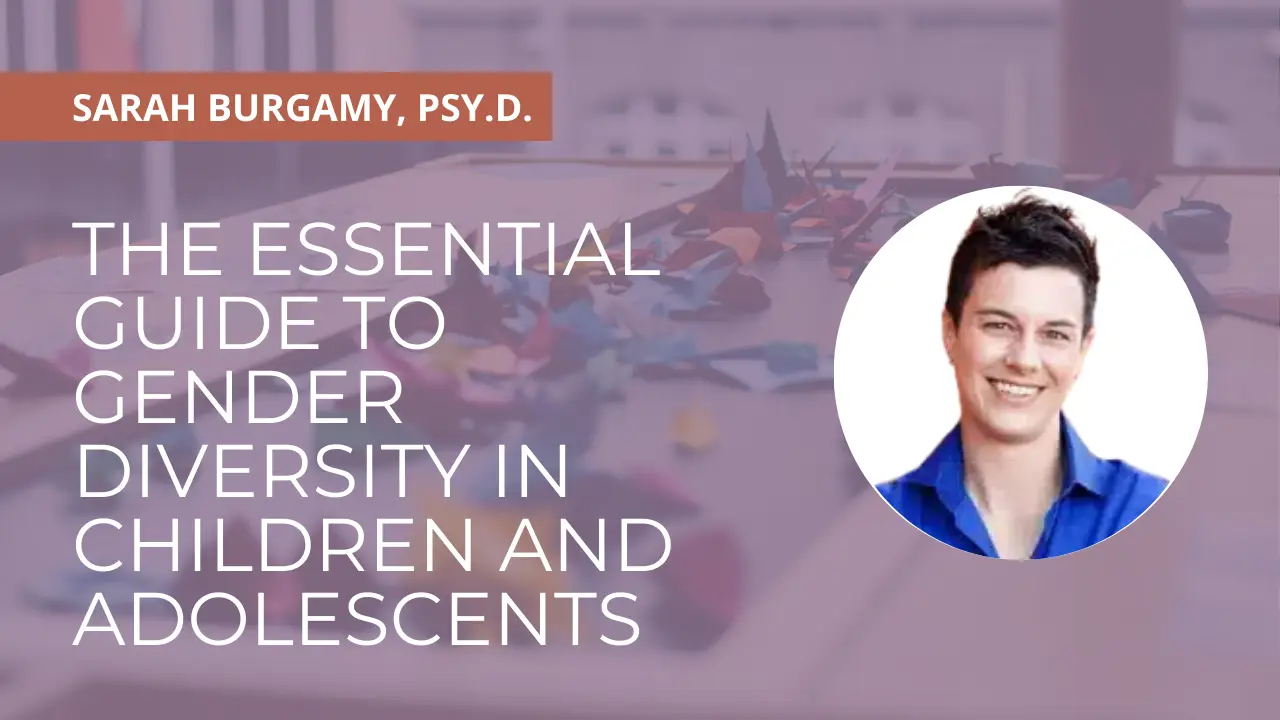





 Sarah Burgamy, Psy.D., is the founder of a private practice in Denver, Colorado, PhoenixRISE, with specialty offerings in identity development (considering intersections of target and non-target status identities), sexual minority competency, as well as transgender and gender diverse issues with adults, adolescents, and children. Dr. Burgamy has previously worked as a founding integrated psychologist in the TRUE Center for Gender Diversity at Children’s Hospital Colorado (2017-2020).


Reviews
There are no reviews yet.