Shame and Trauma: Understanding Shame as a Survival Response
For people experiencing trauma, the effects of shame are ‘protective’ in a time of threat. For trauma survivors, shame remains as a response to both negative and positive contexts. Mistakes, criticism, and poor performance trigger shame, but so does success, validation, and positive feedback. Learn how shame is used to navigate both success and failure so you understand the complexity of addressing shame.
In this session, you will learn about:
- Shame as an automatic survival response
- How shame helps regulate risk for trauma survivors
- Re-interpreting shame to evoke curiosity
- The danger of thinking success is going to cure shame
How Experiences of Shame Become Cognitive Schemas
Shame is a physical and emotional response without words. After a shame attack, we try to make meaning of what we feel. But, of course, the words and meaning reflect just how awful shame feels: degrading, humiliating, overwhelming, small, and powerless. When this cycle is repeated, the beliefs become a lens through which all subsequent experience is interpreted.
In this session, you will learn about:
- The belief systems that are created by shame
- How shame beliefs result in physical responses
- Disrupting shame-related patterns
- Challenges to breaking the schema
The Vicious Circles of Shame
Beliefs have the power to stimulate a shame response each time the client repeats, “I’m worthless,” “I’m stupid,” or “I’m a failure.” In turn, the physical/emotional response to these words reinforces the beliefs, creating a vicious circle of increasing shame. You can help clients differentiate between the feelings and the words, so they notice the impact of each. Then, learn new mindfulness-based somatic interventions that address both shame responses and beliefs so your clients don’t remain stuck in the cycle of shame.
In this session, you will learn about:
- The development of shame-based beliefs
- The destructiveness of shame-based responses
- How to interpret shame so it informs your treatment interventions
- Three interventions to break the cycle of shame
Working with Shame as a Reflection of Fragmented Parts
Beyond the destructive cycle of shame is its tendency to result in dissociation and fragmentation. Learn how shame reflects a relationship between two parts of the individual: a part that judges, criticizes, or humiliates, and a part that feels attacked, mortified, and ashamed. Explore how to interrupt the vicious circles of shame and protect your client from the critical part that keeps the client feeling small and invisible.
In this session, you will learn about:
- Addressing shame as a parts issue
- How to challenge client’s unconditional acceptance of shame-based beliefs
- Helping clients develop compassion for the ‘ashamed part’
- Employing empathy as a therapist’s powerful intervention for shame
A Relational Approach to Shame
The therapist’s own relationship with shame can be a powerful intervention. While simply empathizing with shame, or exploring the traumatic events that caused it, does not transform shame, using ourselves to regulate and shift experiences of shame opens up new therapeutic opportunities. This workshop provides the added benefit of helping therapists work with their own shame.
In this session, you will learn about:
How to use our right-brain-to-right-brain communication as a tool
Capitalizing on an understanding of mirror neurons
Treating shame from the “bottom up”
- Non-verbal as well as verbal interventions
- Challenging the negativity bias


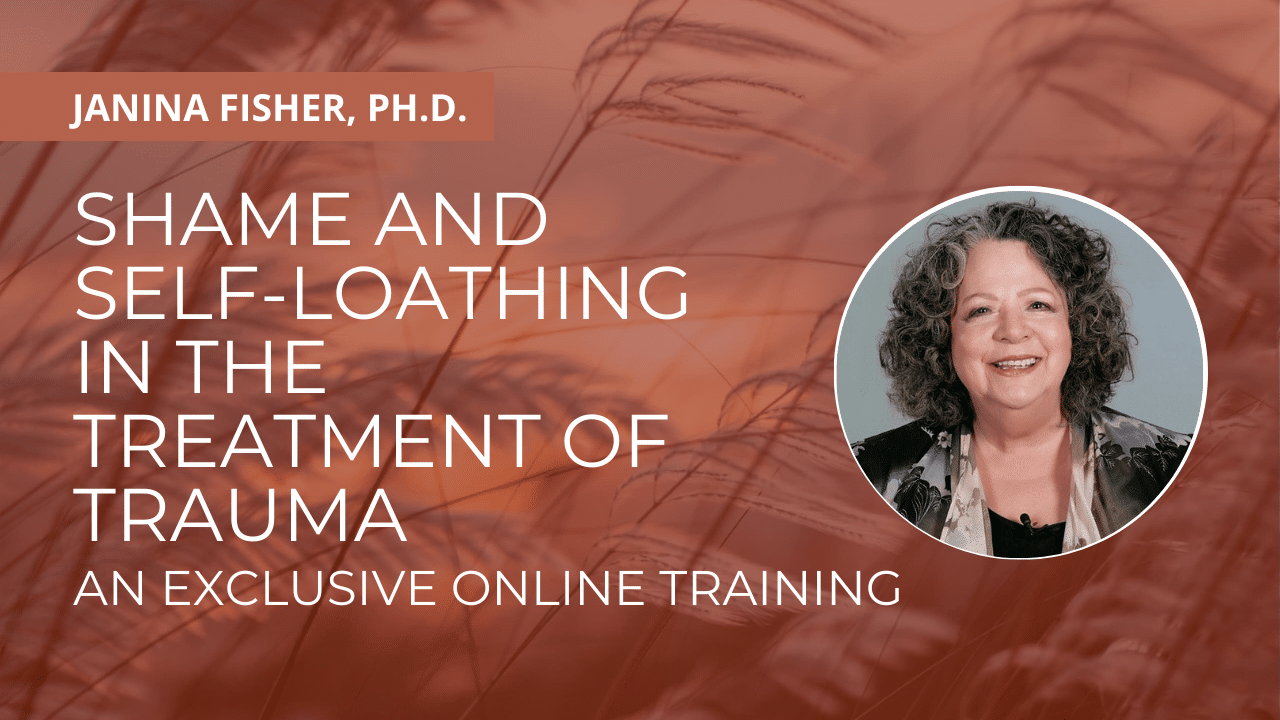






 Janina Fisher, Ph.D., is a licensed clinical psychologist and a former instructor at Harvard Medical School. An international expert on the treatment of trauma, she is an Advisory Board member of the Trauma Research Foundation. Dr. Fisher is the author of Healing the Fragmented Selves of Trauma Survivors: Overcoming Self-Alienation (2017), Transforming the Living Legacy of Trauma: A Workbook for Survivors and Therapists (2021), and The Living Legacy Instructional Flip Chart (2022). She is best known for her work on integrating mindfulness-based and somatic interventions into trauma treatment.


Reviews
There are no reviews yet.