From Burnout to Self-Renewal: A Resilience Informed Approach to Care
Live Call March 26th, 2025
The first module focuses on YOU. Arielle will discuss the toll trauma treatment can have on therapists, and provide you with tools for arriving and centering that will nurture your resilience and carry you throughout your day. Learn skills to resource yourself so you can be fully present for your clients. This is the first step to leaving your work at the end of the day feeling more revitalized than when you began!
You’ll learn:
- Arriving practices to increase your presence for these learning sessions and for your client sessions.
- How to recognize your own stress and burnout so you can stop them in their tracks.
- A resilience-informed approach to care so you can bolster and protect yourself as a therapist.
- Techniques to reflect on resilience so you can track your progress.
- Skills for resourcing yourself to keep the resilience going.
Attending to Adversity from a Foundation of Relational Safety
Live Call April 30th, 2025
You likely already know about the impact of trauma on one’s life. In this session, learn how to discover how trauma has impacted your client’s mental, emotional, and physical health so you can more effectively and quickly bring them relief.
You’ll learn:
- Different forms of trauma — such as single incident to complex, or transgenerational and collective trauma — so you understand the unique story you are working with.
- Additional factors of trauma etiology to capture the full picture of your clients’ experience.
- The core concepts of trauma-informed care so you can help your clients stabilize and promote a positive outlook toward their future.
- Case conceptualization and history-taking questions to increase your skills when working with clients.
- A self-awareness practice for therapists to continue developing your resilience.
Applied Polyvagal Theory for Mind-Body Health: Connection & Co-Regulation
Live Call May 28th, 2025
This module dives into applying the polyvagal theory in your practice. Arielle is known for providing a very understandable and grounded approach to applying the scientific model of applied polyvagal theory in psychotherapy. You’ll incorporate methods for working with the vagus nerve that will improve your client’s well-being and your capacity as a therapist as well. You’ll have an entire new model for regulation.
You’ll learn:
- The components of polyvagal theory so you have a deeper understanding of what’s going on in your client’s nervous system,
- Neuroception: how to use self-awareness as a foundation for change.
- Tools you can use in sessions for natural vagus nerve stimulation to create a mutual field of regulation in the therapy room.
- How to tone the vagal nerve so your clients can achieve more vagal efficiency.
- Neuromodulation and natural vagus nerve stimulation so you can help your clients regulate their vagal system.
Resources for Trauma Recovery: The Science of Positive Neuroplasticity
Live Call June 25th, 2025
In this module, you’ll learn how to create new ways for your client’s brain to respond to life’s challenges and free them from a brain hardwired for stress. You’ll learn the neuroscience of how the brain can be “re-wired” from a trauma-response basis/condition/history to one that can respond more appropriately/effectively to the current situation.
You’ll learn:
- The science of positive neuroplasticity so you can seamlessly integrate positive resource states with traumatic memory reprocessing.
- How to hardwire happiness to make critical changes in your client’s lives.
- Visualization and imaginal practices to provide you with an experiential learning of somatic practices and enhance embodiment for your clients.
- How to anchor self-compassion so you and your clients carry this key resilience strategy with you at all times.
Traumatic Memory Reprocessing: Mind-Body Integrative Approach to Healing
Live Call July 30th, 2025
Here, you’ll learn how to reprocess traumatic memories in a holistic way. You’ll develop the steps and skills to use this mind- and body-oriented approach to heal trauma, and leave behind the old days of frustration and lack of progress.
You’ll learn:
- A model of predictive processing and somatic reappraisal you can resource states while attending to the distress of traumatic memories.
- How to incorporate somatic psychology, parts work therapies, and elements of EMDR so your clients get healed in the mind and body.
- Skills to explore reprocessing, exposure, and desensitization so you can more effectively work with traumatic memories.
- Through observing, as Arielle shares a demonstration session so you can make all of this theory more tangible.
Integration and Navigation of Treatment Barriers
Live Call August 28th, 2025
You know that healing is not a straight line; there will be challenges along the way. In our final module, you’ll learn how to integrate all your new knowledge and skills into your existing practice. Plus, proactively recognize and navigate obstacles to recovery so you’ll no longer be caught unaware or stumped by these barriers.
You’ll learn:
- The process of integration and re-evaluation so you can incorporate what you’ve learned in this course most effectively.
- How to navigate treatment barriers so your clients can transcend them and attain optimal wellness.
- Skills for cultivating coherence in your practice so you experience ease and joy in your work for years to come.


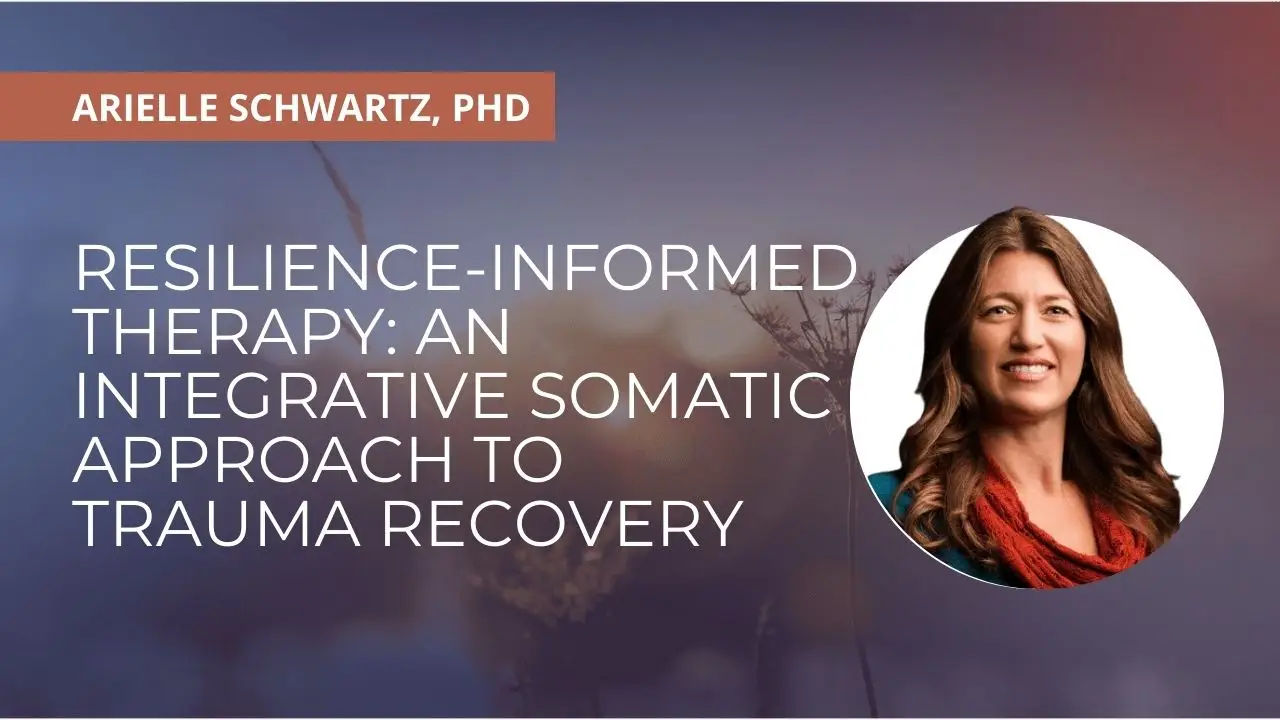

 Arielle Schwartz, PhD, is a clinical psychologist and author of six books: The Complex PTSD Workbook, The Practical Guide to Complex PTSD, EMDR Therapy and Somatic Psychology, The Post Traumatic Growth Guidebook, The Complex PTSD Treatment Manual, and Therapeutic Yoga for Trauma Recovery.



Reviews
There are no reviews yet.