
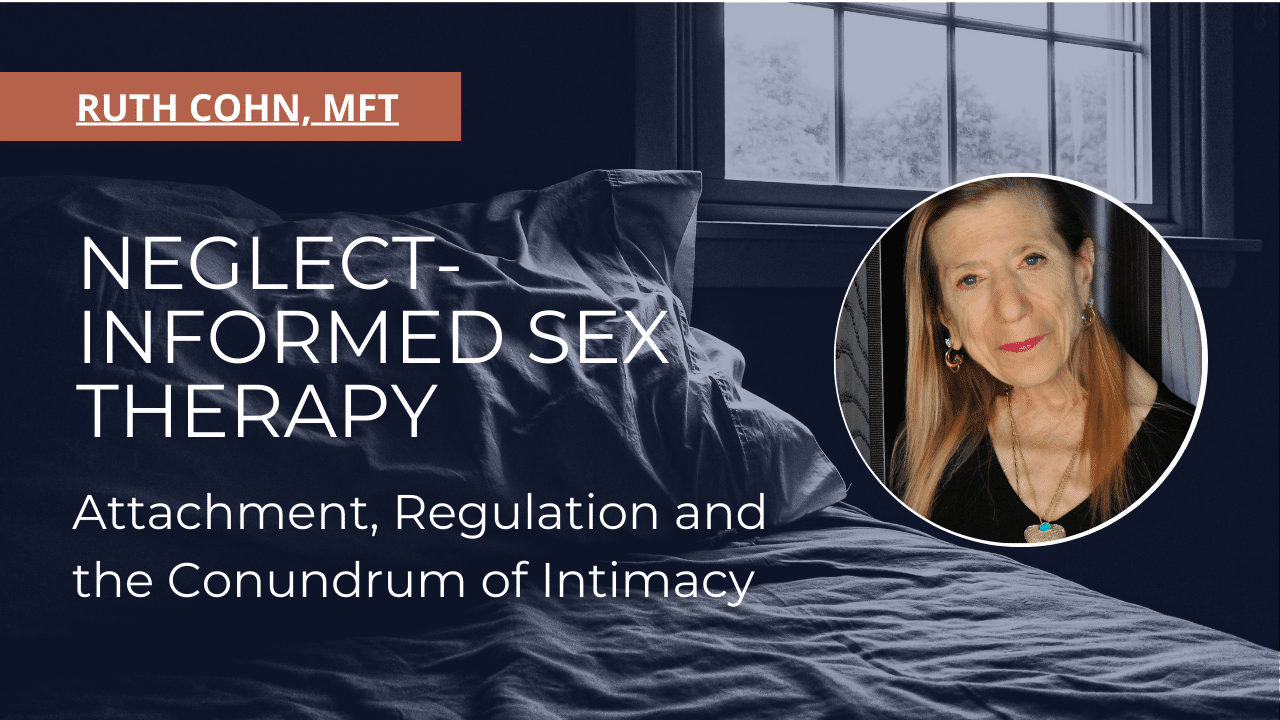


Ruth Cohn, MFT
Dear Fellow Therapist,
If you’ve ever sat across from a client who’s disconnected, dissatisfied, or sexually shut down — but says “nothing happened” to explain it — then this workshop is for you.
Over decades of clinical work with trauma survivors, I’ve found that neglect is the invisible root of more sexual confusion, dysfunction, and despair than we’ve ever been trained to recognize. It’s not about what happened — it’s about what didn’t.
Neglect leaves no bruises. It leaves no headlines. But it creates a silent, wordless template for every future relationship. And when it comes to sexuality — something that depends on presence, safety, and co-regulation — that early absence can wreak havoc.
What makes this even more complicated is that most therapists — unless they’re specifically trained in sex therapy — don’t know how to talk about sex. And if you grew up in a family or culture where it was never discussed, how could you?
That’s what inspired this training: To bring sex and trauma together in a way that’s clinically grounded, shame-free, and actually useful in the therapy room.
You’ll learn how neglect shows up sexually, how to talk about it with your clients, and how to begin untangling the shame, silence, and stuckness that so often surrounds these issues — even in long-term, high-functioning relationships.
Attachment, Regulation, and the Conundrum of Intimacy
The clinical foundation of neglect-informed sex therapy, including the role of profound interpersonal ambivalence — so that you can finally understand where confusing sexual behaviors come from and how they develop.
Why “presence” is so hard — and why it matters — so that you can help clients (and yourself) overcome the internal blocks to intimacy and connection.
How neglect shapes adult intimacy and sexual “roles” — so that your clients stop blaming themselves and start recognizing their adaptive patterns.
Talking about sex: the missing experience — so that you gain fluency and confidence initiating and navigating these essential conversations.
The Six Principles of Sexual Health and redefining “normal” — so that you can normalize client experiences and dismantle damaging myths about sexuality
Getting Practical
- Therapist awareness: values, biases, shame, and the “ick” factor — so that your own discomfort doesn’t limit the depth of your clinical work.
- Sexuality psychoeducation and “what we most need to teach” — so that your clients walk away informed, empowered, and less ashamed.
- How to explain sex therapy as regulation work — so that clients understand their challenges in a new, non-pathologizing light.
- Conversations that normalize, reframe, and heal — so that clients feel seen, safe, and ready to shift stuck patterns.
- Working with gender, parenting, and midlife sexuality — so that your practice reflects the complexity of real-world sexual issues.
- Recommended opening practices and “beginning conversations” — so that you have concrete ways to start working with sex — even when it feels overwhelming.
- Therapist self-care and staying current — so that you can sustain this work without burnout or emotional shutdown.
This Training Helps You See What’s Actually Happening…
Interview with Sunny Strasburg and Dick Schwartz. This interview will explore important IFS connections and how befriending the protector parts can make sessions more successful.

Interview with Sunny Strasburg and David Starfire. Sunny stresses the importance of having the right music playing during psychedelic sessions - this interview will explain why, and teach you how to curate ideal playlists.

Interview with Sunny Strasburg and Courtney Watson. Courtney Watson is a queer Black mother, lover, and community member based in Ohlone Lisjan territory (Oakland, California). She is a Licensed Marriage and Family Therapist and Certified Sex Therapist, she is also a medicine woman studying under African and American Indigenous Knowledge Systems. Courtney’s work centers on decolonized healing, embodied equity, and expanding access to transformative healing practices for all.

Overview of IFS (video). This video will give you an idea of how to use IFS in psychedelic sessions for best results. Sunny’s Theredelic Approach relies on IFS and EMDR to help guide sessions and resolve trauma.
Psycholytic vs psychedelic dosing for Ketamine Assisted Psychotherapy (video). This video will go over the differences between these kinds of doses, what to expect from each, and what ideal dosing for psychedelic assisted therapy looks like.
Finding a Prescriber (video). This video will explain the importance of finding a prescriber to work with in your sessions, and give you an idea of how to find the right person to work with.

Meditation for therapists to reflect on their readiness to host psychedelic experiences. This meditation will help prepare you for the work, so that when you go into your sessions you can do so feeling confident and ready.

Playlist for Psychedelic Therapy Sessions. Having the right music/playlist for a psychedelic assisted session is one of the most important things to prepare, as it can help to set the tone for your clients.You can use this playlist as you’re getting started.
Audio Version of Chapter 2 of Sunny's Book. Listen to Sunny read chapter 2 of her book: The Theradelic Approach. This chapter is called New Narrative Mythology: Connecting Us More Deeply to Our Nature, One Another, and the Natural World so that you can explore some of the relationships you can connect to through psychedelic therapy sessions.

Plus you’ll get these incredible bonuses…
You Have a Choice
You can keep avoiding these conversations — letting your clients sit in silent shame…
Or you can become the therapist who finally helps them make sense of what happened — and what didn’t.
Meet Your Presenter
Ruth Cohn, MFT
Ruth Cohn, MFT, is a psychotherapist living and practicing in the San Francisco Bay Area. She has specialized in working with survivors of trauma and neglect, their intimate partners, and their families since 1988. She is a Certified Sex Therapist, certified in Neurofeedback, EMDR, Sensorimotor Psychotherapy, and Imago Relationship Therapy.
Ruth is also the author of numerous articles on sexuality, trauma, and neglect and three books: Working With the Developmental Trauma of Childhood Neglect: Using Psychotherapy and Attachment Theory Techniques in Clinical Practice, Coming Home to Passion: Restoring Loving Sexuality in Couples With Histories of Childhood Trauma and Neglect, and Out of My Mind: Late Night Contemplations About Trauma and Neglect.






Reviews
There are no reviews yet.