


Dear Colleague,
If you’ve ever worked with a client struggling with addiction or compulsive behavior, you’ve likely felt the weight of how complex, and often misunderstood, this work can be.
You may have wondered why so many people who sincerely want help end up dropping out of treatment? Or why traditional models seem to alienate rather than engage? Or why a person’s substance use continues even when it’s causing real harm in their life?
I’ve spent the last 30 years asking those same questions.
Early in my career, I was committed to helping people recover—but I kept encountering clients who didn’t fit the mold of what I’d been taught. They weren’t “in denial.” They weren’t “resistant.” They were human beings in pain, carrying trauma, shame, unmet needs, and profound meaning in their relationship to substances or behaviors. And they needed something different.
That realization led me to develop Integrative Harm Reduction Psychotherapy (IHRP)—a radically compassionate, client-centered approach that bridges harm reduction with psychodynamic, cognitive-behavioral, and mindfulness-based methods.
This course distills the most essential concepts and clinical tools from the IHRP model, so that you can meet your clients wherever they are, in whatever stage of change, and help them move toward healing, growth, and self-determination.
Together, we’ll explore how to work with the meaning behind their substance use… how to support clients who aren’t ready or willing to stop… how to build real therapeutic alliance rooted in safety and collaboration… and how to reframe addiction through a psychobiosocial lens that’s grounded in science and social justice.

Whether you’re new to harm reduction or looking to deepen your clinical skill set, this course will give you a roadmap for doing this work with more clarity, compassion, and impact.
I hope you’ll join me.
Warmly,
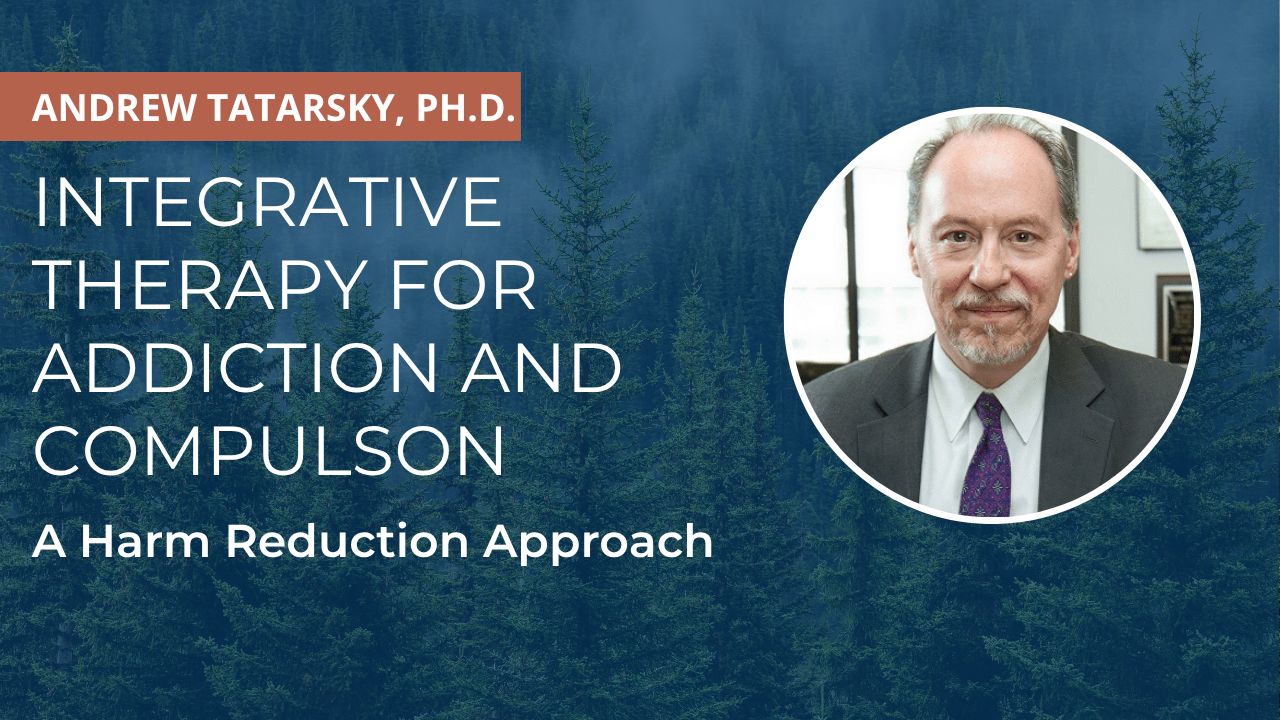
Andrew Tatarsky, PhD
& Academy of Therapy Wisdom
P.S. This program has been approved for 12 distance learning CEs by the following organizations: CAMFT, NBCC, NASW MA Chapter, NYSED MHC, and NYSED SW.
Full CE info can be found by clicking here.
Overview of the Training

In this foundational module, you’ll explore why the dominant narratives around addiction, like the disease model and abstinence-only treatment, fall short for so many clients. You’ll be introduced to a harm reduction framework that centers compassion, meaning, and collaboration, setting the stage for a more effective therapeutic approach.
Overview of the Training
Harm Reduction From Public Health to Psychotherapy

This module provides a deep dive into the core principles of harm reduction and how they translate into therapy. You’ll learn how harm reduction evolved from public health into a full-spectrum clinical framework that welcomes clients without judgment, and supports them in making meaningful, client-defined changes.
Harm Reduction From Public Health to Psychotherapy
Why Harm Reduction is Essential to Effective Helping: Rationale and Theory

In this module, you’ll explore the psychobiosocial roots of substance use and addictive behavior, including trauma, disconnection, shame, and social marginalization. You’ll also learn how to engage clients who are ambivalent about change and not ready to stop.
Why Harm Reduction is Essential to Effective Helping: Rationale and Theory
Creating a Safe Relational Container

This module focuses on the relational heart of harm reduction therapy: creating a safe, nonjudgmental container that allows clients to explore their behaviors without fear of shame or rejection. You’ll learn how to manage alliance ruptures, offer corrective experiences, and use the relationship itself as a healing agent.
Creating a Safe Relational Container
Self-Regulation and Assessment

Addictive urges are often treated as something to be suppressed or controlled, but in this module, you’ll learn how to use them as powerful entry points for transformation. You’ll explore how to bring mindful attention to urges, decode their meaning, and support clients in building new behavioral pathways.
Self-Regulation and Assessment
Action Planning for Positive Change

In this module, you’ll move from insight to action. You’ll learn how to help clients develop personalized, harm-reduction-based goals that reflect their lived reality, not someone else’s idea of success. You’ll also explore techniques for supporting change without coercion, working skillfully with ambivalence, and creating “optimal use plans” that reduce harm while building momentum toward healing.
Action Planning for Positive Change
The Inner Work: Countertransference and Therapist Self-Awareness

The final module turns inward to focus on you, the therapist. Working with addiction, compulsion, and high-risk behaviors often stirs strong emotional reactions, sometimes consciously, sometimes not. In this module, you’ll explore how to recognize, manage, and learn from your countertransference, so you can remain present, compassionate, and ethically grounded in your work.
The Inner Work: Countertransference and Therapist Self-Awareness
Here’s what you can expect
from each module in this course…
This in-depth training with Dr. Andrew Tatarsky introduces you to
Integrative Harm Reduction Psychotherapy (IHRP), a cutting-edge, trauma-informed framework that helps you meet clients wherever they are in their process. Whether they’re using substances, self-injuring, or wrestling with ambivalence about change, IHRP gives you the tools to engage them safely, ethically, and effectively.
You’ll learn how to:
- Understand the psychological, biological, and social drivers of addiction so that you can move beyond one-size-fits-all models and tailor your approach to the unique needs and motivations of each client.
- Support clients who aren’t ready—or don’t want—to stop using so that you can build meaningful therapeutic alliances and facilitate change without requiring abstinence as a precondition.
- Navigate trauma, shame, and dissociation in addictive behavior so that you can identify what’s fueling the compulsion and address the underlying wounds with compassion and care.
- Use the “urge” as a clinical entry point for transformation so that instead of suppressing or controlling addictive impulses, you can help clients explore them as opportunities for self-understanding and growth.
- Incorporate mindfulness, motivational interviewing, and somatic tools so that you can help clients regulate their nervous systems, reduce harm, and build sustainable coping strategies.
- Work through your own countertransference with clarity and confidence so that you can stay grounded and reflective even in the face of high-risk behaviors or powerful emotional responses.
Through theory, case vignettes, practical techniques, and embodied exercises, this course gives you a comprehensive, evidence-based foundation for working with addiction and compulsion, whether you’re a seasoned clinician or just beginning to explore harm reduction therapy.
Meet Your Guide
Andrew Tatarsky, Ph.D.

Andrew has worked with people who struggle with drugs and their families for over 40 years. He developed Integrative Harm Reduction Psychotherapy (IHRP), a model that integrates relational psychoanalysis, CBT, and mindfulness within a harm reduction framework. IHRP supports clients in discovering their truth and choosing goals and strategies that best fit their unique journeys toward positive change. His work is described in Harm Reduction Psychotherapy: A New Treatment for Drug and Alcohol Problems—translated into Polish, Spanish, and Russian—and in numerous published papers. He holds a doctorate in clinical psychology from the City University of New York and completed postdoctoral training at NYU’s Program in Psychoanalysis and Psychotherapy. Andrew maintains a private practice in NYC, offering therapy, training, and consultation.
FAQS
Who is this course for?
This course is designed for mental health professionals—including psychotherapists, social workers, psychologists, substance use counselors, and clinical trainees—who want to deepen their ability to support clients with substance use issues, self-harm, and other compulsive behaviors. Whether you’re new to harm reduction or looking to expand your skills, this course offers both foundational knowledge and practical tools.
Q: Do I need to specialize in addiction treatment to benefit from this course?
No. In fact, one of the core messages of this course is that if you work with trauma, you’re already working with addiction. Many clients use substances or behaviors to manage overwhelming emotions, even if they don’t identify as having an “addiction.” This training will help you recognize and respond to these patterns more effectively.
Q: Does this course support abstinence-based treatment?
Yes—and more. Integrative Harm Reduction Psychotherapy (IHRP) supports any positive change, including safer use, reduced use, moderation, or abstinence. The goal is to meet clients where they are, honor their autonomy, and support sustainable, client-defined goals—rather than enforcing a one-size-fits-all model.
This course is designed for mental health professionals—including psychotherapists, social workers, psychologists, substance use counselors, and clinical trainees—who want to deepen their ability to support clients with substance use issues, self-harm, and other compulsive behaviors. Whether you’re new to harm reduction or looking to expand your skills, this course offers both foundational knowledge and practical tools.
No. In fact, one of the core messages of this course is that if you work with trauma, you’re already working with addiction. Many clients use substances or behaviors to manage overwhelming emotions, even if they don’t identify as having an “addiction.” This training will help you recognize and respond to these patterns more effectively.
Yes—and more. Integrative Harm Reduction Psychotherapy (IHRP) supports any positive change, including safer use, reduced use, moderation, or abstinence. The goal is to meet clients where they are, honor their autonomy, and support sustainable, client-defined goals—rather than enforcing a one-size-fits-all model.

Reviews
There are no reviews yet.