

Vanessa Scaringi and Kathryn Garland
Dear Colleagues,
It’s our distinct pleasure to invite you to this course, Hungry for Security: Healing Disordered Eating Through an Attachment Lens, which we’ve carefully designed to explore the intricate and often deeply personal topics of food, body image, and attachment.
Throughout our professional experiences, we’ve found that working with clients around these issues requires not only a deep understanding of clinical theory but also a commitment to compassion, self-awareness, and cultural sensitivity.
As therapists, we bring our own experiences, biases, and emotional landscapes into the therapy room, and this course encourages reflection on how those aspects of ourselves impact the work we do with clients. Throughout the modules, you’ll find opportunities to engage with your own relationship to food and bodies while learning how to better support clients navigating disordered eating, weight stigma, and attachment-based challenges.
We know that these topics are intertwined with broader systemic and sociocultural factors. That’s why, in this course, we explore the pervasive impacts of weight stigma, diet culture, and societal expectations around health and bodies. We delve into frameworks like Health at Every Size (HAES) and Intuitive Eating to provide you with practical tools to challenge harmful narratives, empower clients, and help them reconnect with their innate ability to care for themselves.
We also recognize the complexity of disordered eating, which is why we introduce concepts like artificial attachments and harm reduction. These approaches help us understand how clients use food behaviors to cope with emotional pain or disconnection and offer ways to gently guide them toward healthier, more sustainable patterns of care. In this work, we are always striving to balance clinical expertise with deep empathy and an understanding of the larger systems at play.
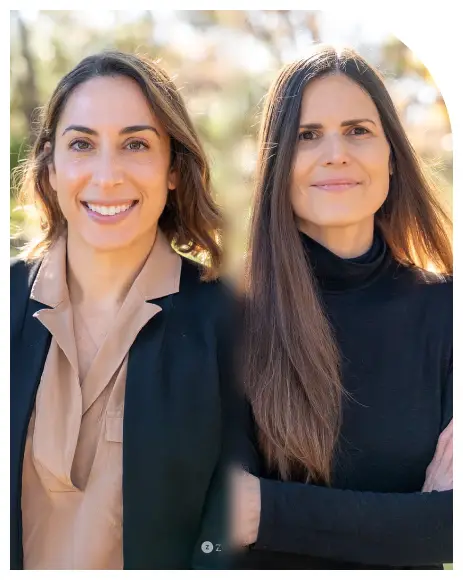
Finally, this course is meant to serve not only your clients but also you. As clinicians, we’re all impacted by the world around us-the messages we receive about food, health, and worthiness-and we encourage you to use this space to reflect on how your own relationship with these topics informs your therapeutic practice. Our hope is that this course helps you grow both personally and professionally, enhancing your ability to support your clients in healing their relationships with food, their bodies, and themselves.
Both of us have worked with disordered eating for a long time, but it was through private practice that we found that really getting to know your clients and forming relationships makes a huge difference. We’ve also found that group therapy and the relationships that evolve from that unlock insights that would otherwise be missed. The Covid pandemic exacerbated a lot of the disconnection and difficulties that people have with food – there’s been a lack of security and stability – and this relational style of practice serves as a natural antidote.
Thank you for your interest in this course. We’re honored to be a part of your journey and look forward to the community growth and healing that will come from this experience.
Strange Times
In this module we’re first going to slow things down by providing the context for why talk about this now. We feel that rooting the material in our current moment is really helpful in deepening our understanding of what is going on with clients, so you can see the whole picture.
Some key takeaways are:
- Impact of Strange Times on Attachment and Eating Behaviors: The module draws a parallel between historical attachment theory research, like the “Strange Situation” experiments, and the current social moment, emphasizing how unstable times (pandemic, technological advances, etc.) affect attachment and emotional regulation, particularly in relation to food and body image.
- Coping as Safety Seeking: Clients’ eating behaviors, even when harmful, are safety-seeking mechanisms. A metaphor Vanessa shares from Anita Johnston’s “Eating in the Light of the Moon” illustrates how behaviors that once provided safety can become barriers to growth, underscoring the importance of empathy in therapy.
- Systemic Trauma and Emotional Regulation: The module connects systemic traumas-like discrimination, technological advances, and diet culture-to challenges in emotional regulation. These factors contribute to a general sense of instability, impacting how people relate to food and their bodies.
- Attachment Styles and Emotional Regulation: Attachment theory is used to explain how clients develop emotional regulation strategies. This module goes over how certain attachment styles have been linked to disordered eating behaviors as clients struggle to regulate emotions in an unstable world.
- Rising Prevalence of Eating Disorders: The module highlights the recent prevalence in eating disorders and challenges stereotypes about who is affected, stressing the importance of understanding disordered eating through the lens of attachment, safety-seeking, and systemic influences like loneliness and diet culture.
Getting to the Root: Attachment and Disordered Eating
In this module, we’re going to walk through how our early attachment relationships impact our relationships with food, our bodies, and other people. We’ll also do a broad overview of eating disorders.
Some key takeaways are:
- Connection Between Food Relationships and Attachment: The module emphasizes how our relationships with food are deeply connected to our relationships with people, particularly shaped by early attachment experiences.
- Overview of Eating Disorders and Subclinical Eating Disorders: The module provides a detailed breakdown of different eating disorders (e.g., anorexia, bulimia, binge eating disorder) and introduces the concept of subclinical eating disorders. Attachment Styles and Eating Behaviors: Attachment theory is presented as a framework for understanding disordered eating.
- Impact of Diet Culture and Weight Stigma: The module highlights how societal pressures, such as diet culture and weight stigma, contribute to the development and maintenance of eating disorders.
- Sociocultural Attachment and Safety Seeking: The module introduces the concept of sociocultural attachment, suggesting that the current cultural climate, with its instability and insecurity, impacts individuals’ attachment behaviors. This lens helps to understand how systemic factors, like the precariousness of the modern world, can activate old attachment wounds and lead to safety-seeking behaviors like disordered eating.
Artificial vs Authentic Attachment
In this module we break down the actual behaviors and map them on to attachment theory more specifically.
Some key takeaways are:
- Proximity Seeking and Attachment Strategies: The module discusses proximity seeking as a fundamental need to stay close to caregivers for safety. It introduces the concept of “authentic attachments” (genuine relationships providing emotional and physical safety) versus “artificial attachments” (short-term coping mechanisms like food, social media, or substances used to soothe or distract when authentic connections are unavailable).
- Maladaptive Coping and Secondary Regulation: When authentic attachments are not available, individuals often rely on secondary regulation strategies (also called artificial attachments) to cope with insecurity or distress.
- Attachment Theory and Internal Working Models: The module explains how John Bowlby and Mary Ainsworth’s attachment theory highlights the role of caregivers in shaping our internal working models of self and others.
- Artificial Attachments in Eating Behaviors: The module draws a strong connection between disordered eating and attachment styles, explaining how behaviors like bingeing, restricting, or excessive exercising often serve as artificial attachments.
- Impact of Sociocultural and Systemic Factors: It highlights how sociocultural attachment (the relationship between individuals and broader societal structures) influences attachment styles.
Disordered Eating Interventions
This module explores the complex relationship between attachment theory and disordered eating, focusing on how early caregiving experiences shape emotional regulation and coping mechanisms.
Some key takeaways are:
- Artificial vs. Authentic Attachments: The module distinguishes between authentic attachments (genuine relationships that meet emotional needs) and artificial attachments (temporary coping mechanisms like food, technology, or substances) that people turn to when they lack safe, responsive, reliable relationships.
- Impact of Early Caregiving on Emotional Regulation: The module explains how early caregiving shapes attachment styles, influencing how people manage emotions.
- Food as an Artificial Attachment: Food behaviors, such as restriction, bingeing, or purging are framed as artificial attachments, offering temporary comfort or distraction but failing to address the deeper emotional needs for connection and safety.
- Societal and Systemic Influences on Attachment: The module highlights how systemic instability (political turmoil, consumerism, weight stigma) and sociocultural attachment influence people’s sense of security.
- Attachment Styles and Coping Strategies: The module discusses how attachment styles influence coping strategies, specifically focusing on hyperactivation (anxious attachment) and deactivation (avoidant attachment).
The Therapist, the World, and the Client: Examining Our Assumptions
This module examines the personal and professional complexities therapists face when addressing issues related to food, bodies, and weight stigma with clients. It emphasizes the importance of self-awareness, understanding countertransference, and recognizing the broader social, cultural, and political influences that shape our relationships with food.
Some key takeaways are:
- The Role of Countertransference in Food and Body Issues: Therapists must be aware of their own reactions and biases around food, bodies, and weight when working with clients. Concepts like “third ear” listening (from Theodor Reik) help clinicians recognize their internal responses and prevent projecting their own judgments or feelings onto clients.
- Influence of Sociocultural and Systemic Factors: The module highlights the pervasive impact of weight stigma, diet culture, and consumerism on both therapists and clients.
- Health at Every Size (HAES) and Intuitive Eating: HAES is presented as a key framework for working with eating disorders, promoting weight inclusivity, intuitive eating, and respectful care.
- Harm Reduction in Eating Disorder Recovery: The module advocates for a harm reduction approach, acknowledging that perfection in recovery is not realistic.
- Body Positivity vs. Body Neutrality: The distinction between body positivity (loving one’s body) and body neutrality (accepting one’s body without needing to love it) is emphasized.
In this workshop you will learn:
Meet Your Presenters
Vanessa Scaringi PhD, CEDS-C

is a licensed psychologist in Austin, TX. Vanessa co-owns a group therapy practice called, CALM Counseling where she works with adolescents, young adults, and adult populations. She primarily sees individuals inworking on recovery from eating disorders or body image issues. Vanessa also runs interpersonal process groups where clients can heal in community with others. Vanessa has dedicated much of her career to working in the eating disorder field. She is a relational psychologist who strives to understand the context of one’s eating disorder. By facilitating insight, Vanessa works with her clients to identify patterns and behaviors that interfere with living the life they want. Vanessa also strives to instill a sense of hope, as she has found this is an important part of the change process.
Kathryn Garland LCSW-S, CEDS-C

is a licensed clinical social worker and supervisor in Texas, New York, and Massachusetts. She is an IAEDP approved Certified Eating Disorder Specialist and Consultant. Kathryn spent her early career and completed postgraduate training in psychoanalytic psychotherapy in New York City. She incorporates relational and attachment-based methods into her work with clients. Her experience includes working with LGBTQ+ teens in the NYC foster care system, community mental health clinics, as well as primary therapist and IOP Program Coordinator at an eating disorder treatment center. Kathryn co-owns a group therapy practice called CALM Counseling in Austin, Texas.



Carolyn McCarter Wood –
This course provides insights into the intersection of attachment and eating disorders in a non-pathologizing way. Eating disorder basics are included for the non-ED specialist.
Monica –
Excellent!