


Tori Olds, Ph.D.
Have you ever wondered, “Are some therapists just naturally better than others?”
Many of us have attended numerous trainings, studied with leaders in our field, and practiced for years…but our clinical results still don’t always match our aspirations. And if we look at ourselves honestly, we are not even sure we are better clinicians than we were a year ago, or even a decade ago.
When I looked at the current research on expertise, I found the key factor for becoming one of the greats is having the ability to develop the expertise.
It’s the methodology of learning — not the years of experience — that is the key ingredient.
As it stands today, properly cultivating our expertise so we can truly be master therapists is not on most psychotherapy curricula. So once we graduate, the question becomes, “How do we take all the knowledge, research, and clinical approaches and methodologies and fully integrate it into our practice?”
In my revolutionary course, Becoming a Master Therapist, I focus on the skill development that’s needed for you to feel more competent in the work you do. This is a process known as Deliberate Practice.
Deliberate or Purposeful Practice, as defined by Anders Ericsson, is: focused, has well-defined and specific goals, involves feedback, and requires getting out of one’s comfort zone.
In this groundbreaking online course, I provide a safe environment for experiential, vulnerability-led learning. Becoming a Master Therapist is more than just theory and information: the course offers you the knowledge and the skills you need to engage more effectively and get better results with your clients. And you’ll have access to pre-recorded sessions that will help hone your skills.
You’ll learn the tools and skills you need to go deeper with clients and have more meaningful sessions. You’ll receive guidance on how to get better results, improve your skills, and strengthen your relationships with your clients. Deliberate practice works regardless of the modality or type of therapy you practice.
Whether you are a new or experienced therapist, I invite you to join me on this transformational journey.
Playlist
0:16
0:16
Becoming a Master Therapist Includes
FIVE Pre-recorded Teaching Modules with Tori Olds and Charlotte Howard

Pre-recorded Training Calls
In these pre-recorded sessions, Tori will demonstrate skills so that you can deepen your knowledge of the course materials.
Private User-Friendly Membership Site
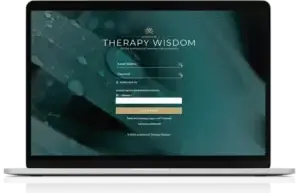
All your course materials in one easy-to-navigate platform, supported by our dedicated customer service team.
Downloadable Videos and Transcripts to Add to Your Library
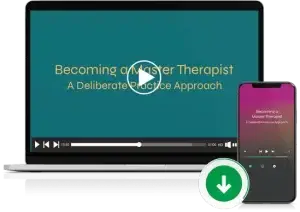
All the course assets are downloadable for you to keep and reference.
Access to the Becoming a Master Therapist Deliberate Practice Community
The Becoming a Master Therapist Deliberate Practice Community provides a private space for you to connect with your peers, practice, ask questions, network, and develop lifelong relationships with like-minded colleagues.
Interview with Dr. Karen Tao and Dr. Jesse Owen

Dr. Jesse Owen, developer of the “Multicultural Orientation” Framework (MCO), and Dr. Karen Tao have clearly demonstrated in their research the power of deliberate practice when used to enhance a therapist’s ability to develop skills
Interview with Stan Tatkin, Psy.D.

In this interview, Dr. Stan Tatkin will give his thoughts on the journey toward excellence.
Experiential Therapy Demonstration
In this demo session, Tori will illustrate how to use experiential questions to turn a client away from intellectualizing and toward an embodied awareness of their self, their needs, and their unfolding experience.
Video: Circles of Surviving Versus Thriving
There are two forces that we clinicians learn to appreciate over time: one, the forces that keep the human brain stuck in a mode of merely surviving, and two, the forces of resilience that pull us toward thriving.
Mind Maps of Each Module
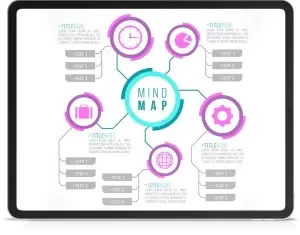
For each module of the course, an interactive Mind Map will be included, allowing participants to approach complex terrain with visual maps that help you understand, organize, and remember this rich material.

Presence: Developing Warmth and Strength
In the first module, we will explore the central role of therapeutic presence in helping the client shift from avoidance toward engagement, whether that be engagement with their deeper self, their emotions, their relationships, or the resources they need to stand in reality. We will unpack the various aspects of therapeutic presence, particularly the importance of embodying the two poles of warmth and strength. When the therapist exhibits both warmth and strength, the security this creates supports the client in coming into wholeness and taking risks.
In this module, we will discuss:
- The definition of Therapeutic Presence
- Awareness of self and awareness of the other
- How to embody the qualities of Therapeutic Presence
Integration: Maintaining Social Engagement
In the second module, we will explore the importance of developing integration in our nervous system as a therapist. We will discuss why our capacity to maintain intrapersonal and interpersonal integration is key for the therapy to unfold. We will also explore various avenues toward developing integration, such as the use of self-compassion, mindfulness, and engagement in healing work to overcome our own experiential avoidance. Some practical advice will be given in terms of finding the most healing therapeutic experiences for ourselves as clients–something that can be hard to come by.
In this module, we will discuss:
- How to help our clients move from avoidance to engagement
- The biggest block to helping clients move into engagement
- Ways to overcome our own avoidance and increase our capacity to stay present
Focus: Guiding the Client Inward
In module 3, we will explore the importance of therapeutic focus. There is strong research that focused treatments get better results than non-focused (meandering) treatments. While short-term, structured treatments have an edge in this regard, it is possible to integrate the benefits of therapeutic focus into deeper therapy. This is done through the theoretically informed use of mindfulness, where the client is actively guided to contact their inner world. We will also explore how to overcome the false dichotomy between focus and depth.
In this module, we will discuss:
- Research supporting focused therapies
- How to optimize the benefits of both therapeutic focus and experiential work
- Tapping into our client’s issues and deepest resources
Collaboration: Working Past Resistance
In module 4, we will explore the importance of developing a capacity to work effectively with client resistance and foster a relationship characterized by collaboration. We will examine the difference between the attachment system and the collaborative behavioral system, which draws upon the client’s adult functioning and allows the therapy to be a collaboration between equals. We will also explore how working with anxiety is an important part of minimizing resistance, as is using interpersonal skills such as clear communication, non-defensiveness, and curiosity.
In this module, we will discuss:
- How to approach resistance with curiosity and skill
- Tools for minimizing resistance
- Tapping into the collaborative aspect of therapy
Dedication: Deliberate Practice and Focusing on the Basics
In the final module, we will explore how the therapist’s commitment to growth and to flexibility helps them meet their clients’ needs to powerfully predict outcomes. ‘Supershrink’ research studies what separates some clinicians from others in terms of results. The fact that clinicians who try harder and do better begs the question, “How does one try harder?” This is where deliberate practice comes in as a way of approaching growth that is experiential, embodied, and focused on actual skill development.
In this module, we will discuss:
- Characteristics of Supershrinks, or those who get the best results
- Research that shows how Supershrinks get better results
- How deliberate practice applies to the field of psychology and supports professional growth
Here’s What we'll Learn together in
Becoming a Master Therapist: A Deliberate Practice Approach
CE Information:
This course is approved for 10 CEs through Deep Eddy Psychotherapy.
For complete CE info, please click here.


Reviews
There are no reviews yet.