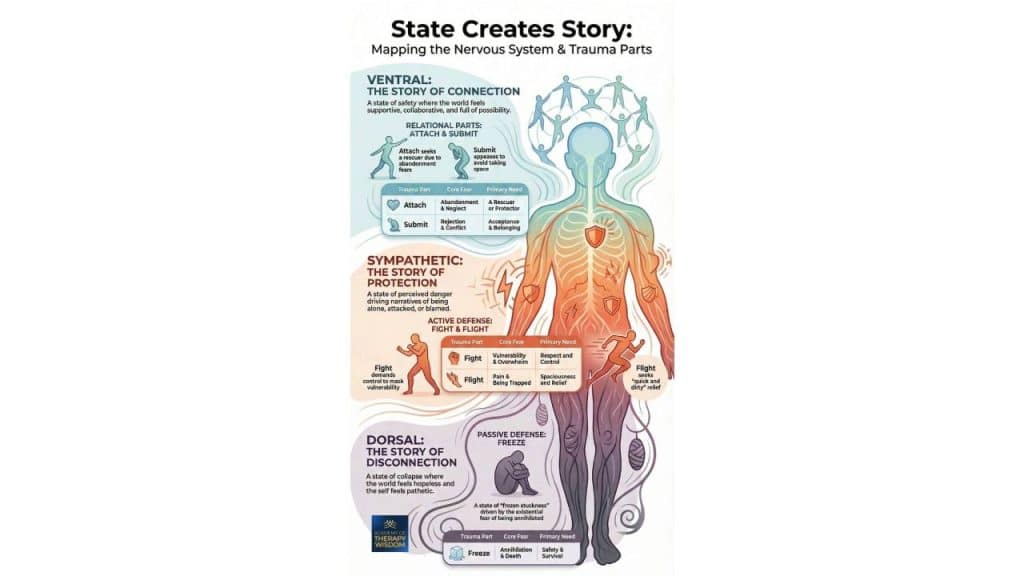


I’ve spent years working alongside dedicated therapists, watching them pour their hearts into helping clients heal from trauma. One conversation last week particularly struck me—a brilliant therapist described her frustration with a client who intellectually understood their patterns but couldn’t seem to make lasting changes. “It’s like we’re stuck in an endless loop,” she confided. “I know all the right things to say, but something deeper isn’t shifting.” This is precisely where neurobiological therapy techniques can transform your practice. By addressing the brain’s implicit processes rather than just conscious cognition, approaches like Juliane Taylor Shore’s framework create pathways to healing that traditional talk therapy alone can’t reach. If you’re encountering similar challenges with your clients, exploring self-compassion experiential therapy training could be the missing piece in your therapeutic toolkit.
If you’ve ever learned from Juliane Taylor Shore (known also as Jules), you know she’s a talented and inspiring therapist.
One of Jules’ superpowers is condensing years of Interpersonal Neurobiology research into digestible content so you can understand how and why your modalities work.
For years, Jules has taught how to apply cutting-edge research in interpersonal biology in your therapy practice, and students have given her rave reviews. But there’s always been more to explore! Indeed, the elegant, effective techniques that Jules teaches are built upon a much deeper model of what integrative means in the context of brain science.
It’s a radically new way of using the therapeutic tools you already know to exponentially greater effect with your clients. Jules calls it the STAIR method.
It is with incredible excitement that the Academy of Therapy Wisdom invites you to join Jules for Self-Trust and Integrated Resilience: A Framework for Synthesizing Therapy.

Join Juliane Taylor Shore for a FREE 90-minute webinar
Experiential Therapy Techniques: A Neurobiological Approach to Self-Compassion Therapy
During the webinar, you will learn:
A practice to increase self-compassion towards yourself as you do your work so you can both embody and benefit from self-acceptance.
The neurobiological difference between empathy and compassion so you keep use them judiciously in practice.
How to set up experiential practices so clients can discover and experience self-compassion.
The Neuroscience Revolution in Therapy Practice
The field of psychotherapy has undergone a profound transformation in recent decades. Where once talk therapy dominated the landscape, we now understand that healing often requires approaches that directly address the neurobiological foundations of psychological distress. This shift represents nothing less than a paradigm change in how we conceptualize and treat mental health conditions.
Recent advances in neuroscience have revealed that trauma and psychological distress manifest in the nervous system, not just in conscious thoughts and beliefs. According to the research of Dr. Stephen Porges and his Polyvagal Theory, trauma responses become encoded in our autonomic nervous system, creating patterns that resist purely cognitive interventions.
This understanding has significant implications for therapists:
- Traditional talk therapy may not reach the implicit, non-verbal processes where trauma is stored
- Clients often struggle to “think their way out” of trauma responses
- Neurobiologically-informed approaches can access and transform these deeper patterns
As therapists, we must expand our understanding beyond cognitive frameworks to include the body’s wisdom and the brain’s implicit processes. This is precisely where Jules Shore’s STAIR method offers a revolutionary framework.
Understanding the STAIR Method: A Comprehensive Framework
The STAIR method represents a synthesis of cutting-edge neurobiological research and practical therapeutic techniques. Unlike approaches that focus on a single modality, STAIR provides a comprehensive framework that helps therapists understand when and how to deploy different interventions based on the client’s neurobiological state.
The acronym STAIR stands for:
- Self-awareness and somatic attunement
- Trust in the therapeutic relationship
- Accessibility of implicit processes
- Integration of fragmented experiences
- Resilience through neuroplasticity
What makes this approach particularly powerful is its ability to help therapists navigate the complex landscape of trauma treatment with greater precision and effectiveness. Rather than applying techniques in a one-size-fits-all manner, the STAIR method allows for a nuanced understanding of which interventions will be most effective based on the client’s current neurobiological state.
As Jules explains, “When we understand the neuroscience behind our interventions, we can work more efficiently and effectively, creating profound change with less activation and distress for our clients.”
Why Traditional Approaches Often Fall Short
We’ve all seen the frustration therapists experience when working with clients who seem intellectually engaged in therapy but struggle to experience real transformation. This disconnect often occurs because many traditional therapeutic approaches primarily engage the prefrontal cortex—the thinking, reasoning part of the brain—while trauma is stored in subcortical regions that govern emotional and physiological responses.
Research by Dr. Bessel van der Kolk, author of “The Body Keeps the Score,” has demonstrated that trauma fundamentally changes how the brain processes information. These changes include:
- Hyperactivation of the amygdala, leading to heightened threat perception
- Reduced activity in the prefrontal cortex during triggering events
- Disruption in the brain’s ability to integrate sensory, emotional, and cognitive information
When therapists rely solely on talk therapy, they may inadvertently reinforce the disconnect between a client’s intellectual understanding and their embodied experience. As one client poignantly described it to a therapist I was supporting, “I know in my head that I’m safe now, but my body still lives in danger.”
The STAIR method addresses this gap by providing therapists with tools to work directly with the neurobiological underpinnings of psychological distress, creating change at the level where trauma is actually stored.
Integrating Neurobiological Approaches into Your Practice
Implementing neurobiologically-informed techniques doesn’t necessarily require abandoning your current therapeutic modalities. Instead, it means enhancing them with a deeper understanding of how the brain and nervous system function in response to trauma and attachment injuries.
Here are some key principles from Jules’ STAIR method that you can begin incorporating into your practice:
Working with the Window of Tolerance
The concept of the “window of tolerance,” developed by Dr. Dan Siegel, provides a useful framework for understanding a client’s capacity for processing challenging material. When clients are within their window of tolerance, they can engage with difficult emotions while maintaining regulatory capacity. Outside this window, they may experience hyper-arousal (anxiety, panic, rage) or hypo-arousal (numbness, disconnection, freeze).
- Recognizing Nervous System States
Learn to identify subtle signs of dysregulation in your clients’ facial expressions, breathing patterns, and body language before they become overwhelmed. - Titrating Emotional Activation
Practice “pendulation” between activating and resourced states, gradually expanding the client’s capacity to process difficult material. - Somatic Resourcing
Teach clients to recognize and access bodily sensations associated with safety and regulation.
Accessing Implicit Memory Systems
Traumatic experiences are often stored in implicit memory systems that operate outside conscious awareness. These memories manifest as bodily sensations, emotional reactions, and behavioral patterns rather than coherent narratives.
- Tracking Somatic Responses
Help clients notice and describe physical sensations that arise during therapy sessions. - Working with Metaphor and Imagery
Use symbolic representation to access and transform implicit material that may not be accessible through direct questioning. - Right-Brain to Right-Brain Communication
Engage in attunement practices that speak directly to the client’s emotional brain rather than their analytical mind.
The Transformative Impact of Neurobiological Approaches
The integration of neurobiological principles into therapy practice can lead to profound transformations for both clients and therapists. When therapy addresses the root neurobiological patterns underlying psychological distress, clients often experience:
- Faster resolution of trauma symptoms
- More sustainable changes that persist outside the therapy room
- Greater embodied sense of safety and regulation
- Increased capacity for authentic connection with others
- Enhanced resilience in the face of future challenges
For therapists, this approach offers:
- Reduced risk of compassion fatigue and burnout
- More efficient and effective interventions
- A coherent framework for integrating diverse therapeutic modalities
- Deeper satisfaction in witnessing profound client transformation
As one therapist who completed Jules’ training shared with me, “Understanding the neurobiological underpinnings of my interventions has completely transformed my practice. I now have a clear roadmap for when to use different techniques, and my clients are experiencing breakthroughs that simply weren’t happening before.”
Taking the Next Step in Your Professional Development
Jules is uniquely qualified to guide trauma therapists when to use therapeutic tools to create the quickest, most profound changes. And she’ll show you how to use your knowledge of the brain and the implicit mind to get to the root of trauma with gentleness and depth.
She’s compiled all of her years of study, theory, practice, and training into one certification program. Finally, you can understand the neuroscientific basis of all your modalities, look at everything you know with new eyes, and create a therapeutic approach that fits you and your client regardless of the situation.
Join the next STAIR Certification cohort now inside Self-Trust and Integrated Resilience: A Framework for Synthesizing Therapy — Level 1 >>
If you’re ready to transform your practice with neurobiological therapy techniques that address the root causes of psychological distress, I encourage you to explore self-compassion experiential therapy training. Jules Shore’s STAIR method offers a comprehensive framework that will enhance your therapeutic effectiveness and bring new depth to your work with clients. By understanding the brain science behind your interventions, you’ll gain confidence in navigating complex trauma presentations and witness more profound transformation in your therapy room.
Warmly,
Heather