
Memory Reconsolidation:
Translating Neuroscience Into Art
With Juliane Taylor Shore, LPC, LMFT, SEP


Hello,
Memory Reconsolidation is a phenomenon, not a technique.
When I learned that, my world opened up.
I used to be frustrated at the inconsistency and unpredictability of my work. I wondered if I was any good as a therapist.
Or worse, I became frustrated with my clients because they didn't improve.
But then I learned that memory reconsolidation - a fast way to unlock old learnings - didn't happen because of some technique I was using...
Memory reconsolidation happened because on occasion, I managed to summon the key combination of factors that unlocks the human implicit memory system.
It turns out that our brains come pre-built with a way to create a neural 'short-circuit,' that lets your clients permanently rewire the implicit memories that keep them stuck.
You just need three ingredients, and some practice.
Now that I know how Memory Reconsolidation works, transformations are faster. Going deep with a client happens more often.
And complex cases...are much less daunting.
Inside this course, you will learn everything you need to give your clients the best chance for successful memory reconsolidations over and over.
Memory Reconsolidation: Translating Neuroscience Into Art
Module 1: Memory Reconsolidation Basics
Module 2: Holding Healing Brain States
Module 3: Finding the Emotional Knowing
Module 4: The Mismatch, the Support, and the Double Check
Module 5: Memory Reconsolidation for Specific Issues
Plus I have collected a treasure trove of clinical demonstrations of me doing this work with my clients and I share them all with you so you can see what it looks like. You will have everything you need to start mastering this incredibly powerful tool.
Like me, you'll be the one in your group of colleagues whom people ask, "Wait, you get those results regularly?"
Join us today for Memory Reconsolidation: Translating Neuroscience Into Art.
Warmly,
Jules Taylor-Shore, LPC, LMFT, SEP
and the Academy of Therapy Wisdom
P.S. Memory reconsolidation is also helpful for empowering clients in seemingly-impossible situations. This includes workplace bullying, teens with difficult home lives, or clients who face the daily burden of systemic oppression. Memory Reconsolidation is the phenomenon by which the subcortical mind changes, and change at that level can facilitate incredible transformation.
"All of us have old learnings held in the subconscious brain that color the way we experience and interact with the world. But these perceptions are not always true. Your clients can undo these old learnings and take in deeper truths about themselves and the world so their lives can be filled with self-trust and resilience. Memory Reconsolidation is the science of how that shift happens."
-Juliane Taylor Shore
Help your clients unlearn internal messages that are both unhelpful and not true.

Crack the code of the Three Principles of Memory Reconsolidation
Learn the skills that complement the Principles of Memory Reconsolidation
Recognize the "light bulb" moments that show you Memory Reconsolidation is occurring
Become more confident in your ability to serve your clients
Here's what you'll receive in
Memory Reconsolidation:
Translating Neuroscience Into Art

1. Five in-depth Memory Reconsolidation teaching modules taught by Jules Taylor-Shore
Each module explains the theory of memory reconsolidation in language that's accessible to you. Jules will teach you the steps to take to facilitate memory reconsolidation, and more…
2. Five Pre-recorded Memory Reconsolidation training calls with Jules
Jules will show you by example - with lots of client session tapes - the skills to use when doing memory reconsolidation work: what to look for, when to intervene, and how to respond in any client session (no matter your modality or your client's problem). She'll discuss each tool she uses so you can try them out and feel confident and assured you can help your clients when it's you in the chair.

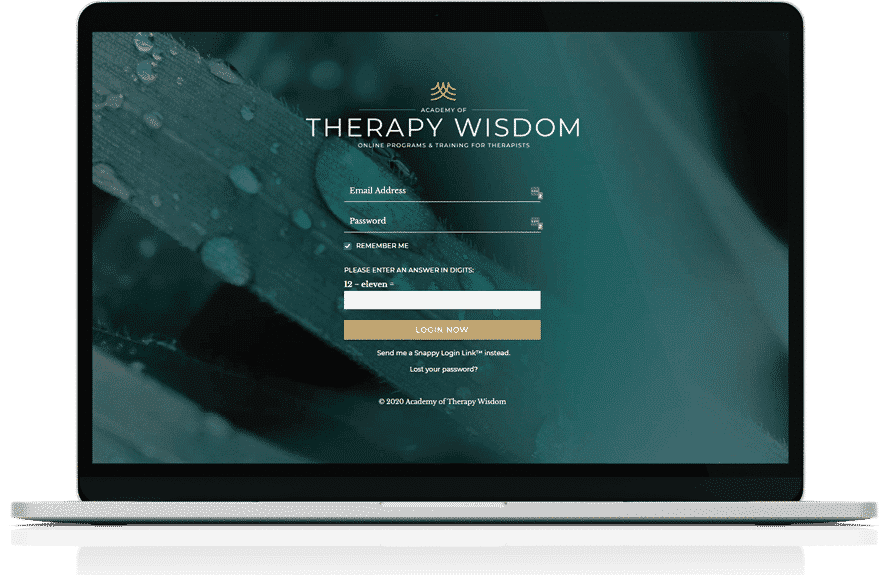
3. Access to the Academy of Therapy Wisdom private membership site
All your course materials in one easy-to-navigate platform, supported by our dedicated customer service team.
4. Downloadable course materials
Recordings, transcripts, and handouts so you can re-watch and dive in deeper at your own pace.

Plus, these special bonuses:
1. Brainspotting and Memory Reconsolidation with John Edwards
Jules and John discuss Brainspotting and Jules helps break down some of the neurobiological underpinnings of why it works so well.
John was born in Guyana, South America, and currently maintains a full time private psychotherapy practice in Oakland, CA with specialities in treating Addictions, Anxiety, Depression, Eating Disorders, Trauma and Couples/Relationships.
He is an international Brainspotting Trainer and consultant, and was trained directly by David Grand, PhD, Founder and Developer of Brainspotting.
John has over 30 years post-masters experience working with individuals, couples and families who would like to transform their lives. He is the first Black/African American male psychotherapist in the world to become a Certified Gottman Method Couples Therapist.
John has a Bachelor of Social Work from Atlantic Union College, a Master of Social Work (MSW) from Walla Walla University, and a Two Year Post Masters Certificate in Psychodynamic Psychotherapy from City University of New York - Hunter College School of Social Work.


2. Embodied Work: Procedural Memory and Reconsolidation with Peter Levine
Peter and Jules discuss Somatic Experiencing and how memory reconsolidation is one of the underlying experiences that Somatic Experiencing is supporting in assisting clients with their healing journey through trauma.
Peter A. Levine, PhD, holds doctorates in both medical biophysics and psychology. He is the developer of Somatic Experiencing®, a body-awareness approach to healing trauma, and founder of the Somatic Experiencing® Trauma Institute, and President and Founder of Ergos Institute of Somatic Education.
Levine is the author of Waking the Tiger: Healing Trauma and In An Unspoken Voice: How the Body Releases Trauma and Restores Goodness, and co-author of Trauma Through a Child's Eyes and Trauma-Proofing Your Kids.
3. Internal Family Systems and Memory Reconsolidation with Toni Herbine Blank
Toni and Jules discuss the gifts that IFS has shared in helping clients hold healing brain states with more stability and how memory reconsolidation experiences are supported by the IFS model.
Toni Herbine-Blank MS, RN, C-SP (she/her)is a Senior trainer for The IFS Institute. Her expertise is the use of IFS with couples and is the sole developer of IFIO Basic and Advanced Trainings. Toni has co-authored two books on IFS couple therapy: Intimacy from the Inside Out and the new IFS Couple Therapy Manual.


4. PRIDE and Memory Reconsolidation with Akilah Riley-Richardson
Akilah and Jules discuss Akilah's new model, PRIDE, and highlight how it supports both healing brain states and embodied reconsolidation experiences.
Akilah Riley-Richardson, MSW, CCTP, is a Certified Clinical Trauma Professional, a Brainspotting Therapist and a Certified Relational Life Therapist and Facilitator. She has received training in various areas including Somatic Experiencing, Playback Theatre, Eye Movement Desensitization and Reprocessing, Neuroscience, Compassion Focused Therapy, and Internal Family Systems Therapy.
Akilah strives for Authenticity, Alignment, Attunement and Abundance. She is a woman who knows both joy and pain in her personal life. She knows to treat all emotions with the dignity they deserve. Akilah is a mother, partner, researcher, social worker, advocate, educator, facilitator, therapist, and person.
5. MEMORY RECONSOLIDATION: A DEEPER DIVE - A CONVERSATION WITH BRUCE ECKER
Bruce and Jules discuss some of the common misunderstandings in the reconsolidation neuroscience and offer tools from Bruce's Coherence Therapy model that is centering therapeutic reconsolidation.
Bruce Ecker, MA, LMFT, is co-originator of Coherence Therapy and coauthor of Unlocking the Emotional Brain: Eliminating Symptoms at Their Roots Using Memory Reconsolidation, Coherence Therapy Practice Manual & Training Guide, and Depth Oriented Brief Therapy: How To Be Brief When You Were Trained To Be Deep and Vice Versa.
Clarifying how transformational change takes place is the central theme of Bruce Ecker's clinical career, and he has contributed many innovations in concepts and methods of experiential psychotherapy. Since 2006 he has driven the clinical field's recognition of memory reconsolidation as the core process of transformational change and has developed the application of this brain research breakthrough to advancements in therapeutic effectiveness and psychotherapy unification.


6. CORE TRANSFORMATION WITH TAMARA ANDREAS
Jules meets with Tamara Andreas to discuss how Core Transformation elicits the neurological process of memory reconsolidation. Core Transformation is a method that creates transformational change. Based on NLP, it is used by therapists, coaches, and individuals to transform stress, limiting beliefs, and bad habits from the heart.
Tamara Andreas is an international transformational seminar leader and co-author of the book, Core Transformation: Reaching the Wellspring Within, and the Core Transformation Training Manual. She has been bringing the Core Transformation work to people around the world for over two decades, and has been the lead trainer for this process and for the Wholeness Work trainings in Asia.
7. Memory Reconsolidation At-a-Glance
A one-page cheat sheet for you to reference. It displays all the elements to support therapeutic reconsolidation.

In every module you will learn new skills to improve memory reconsolidation results:
Module 1:
Memory Reconsolidation Basics
It's time to learn all about memory! You will learn about explicit and implicit memory systems and take a look at how memory is created and re-experienced, and how it changes. We will uncover the core elements that are necessary for reconsolidation to be completed so that you don't miss any crucial steps and can set the stage for success in every client visit. Once you have this knowledge, you will have the tools and skills to support therapeutic reconsolidation experiences.
In this session, these topics are discussed:
Memory and Perception - How memory is recalled and the "psychological floor" that holds memory so you can identify implicit memory when it shows up
Memory Consolidation and Reconsolidation - When you know how memory happens, you'll understand which therapies are inherently doing memory reconsolidation (whether they know it or not) and why reconsolidation doesn't "work" all the time (and what you can do to support your client in those stuck moments)
Sticky Symptoms and Emotional Knowing - Learn the difference between a symptom and an emotional knowing, how the symptom came to be, and how it shows up so you can recognize it
How Brains Are Complicated - What to do when emotional knowings will not unlock, how to detect mismatches in the mind, and the right brain state for mismatches can be resolved
A demo tape that shows the three basic principles in action


Module 2:
Holding Healing Brain States
The brain has to be in a certain state for reconsolidation to occur. Learn how to create the right balance of activation and regulation - at the same time - so the mismatch can be both discovered and integrated. You'll also discover that stances you hold might hinder your client's reconsolidation process.
In this session, these topics are discussed:
Healing Brain States - The relationship between mismatch detectors and the juxtaposition process so you can facilitate more reliable reconsolidation
Building Coherence - How to facilitate coherence through deep listening
Building Compassion - How to support your client's regulation through compassion, coherence, dual empathy, and presence
Therapeutic Presence - How letting go and trusting while using clinical tools will support mismatch and juxtaposition processes
Demo tapes of healing brain states, finding coherence, finding compassion, dual empathy
Module 3:
Finding the Emotional Knowing
Recognizing this difference between the symptom and the emotional knowing is essential to supporting memory reconsolidation. Missing this distinction is one of the common reasons that clinicians feel unable to assist their clients with reconsolidation experiences. Another common issue that is addressed in this module is how to support the network holding the emotional knowing in an embodied way so it can become open to learning new information. You will leave with interventions and tools to help your clients discover their subconscious knowings and deepen their embodied experiences.
In this session, these topics are discussed:
Emotional Knowing or Sticky Symptom? - How to identify emotional knowings as differentiated from your client's symptom, and the precise language to use so you can help your clients reconsolidate with more ease and permanence
Symptom Deprivation and Sentence Completion - Learn the interventions for symptom deprivation and sentence completion and how to slow down enough to listen for the image, history, or language
Tracking the Joints and the Viscera - How to track the basal ganglia, joints, limbic system, and viscera as a way to find emotional knowings
Helping the Knowing Become Embodied - Get enough electricity flowing through the network so the prediction is embodied and active and the mismatch will be discovered naturally.
Demo tapes of symptom vs. knowings, symptom deprivation and sentence completion intervention, tracking viscera, helping the knowing become alive in the body, and using parts map to find the emotional knowing


Module 4:
The Mismatch, the Support, and the Double Check
The key for Memory Reconsolidation is to notice the moment of mismatch and learn how to recognize a successful opening in previously locked networks. You will learn to spot spontaneous reconsolidations and juxtapositions and learn how to support them to completion. You will also learn how to create spaces in which clients will find their own mismatches that are already present within themselves and learn what to do when a needed mismatch is not present. Finally, you will learn how to double check your reconsolidation work.
In this session, these topics are discussed:
Finding the Mismatch, It Is Already There - Learn to recognize when a mismatch or spontaneous juxtaposition has successfully occurred and how to wait for your client to discover it
What About When There Is Not a Mismatch - How to build mismatch through mindful focus and interventions you can use (such as using yourself) to create new experiences for your client
Keeping a Reconsolidation Going Once It Starts - The five-hour window for deeper integration, going back and forth between knowing and mismatch, and interventions to use right after a session
Double Checking the Reconsolidation - How to check-in about a symptom after reconsolidation and what to do if it didn't work
Demo tapes of a mismatch moment, back and forth, and using yourself as juxtaposition
Module 5:
Memory Reconsolidation for Specific Issues
Memory reconsolidation is a powerful tool for several specific issues. It can be helpful with improving self-worth and empowerment, in attachment repair, and in unlocking couples that are mired in long-held stories about who the other is. You will also explore how shock trauma is helped with memory reconsolidation.
In this session, these topics are discussed:
Memory Reconsolidation and Self Worth - Understand the points of origin and consolidation of belief for low self-worth as symptom, and and learn several interventions so you can use to improve your work with clients who struggle with self-worth
Memory Reconsolidation and Empowerment - Understand the points of origin and consolidation of belief for low empowerment emotional knowings, and use memory reconsolidation experiences to discover resiliency and empowerment in embodied forms so you can improve your work with clients who struggle with a history and current experiences of oppression, threat, and disempowerment.
Memory Reconsolidation and Attachment - A review of attachment theory and how to look at attachment through the lens of prediction so you can set up scenarios for predictions and mismatches for your clients with attachment difficulties
Memory Reconsolidation and Couples - Untangle the knowing from personal history and within the couple dance and introduce interventions in your couples sessions
Memory Reconsolidation with Shock Trauma - Learn to separate the knowing from the incident and how to find the mismatch in the body so you can help your clients embody their survival
Demo tapes of memory reconsolidation for self-worth, empowerment, and couples counseling


Our courses are
At the Intersection of Psychotherapy, spirituality, and social change
WE BELIEVE LEARNING SHOULD CHALLENGE YOU AND CHANGE YOU.
Here's everything that's included in
Memory Reconsolidation:
Translating Neuroscience Into Art

PLUS THESE SPECIAL BONUSES:
ENROLL NOW
Payment of
$247
Get Memory Reconsolidation: Translating Neuroscience Into Art with Jules Taylor Shore

If you are a BIPOC helping professional,
please accept our discounted enrollment price for this course by clicking here.
We are glad to have you with us!
Meet Your Presenter...
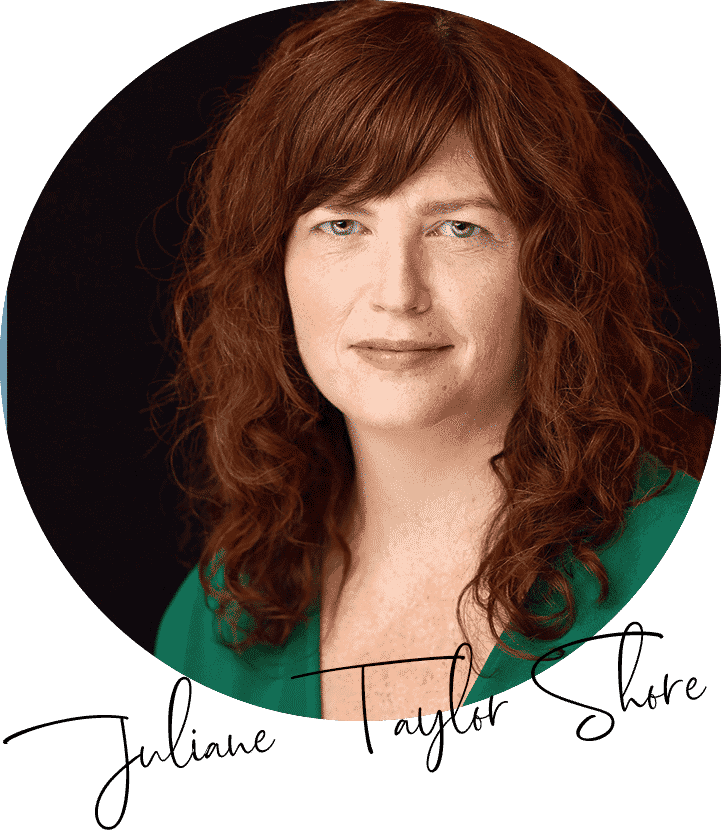
Juliane Taylor Shore, LPC, LMFT, SEP
Juliane Taylor Shore, LPC, LMFT, SEP (AKA Jules) is a therapist and trainer of therapists in Austin, Texas. She specializes in applying Interpersonal Neurobiology to the healing of trauma and the creation of relational health with clients she sees. She uses her knowledge of the brain and the implicit mind to go decisively to the root of the issue with gentleness and depth.
Jules has been a specialist in trauma recovery and in couples counseling for 12 years and loves to work experientially because that is how to invite shifts in the implicit mind. She wants to help people find the love, connection, and grace they have always longed for, both in themselves and with each other.
In addition to seeing therapists for consultation and teaching, Jules offers intensives for couples and for individuals who come from all over to do in-depth work in a brief format.

100% Risk-Free Money-Back Guarantee
We are confident you will absolutely learn new skills for memory reconsolidation in this online training. However, if you don't feel like you will learn anything to apply in your practice, please contact our support team at support@therapywisdom.com within 7 days of your purchase and we will give you a full refund, no questions asked.
"Jules has helped me find clarity in the murky waters of trauma work."
Her incredible capacity to distill complex science into heart-felt wisdom and tangible guidance makes the deeper work feel suddenly accessible and clear.
- Tori Olds, PhD, psychologist and educator, Austin, TX
"This new knowledge…has helped many of my couple clients to achieve the 'whoosh' of realization that makes profound change possible."
The clarity and accessibility of the descriptions of brain function that Jules has provided have transformed
my understanding. The outcomes are immeasurable… I can explain concepts - such as the way in which our 'history channels' constantly tweak our experience of the present moment - with a renewed confidence.
- Mary, couples therapist and trainer, Ireland
"Jules created the most emotionally safe, inviting, connected training space I've experienced in my 12+ years as a therapist."
Jules has a beautiful gift of taking difficult to understand or complex material and translating it a digestible, concise manner... I am immensely grateful for how she has consolidated and streamlined research, technique, and theory into something actually applicable in the room with people.
- Natalie, therapist, Austin, TX
"Jules pulled back the curtain and showed me the science behind the magic of psychotherapy!"
I needed the science although I love the magic!"
- Charla, LPC Associate, Austin, TX
"[Working with Jules] has helped me to help every single one of my clients to heal and reach their potential."
Learning her unique approach to neuroscience and integrating so many of her exercises and interventions into my work, has helped me to help every single one of my clients to heal and reach their potential.
- Sue, psychotherapist, England
"My pen or typing skills have a hard time keeping up with all of the wealth of information she shares."
Jules has a brain that can capture, hold and integrate information from most all therapeutic frameworks,
interpersonal neurobiology (IPNB), Polyagal, Somatic and the most recent and relevant research. She takes that information and makes it understandable to others. I have been training with Jules for 5 years on a regular basis and I know what I am learning and bringing to my clients is the best clinical practices and interventions. After each session, I am more confident in the chair and I see transformation with my clients.
- Janai, LCSW therapist, Austin, TX
Here's everything that's included in
Memory Reconsolidation:
Translating Neuroscience Into Art
PLUS THESE SPECIAL BONUSES:
ENROLL NOW
Today Only:
$397
Get Memory Reconsolidation: Translating Neuroscience Into Art with Jules Taylor Shore
If you are a BIPOC helping professional,
please accept our discounted enrollment price for this course by clicking here.
We are glad to have you with us!