
One morning, I randomly started reading The Book of Five Rings, a famous 17th-century martial art manual by Miyamoto Musashi. I couldn’t help but notice the striking parallels between the art of being a warrior and the art of being a mental health professional. While his classical book is about warriorship traditions, mainly swordsmanship—it’s also a profound meditation on the journey of mastery, the importance of adaptability, and the need to remain present no matter what challenges come your way. It gives us strong insights into mastering clinical practice as a therapist, so let´s explore it a little more today.
At Academy of Therapy Wisdom, we’ve tried to embrace that same philosophy. We host different modalities and try to bring you the best teachers on trauma, attachment, and somatics—not to lock you into one rigid method but to expand your flexibility as a practitioner. Just like a warrior who learns from various fighting styles, a therapist benefits from a diverse toolkit, allowing you to be fully present with your client, breathe through any complexity or difficulty, and confidently stay present with a wide range of emotions.
I typically have little interest in sports analogies and battle discussions. Yet, as someone with a dyslexic and ADD brain, I find myself receptive to ancient Eastern traditions that are grounded in virtue, discipline, and mindfulness. I’m not asking you here to adopt a warrior philosophy, significantly during a time when patriarchy has caused so much harm. I do invite you to be curious and see if there are some snippets or takeaways for your journey…
The Journey of Mastery
True mastery is not a destination, but a journey of constant learning, adapting, and refining.
As practitioners, we must emphasize that the art of healing—and any art—is ever-evolving through continued effort.
The Book of Five Rings is a pithy essay that true mastery isn’t about clinging to a single technique. It’s about a relentless journey of learning, adapting, and refining your approach. In therapy, it’s too easy to become overly identified to the one methodology you’ve received the most extensive training—whether that’s IFS, SE, SPI, EMDR, or another system.
Regardless of how comprehensive it may be, no single approach can fully capture the unique needs of each client. Whether a client is grappling with deep trauma, battling complex attachment issues, or experiencing profound depression, a one-size-fits-all method simply isn’t right. These methodologies often hold profound wisdom, but we must be cautious that they don’t become an SOP (standard operating procedure) prison around your work. Embracing a diverse array of modalities not only enhances your flexibility as a practitioner but also honors the intricate, multifaceted nature of the human experience.
Think of it this way: Imagine if a fighter could only use one move in every situation. Chances are, they’d get overwhelmed by an opponent who varied their technique. Similarly, limiting ourselves to just one therapeutic model risks missing critical nuances in our clients’ experiences. By learning multiple approaches, you’re not adding complexity for its own sake—you’re expanding your ability to meet clients exactly where they are. Also, you bring your unique gifts as a practitioner and human presence that are beyond any training.
Embracing a Multifaceted Toolbox
“You must understand that there is more than one path to the top of the mountain.” A A reminder that mastery comes through varied approaches, not just a single technique.
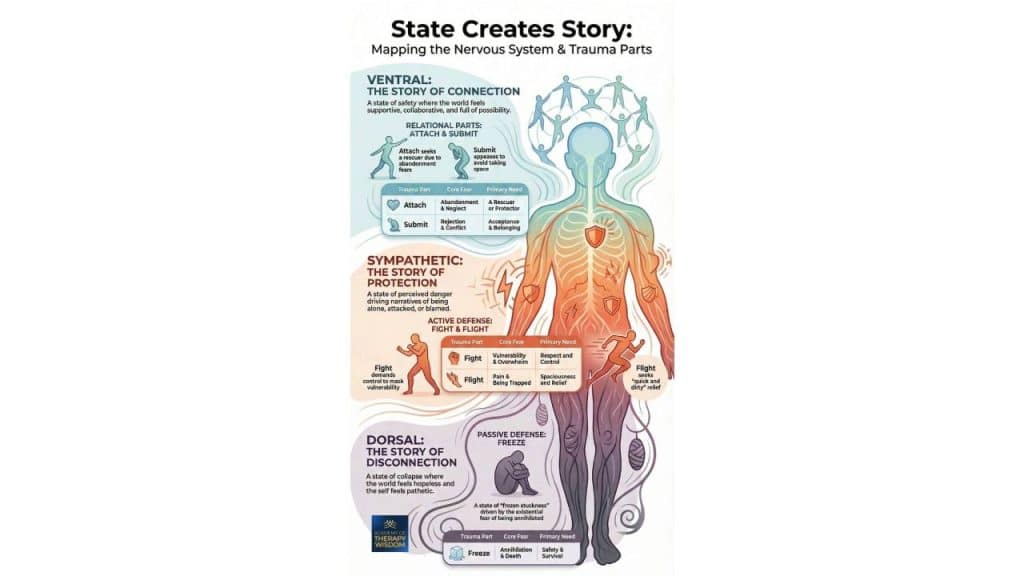
At Therapy Wisdom, our mission is to provide you with diverse tools. We dive deep into trauma to understand how life experiences and our environment shape our nervous system. We explore attachment theory to grasp the subtle dynamics of human relationships. And we immerse ourselves in somatic practices that reconnect us with our bodies, teaching us to recognize and release the tension that can block healing.
These aren’t just academic exercises. Our teachers emphasize practical, real-world tools and demos that help you cultivate the kind of presence that makes a difference in therapy. For example, when you’re working with a client who has experienced trauma, understanding somatic responses can help you notice when their body is holding onto stress—even if they aren’t verbally expressing it. Similarly, insights from attachment theory might reveal how a client’s early relationships continue to influence their current interactions, allowing you to tailor your approach to foster trust and safety.
Flexibility in the Moment
What I found most compelling about Musashi’s work is the emphasis on being in the moment. The warrior who can adapt quickly to shifting circumstances is the one who ultimately succeeds. As therapists, our “battles” are not fought with swords but with empathy, insight, and presence. In a therapy session, you need to be flexible enough to shift your approach as new emotions, memories, or somatic experiences arise.
It’s a bit like dancing—you have a routine, a choreography you’ve practiced over time, but you must also be ready to improvise when the music changes. This flexibility doesn’t come from rigid adherence to one technique but from a deep, embodied understanding of multiple modalities. It’s about having the breath and confidence to navigate a session in real-time, adjusting your stance, or even perhaps letting go of a stance as needed to best support your client.
Not Being Imprisoned by Methodology
Every encounter is an opportunity to learn and evolve—do not be confined by a single approach.”
Encourages you to see each moment as a chance to expand your repertoire and avoid the prison of one rigid methodology.
One of the biggest challenges for therapists is the temptation to cling to the method that first brought them success. After all, if something works, why change it? But true mastery—whether in martial arts or therapy—requires a willingness to explore and integrate new ways of thinking and being continuous. At Therapy Wisdom, we believe that learning from a wide array of modalities is a good antidote for becoming trapped in a single, narrow perspective.
Exposing yourself to different theories and practices creates a richer, more dynamic understanding of what healing can be. This broader view enhances your professional skills and deepens your personal growth. You learn to see challenges from multiple angles, draw on various strategies, and trust your intuition in guiding the therapeutic process.
A Call to Expand Your Horizons
“You can only engage with life the way you have trained yourself to do so.”
I invite you to think of your therapeutic journey as a lifelong quest, much like the warrior’s journey in The Book of Five Rings. Embrace the idea that every modality you explore—be it trauma-informed care, attachment theory, somatic practice, etc.—is a tool that can enhance your ability to hold space for your clients. It’s not about choosing one method and discarding the rest; it’s about integrating them into a flexible, evolving practice that meets each client’s unique needs.
At Therapy Wisdom, our commitment is to empower you with a comprehensive education that honors the complexity of human experience. We want you to step into your practice with the confidence of a seasoned spiritual warrior—calm, centered, and ever-ready to adapt to whatever challenges arise. This is how you become not just a therapist but an embodied healer—a professional who is truly present in each moment and capable of guiding clients on their transformative journeys.
In the end, whether you’re reading ancient martial texts or modern trauma studies, remember that the goal is the same: to cultivate a presence that is dynamic, compassionate, and deeply responsive to the world around you. Embrace the journey, expand your toolkit, and let your practice be as fluid and powerful as the art of the warrior.