

Table of Contents
- Why this matters for therapists
- How Linda Thai frames body-first work
- Nervous system regulation in session
- Bottom up stabilization, phase by phase
- A decolonized view of attachment
- Micro-practices to try this week
- Learn with Linda Thai
Last updated:
Today I was to respond to the therapists in our community who come to us looking for usable guidance they can apply in the very next client session. So, I´m going to tell you more about Linda Thai training perspectives with the intention to meet your need for clear steps, plain language, and examples that fit the realities of a full caseload. Something we love about Linda’s way of working with trauma is how it starts from the body and moves outward: state first, story second, and a steady pace that protects capacity. If you are exploring this approach, the embedded video below gives a quick feel for the work. Below, I´ll better translate it into decisions you can bring into the room.
For a structured start, see our page on nervous system regulation therapy, which lays out the sequence we are talking through here and gives you an easy entry point to share with colleagues or supervisors (it´s a free recorded webinar with Linda Thai where she walks you through her bottom-up approach).
How Linda Thai frames body-first trauma work
Therapists tell us they need approaches that are kind to the nervous system and simple enough to repeat. In Linda Thai´s teaching, we encounter a steady emphasis on state awareness, consent, and small steps that are easy to reverse if they overshoot. The language stays plain. We name what the body is doing now, we try one small regulating input, and we keep checking in together. Her language is inviting and consent-informed. “The invitation is to nose breathe, if that feels okay with you,” as a direct example.
She also keeps the ever-important social field in view. Culture, history, ancestry, and present community shape attachment and regulation, so treatment plans make more sense when they include the support system clients already have outside the therapy room. In practice, that can be as simple as building a routine closing and naming where and when clients will lean on co-regulation between sessions, then returning to the same routine the next session.
Nervous system regulation in session
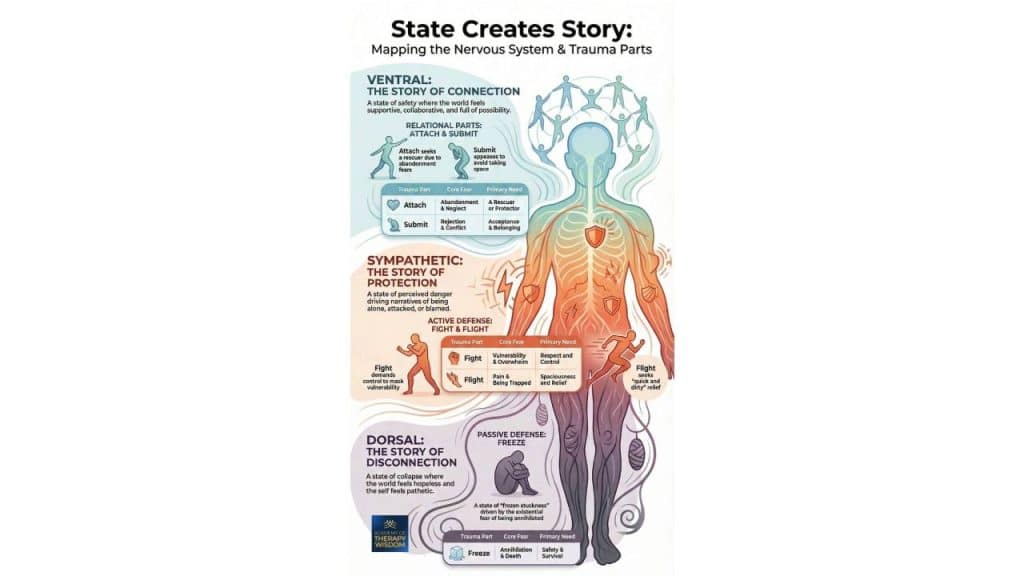
What we often notice in supervision-related questions is a desire for a simple map, so here is a look at how you can loosely set that up for yourself based on Thai´s training.
Start by orienting to the room, inviting clients to notice sights, sounds, and contact points. Track arousal together without blame. Choose one regulating input that is brief and reversible, like slow swaying or soft eye shifts (I´ve added a quick-reference guide to this and other techniques below), and pair it with language that invites choice. Linda often reminds us to move at a very humane tempo: “We work at the speed of trust,” she tells us when she shares specific techniques we can use with clients.
Here are two details from her skills classes you may find especially helpful when a session gets intense.
First, gentle vestibular input (like rocking or side-to-side swiveling) can bring the vestibular system online and quiet limbic reactivity. This is why tiny movements often help when vision narrows and breath turns shallow.
Second, eye-based resets can soften the field of vision and invite breath without forcing it, especially when you return to center and pause before the next shift.
Bottom up stabilization, phase by phase
As Linda and many of our favorite trauma-informed trainers teach, stabilization is not a pause before the “real work,” it is the work. This reframes our sense of sequence.
First, build safety and predictability.
Reorient often, pick one small regulating input.
Agree on how you will close the hour.
Deepen regulation and capacity.
Practice the same few skills across different states so clients learn what helps when they feel overwhelmed, numb, or cycling.
When there is room, touch the deeper material in short, supported steps.
Titrate activation and return to regulation whenever the body asks for it.
This pace preserves trust, teaches durable skills, and fits complex caseloads. It matches Linda’s approach of not labeling clients. She believes trauma is an injury caused by stress, not a flaw in character.
“Trauma is not mental illness. Trauma is mental injury.” — Linda Thai, LMSW
A decolonized view of attachment
Something we appreciate in Linda’s framing is the wider lens on attachment. Many clients draw strength from extended kin, community, spiritual lineages, place, and chosen family. When we center only a narrow picture of “secure,” we can miss the resources already present. In treatment planning, this involves finding co-regulation sources beyond therapy sessions. It also includes creating rituals that suit the client’s life, and adjusting goals in a way that makes sense inside that lived context. We still hold boundaries, scope, and safety. We simply stop assuming that one template fits all.
Micro-practices to try this week
Therapists tell us they want small moves that fit real schedules. Try one and notice what changes.
- Slow swaying or a brief swivel, then pause. Helpful when the peri-trauma pull is stillness and smallness; it invites breath and space.
- Soft eye shifts. Float eyes to three or four o’clock, pause, return to center, then to eight or nine o’clock, always with consent options.
- Self-held pressure. Hands to upper arms or shoulders, steady contact, a few breaths, then release. Use as a closing ritual.
- Alternating movement or sound. Simple bilateral patterns or brief vocalization on the exhale can break looping and signal safety to the system.
- “Rainbow and butterfly.” A playful end-of-session sequence that reaches across midline, lengthens the side body, and orients to the room before goodbye.

Join Linda Thai, LMSW, for a FREE webinar
Bottom-Up Strategies for Trauma Stabilization: A Phase-Oriented Approach
During the webinar, Linda will show you:
A road map detailing a 3-phase, sequential (but non-linear!) process that starts with safety, stabilization, and coping skills.
The creative use of various treatment modalities and interventions.
When and how to address specific symptom sets with your modalities.
How to plan and navigate your professional development to maximize client outcomes.
Linda Thai Training to Go Deeper
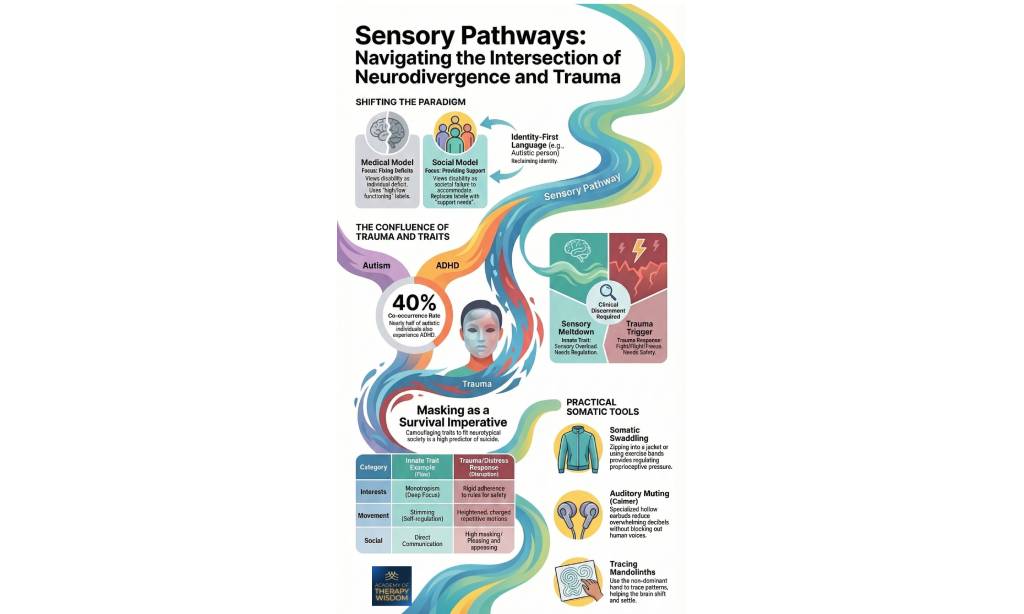
If you feel drawn to study further with Linda, clinicians generally choose one of two paths. Nervous System Strategies Certification Training with Linda Thai, LMSW, ERYT-200, organizes learning around state tracking, sensory processing differences, and relationship dynamics. Somatic Hacks for Calming the Nervous System is a short, skills-focused workshop that helps you build a quick-use toolkit for busy weeks. If you are comparing broader options across our ecosystem, our counseling ce courses page makes it easy to scan areas like trauma, somatics, and neurobiology.
Notes for scope of practice This article is educational and intended for licensed professionals. Adapt any practice to fit your training, your setting, and your client’s consent and capacity. When in doubt, slow down and consult.
We look forward to supporting you on this journey as a therapist, helping your clients in more and more effective ways as you grow.
Warmly,
Heather