

Each year we open submissions for our Annual Wise Therapy Spotlight, where we ask a question of particular importance to our wider therapist community. We are always moved by the depth and generosity of our community voices.
This year, we asked our community, What Is the Soul of Therapy? Read more about our inspiration for this, our 5th edition, in the letter from the editors and Academy of Therapy Wisdom founders, Brian and Ian.
Continue here to read the submission by Jane Tambree, LCSW-C. We hope you enjoy it as much as we all did.
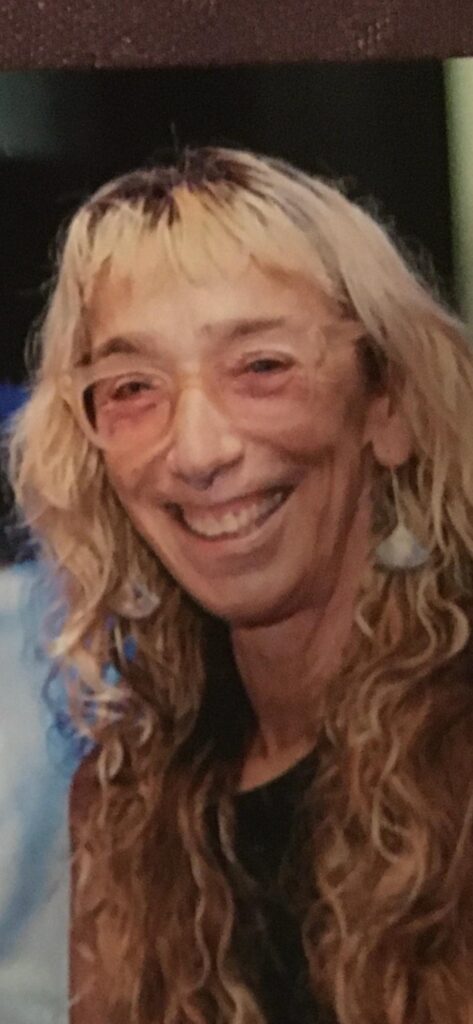
My practice as both a forensic clinician and psychiatric social worker has placed me in the most difficult environments and conditions, where the most severe suffering is revealed.
The soul of therapy thus is the finding of, the returning to, the residing in essence;
a luxury that most of my clients do not have given that many of them are detained and do not feel there is an option to call forth when in the mode of survival because their freedom of choice has been diminished or removed.
Many of my clients are approaching me in handcuffs, and ankle shackles, or are symptomatic of a psychotic disorder that untreated or uncontrolled manifested in behaviors assessed to be illegal or harmful to the outside community. These details make for a challenge not conducive to receptivity and candor from the moment of meeting. The perceived and real power differential is immediate and noted.
My entre’, as intentional as it can be, originates in spirit reaching for spirit. Connection. Relationship. Care. Compassion. Safety. This is not an exercise. This is a deepening. This is a knowing of oneself to bring to the other self/selves, an offering. This is what is required of me when I choose to be in the company of the marginalized, trivialized, voiceless in systems that continue to pathologize those whose position is considered the “underclass”, under-resourced and forgotten. Mediocrity is not an option for me.
My clients, “the criminally insane”, parents of murdered children, “mentally ill defendants”, abused children, rape victims need presence, deserve my presence. I manifest this in voice tone, eye contact, body posture, facial expressions, space, deliberate language, the timing of such language, curiosity, respect… and so it goes.
While the meeting happens in maximum security jail cells, emergency rooms, inpatient psychiatric units, segregation, protective custody, offices, courtrooms, homes, we move beyond the physical location inward, where people can be seen, heard, valued, validated.
The work begins with me, my willingness out of interest and care for myself. From the moment I meet the client, I move into a level of conscious awareness as a realm, partnered with training and skills, heart opened to receive, carefully constructing the flow, knowing who is center stage and who might be a director of sorts.
My clients have endured trauma and hardships… some from individual experiences, some from systems violence or oppressions. I come to them with obvious barriers: my race, my socioeconomic background, my named gender. My knowing of my experience, and the wanting to know theirs, allows for the reckoning of these obstacles, if they become obstacles.
I come from a time when the clinician did not reveal about themselves, did not use their identities to find and work with clients of similar experiences, as is now the case very often. In fact, it was unacceptable and came with the threat of losing one’s license for boundary violations. Thus the nuance arose, bringing a full and selective self to the interaction.
Quietly, privately it becomes more complex as I have Dissociative Identity Disorder (DID). This is my core truth. This is my sacred place. This has allowed me to join, engage with, those, that from the periphery look to be foreign, yet I know are not.
This works because I have spent years, decades in self -inquiry…for my own health and healing, now able to lend to my clients a felt sense that they are being witnessed.
Part of my experience involved the confusion around religion resulting in the conclusion that it supported patriarchy, contributing to associated fears, prompting mistrust. Thus I did not believe that anything outside of me could be considered protective or loving as we are taught to believe “God” is. Religion as the offering of values and behaviors set forth to follow for ones highest good. Instead it became dogma and was experienced as dictating, culminating in rejection as it came in the face of a white man to be submitted to.
This runs parallel as many of my clients have experienced systems, doctrine, degradation, external controls, being caged, coerced, and punished by some sources more “powerful” than themselves.
I became vigilant, attentive, fearless, and in tune with those who were forced into selective mutism or censoring because of the status assigned to them as women, black and brown skinned people, children, formally undereducated, lacking in economic resources.
These were and are the people I care about and care for.
My voice/voices within came to the forefront carefully listening for, characterizing, for the purpose of understanding so as to present the most appropriate “interventions”. Thus abandoning what some thought to be regimented theories and best practices replaced by the “use of self” as the primary clinical “tool”. Instead of an attempt to fit a client into a specified modality of care, my selected fullness emerged whenever appropriate, in reverence.
Within my system are alters who have experiences, traits and affinities that make them skilled and accomplished in their roles. When there is congruency, the relationship between the client and me/us reaches toward a place of shared clarity and possible collaboration.
Moving from my essence propels me onto higher ground and allows me to visit what might be unknowingly buried when presented to me by a client. Ultimately, we might connect the two, through problem solving or identifying the origin allowing for healing, and secondarily and as important, expanding to the possibilities that could have been hindered from early life experiences.
Finally and completely, the soul of therapy is art, seeking truths, where both the clinician and client are striving toward ones deepest sensory understanding beyond the ground level.
The views expressed in this essay are not necessarily the opinions of Academy of Therapy Wisdom, its presenters or its staff. This is part of a series featuring the unedited voices of our community in conversation. All content is used with permission and is copyright 2024 by Academy of Therapy Wisdom. Only the author may reproduce their content.
To read more articles or download a free copy of the final publication visit Wise Therapy Spotlight.