
Each year we open submissions for our Annual Wise Therapy Spotlight, where we ask a question of particular importance to our wider therapist community. We are always moved by the depth and generosity of our community voices.
This year, we asked our community, What Is the Soul of Therapy? Read more about our inspiration for this, our 5th edition, in the letter from the editors and Academy of Therapy Wisdom founders, Brian and Ian.
Continue here to read the submission by James D. Huysman, PsyD, LCSW, CFT. We hope you enjoy it as much as we all did.
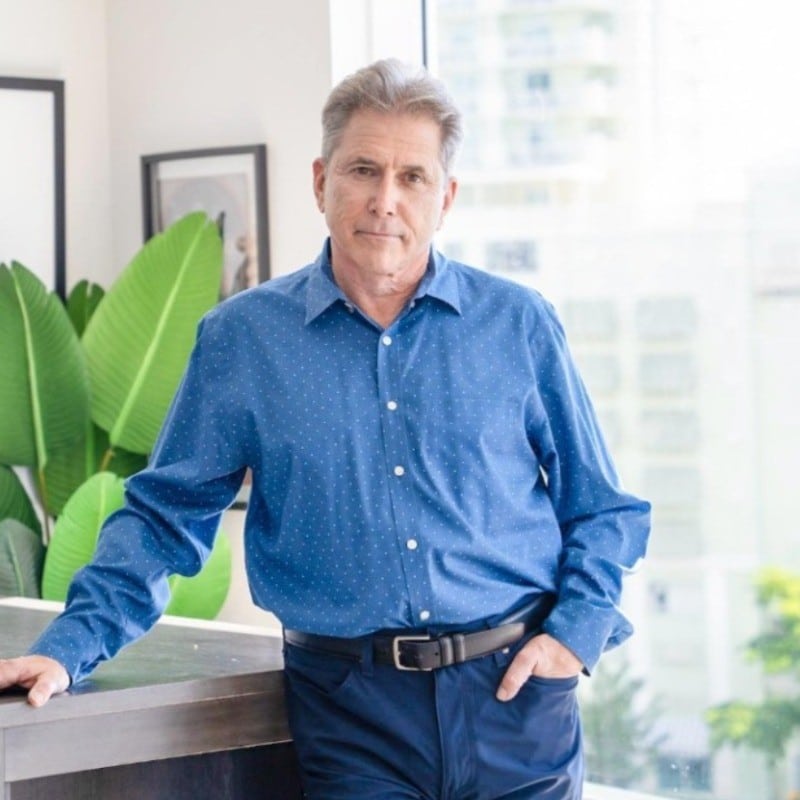
It Takes a Village: We Are Humanity’s Emotional Support Response Team
It has been my life’s work to help reduce the shame and stigma surrounding mental and behavioral health issues over the past several decades. Today, the need for human connection and support for those struggling with their place in life has never been greater.
As therapists, we are tasked with providing a safe environment and corrective emotional experience for anyone seeking our help. We are called to serve in a variety of milieus from social services and education to traditional medical, legal and corporate settings. In recent years, our skills and involvement have become even more important in keeping both kids and adults safe from themselves and each other.
Isaac Newton is famously quoted as saying ‘If I have seen further than others, it is by standing upon the shoulders of giants.’ In that spirit, we all owe enormous gratitude to the groundbreaking work of Marsha Linnehan, Richard Shwartz, Pete Walker, Bessell A. van der Kolk, Gabor Maté, Stephen Porges, and Brene Brown.
Our professional continues to advance in agency, depth and weight. The introduction of Dialectic Behavioral Therapy (DBT) and Internal Family Systems (IFS) modalities in the 90s opened us to a new understanding of causes and conditions of the human condition. These informed therapies, along with EMDR, breath and body work, among others offer us the extraordinary opportunity to collectively address the pervasive mental health challenges we are seeing come through our doors every day. We have many tools at our disposal to
We live in an increasingly toxic world and none of us has been immune from the constant bombardment of our senses and sensibilities in both professional and personal settings. So, it will behoove us, as current professionals or soon-to-be professionals, to do our own inner work with an appropriately trained therapist of our choosing.
Although CPTSD, Cluster B, and attachment disorders are not yet recognized as diagnoses in the DSM5, we cannot afford to get behind the curve of the effects of these toxic influences. These destructive patterns have become more prevalent in every walk of life.
Cognitive dissonance abounds for anyone trying to make sense out of something that makes no sense at all!
It is necessary that we take Childhood PTSD aka Complex PTSD seriously as a culprit in the immediate spectrum of mental health co-regulation and attachment disorders. As Pete Walker’s book, Complex PTSD: From Surviving to Thriving so eloquently frames it, “The causes of Complex Post-Traumatic Stress Disorder range from severe neglect to monstrous abuse. Many survivors grew up in houses that were not homes – in families that were as loveless as orphanages and sometimes as dangerous. If you felt unwanted, unliked, rejected, hated, and/or despised for a lengthy portion of your childhood, trauma may be deeply engrained in your mind, soul, and body.”
I am still enamored and encouraged by this profound insight from author Anais Nin: “We don’t see things as they are, we see things as we are.” I am ever mindful that once we are aware, we are no longer naïve. I have found no truer words when it comes to embracing my own emotional safety and healing from circumstances over which I had no control or power when I was growing up.
In The Myth of Normal: Trauma, Illness, and Healing in a Toxic Culture, Dr. Gabor Maté states these meaningful words – “Trauma is not what happens to you. Trauma is what happens inside you, as a result of what happens to you.” The interconnected epidemics of anxiety, chronic illness and substance abuse are normal. But not in the way you might think. So much of what we call abnormality in this culture is actually normal responses to an abnormal culture. The abnormality does not reside in the pathology of individuals, but in the very culture that drives people into suffering and dysfunction.”
My personal and professional experience has informed my definition of Childhood PTSD. I humbly propose that it occurs “when the last 10 years of your life trigger the first 10 years of your life”.
The past eight years of my life have been my proving ground for this description. None of the letters behind my name in the byline of this piece or the many years I spent in CODA meetings helped me avoid the reality of being involved in a toxic abusive relationship; it literally brought me to my knees.
Dr. Bessell van der Kolk was right on point when he wrote The Body Keeps the Score – Brain, Mind, and Body in the Healing of Trauma. Narcissistic abuse takes many prisoners and is the thief of authenticity.
It was only when I began to address my childhood issues that I was able to begin my journey of healing that continues to this day. I share this with you in the hope that you will find a family of choice with which to trudge the road of recovery from TAR – Toxic Abusive Relationships.
If necessity is the mother of invention, as opined by the philosopher Plato, then quite simply, “If you don’t break the family trauma, the family trauma will break you.” We owe it to ourselves to be proactive and not reactive.
Prioritizing our personal mental health is the touchstone of creating healthy boundaries in our personal and professional lives. Fostering the idea of being fair, consistent, and available to ourselves and those we would help creates a safety net. It is imperative that we provide an authentic space within us for the purpose of healing and self-discovery.
Only then can we rest assured that we are doing all we can to become the change we want to see in others. Our own triggers are teachers. We must do the deep inner work to keep others safe and avoid the pitfall of possible vicarious traumatization of patients and loved ones alike.
We are a powerful healing community! And as we navigate the complexities of trauma, CPTSD, toxic abusive relationships, and attachment disorders with our clients, it becomes increasingly clear that the path to healing and resilience begins with us.
Organizations, individuals, and communities must work together to foster environments that prioritize mental health and create safe spaces for those affected by trauma, CPTSD, and Toxic Abusive Relationships.
By implementing trauma informed and certified practices and promoting open dialogues, we can break the cycles of abuse and foster healthier relationships.
T.R.U.S.T. means To Reach Ultimate Success Together. So, let’s champion mental health awareness, be fierce advocates for those in need, and commit to building a world where everyone can thrive free from the shadows of trauma.
The views expressed in this essay are not necessarily the opinions of Academy of Therapy Wisdom, its presenters or its staff. This is part of a series featuring the unedited voices of our community in conversation. All content is used with permission and is copyright 2024 by Academy of Therapy Wisdom. Only the author may reproduce their content.
To read more articles or download a free copy of the final publication visit Wise Therapy Spotlight.