
TIST Certification Starts Here!
Healing the Fragmented Selves of Trauma Survivors
Trauma-Informed Stabilization Treatment (TIST)
Certification Level 1
With Janina Fisher, Ph.D.
First LIVE Call April 24th, 2026!
CEs are available. Click here for full info.


Welcome!
For the last 30 years, I've been on a mission to help survivors of trauma and those who are trusted to help them.
The treatment model I’ve developed over the years is a trauma-informed parts approach that takes the intensity out of trauma treatment and replaces it with a method that is gentle and accessible, decreasing avoidance and resistance. Clients who haven’t been able to progress using other methods often recognize themselves in TIST and feel helped by it.
Treatment-resistant conditions - such as suicidal, self-harming, eating disordered, and addiction behaviors - can be stabilized much more easily than with traditional methods for self-destructive behavior.
When clients get stuck, and their therapists don't have other modalities to help them, everyone is left feeling helpless and ineffective.
TIST changes all that.
With TIST, we focus on helping clients feel more connected, accepting, and self-compassionate.
My method focuses on treating the effects of traumatic events, as opposed to treating the event itself, and on managing unsafe and addictive impulses as trauma-driven behaviors rather than manipulative and attention-seeking ones.
We show clients how to use mindful observation to develop a relationship with their feelings, their impulses, and their traumatized parts.
TIST makes therapy much less threatening to the client.
And much more doable for the therapist.
TIST is informed by concepts and techniques from Sensorimotor Psychotherapy, Internal Family Systems, and clinical hypnotherapy. The process is more gentle and requires less of clients, and the response is most often extremely positive.
In this training, you will learn exactly how traumatic triggers stimulate re-experiencing of overwhelming experiences and drive trauma-related parts defending against what feels like imminent danger, whether it’s fleeing, fighting, submitting or crying for help.
TIST provides an easier and more effective way of working with any clients who still suffer from the effects of trauma. Best of all, TIST also prevents burnout by decreasing the stress on YOU to "save the day."
I am truly inspired by how hard therapists work and how much they put themselves on the line to help their clients. If you want to learn how to treat the clients at the highest risk, the clients most demanding to take on, or those you may have felt ill-equipped to handle, join me in learning this unique and effective method.
Warmly,
Janina Fisher and
Academy of Therapy Wisdom
P.S. If you are interested in becoming fully certified in the TIST model, this Level 1 course is the first step. Certified TIST practitioners are some of the best equipped in the field to help people that others have given up on or have given up on themselves. This is your chance to become one of them.
P.P.S. Registration into Levels 2 and 3 for certification will be opened following your registration into Level 1.
"You can do justice to the traumatic past while stabilizing the trauma survivor's ability to live a normal life here and now."
- Janina Fisher, Ph.D.
How TIST Level 1 Helps You Treat the Effects of Traumatic Events

Offers Hope

Helps clients finally understand themselves

Accepts and embraces all parts

Clients feel less stigmatized and pathologized
What Clinicians are Saying About the TIST Method...
"It's clarified and organized much of what I've known, giving me greater confidence in my work."
- Anonymous
"Wow, where to even begin! This course has helped on all levels - navigating my own reactions (from my own parts) to client presentations and interactions; understanding the complex layers of fragmented and traumatized clients' internal landscapes; learning about more complex presentations involving clients' parts; more clearly understanding how to apply TIST in sessions (especially how to facilitate un-blending and internal parts work toward repair of ruptures and healing legacies of traumatic environments)."
- Jonathan L.
"Personally it made sense to me and clarified reasons for our own behaviour, how I behave with clients sometimes as well. It has also given me a road map to navigate with clients who have deeper issues. I feel more comfortable using the road maps shared to better help my clients evolve, release and grow."
- M.A.H.
"Janina’s TIST’s model is the most amazing method I've worked with. A game changer for me and my clients. " - David L.
A Different Approach to Trauma
VS
TIST (Trauma-Informed Stabilization Treatment)
Therapy focuses on unpacking past experiences, exploring the "why" behind behaviors.

Therapeutic Focus
Therapy focuses on stabilization through present moment awareness, building skills to manage overwhelming emotions and impulses. We recognize the "fragmented self" of the present created by trauma from the past, and give clients a vocabulary for it.
Often relies on talk therapy, processing emotions and memories. May encourage emotional expression before adequate stabilization.

Therapeutic Method
Combines parts work (IFS), structural dissociation, mindfulness and somatic techniques to create a sense of internal safety and self-compassion. Prioritizes stabilization and nervous system regulation before deep emotional processing. Works with, rather than against, emotional defenses.
Can feel overwhelming for highly dysregulated clients, potentially increasing shame and confusion. May not address immediate needs for safety and stabilization.

Client Experience
Empowering, helps clients feel less ashamed, more in control, and less confused by their symptoms. Provides concrete tools to manage difficult emotions and impulses. Focuses on collaboration and self-compassion. Reduces reliance on crisis services.
Can be challenging to manage clients' fluctuating emotional states and safety concerns. May feel like "one step forward, two steps back.

Therapist Experience
TIST provides a clear framework and practical tools, increasing your confidence and reducing frustration. It strengthens the therapeutic alliance by fostering collaboration and understanding, and ends up being less work for you as a therapist!
A Different Approach to Trauma
Traditional Therapy
VS
TIST

Therapeutic
Focus
Therapy focuses on unpacking past experiences, exploring the "why" behind behaviors.
Therapeutic
Focus
Therapy focuses on stabilization through present moment awareness, building skills to manage overwhelming emotions and impulses. We recognize the "fragmented self" of the present created by trauma from the past, and give clients a vocabulary for it.

Therapeutic Method
Often relies on talk therapy, processing emotions and memories. May encourage emotional expression before adequate stabilization.
Therapeutic Method
Combines parts work (IFS), structural dissociation, mindfulness and somatic techniques to create a sense of internal safety and self-compassion. Prioritizes stabilization and nervous system regulation before deep emotional processing. Works with, rather than against, emotional defenses.

Client Experience
Can feel overwhelming for highly dysregulated clients, potentially increasing shame and confusion. May not address immediate needs for safety and stabilization.
Client Experience
Empowering, helps clients feel less ashamed, more in control, and less confused by their symptoms. Provides concrete tools to manage difficult emotions and impulses. Focuses on collaboration and self-compassion. Reduces reliance on crisis services.

Therapist Experience
Can be challenging to manage clients' fluctuating emotional states and safety concerns. May feel like "one step forward, two steps back.
Therapist Experience
TIST provides a clear framework and practical tools, increasing your confidence and reducing frustration. It strengthens the therapeutic alliance by fostering collaboration and understanding, and ends up being less work for you as a therapist!
Here's Everything Included with
Healing the Fragmented Selves of Trauma Survivors
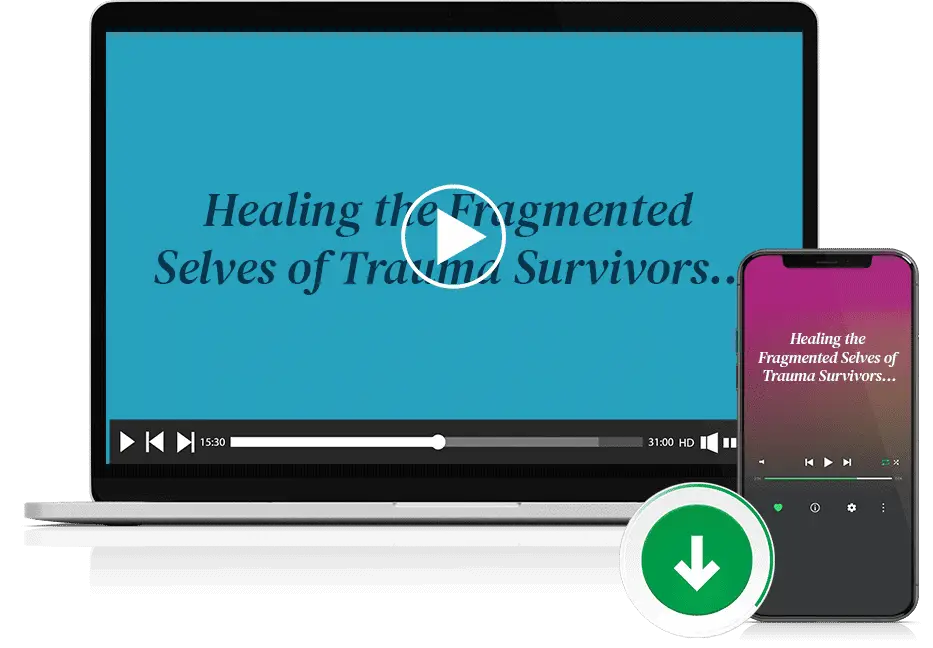
6 Video Teaching Modules (10+ Hours)
Click the player for a preview!
6 LIVE Video Training
Sessions with Janina
(12 Hours)
Participate in all-new LIVE lecture, Q&A and discussion with Janina! See FAQ for dates.
Access to the Academy of Therapy Wisdom Community Hub and Course Portal
PLUS These Bonuses…
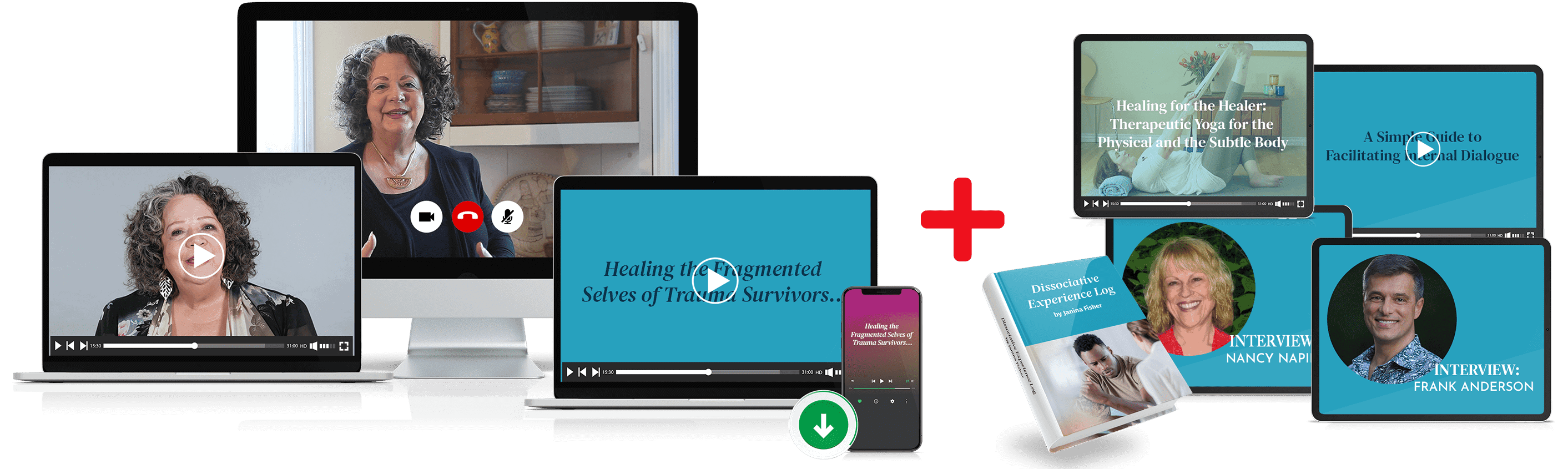
5 exclusive offerings to deepen your learning and prepare you to take the model into your clinical practice!
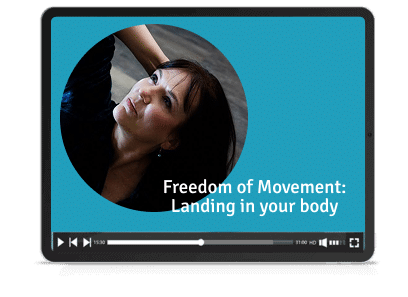
1. Freedom of Movement ~ Landing in your body: Therapeutic Yoga with De West, C-IAYT, RYT, RPYT
De will lead you through a series of 30-minute yoga classes designed to help bring you back into your body and counter the effects from sitting and being in the thinking mind. There is one class per course module.
De also provides a video with 3 short practice yoga therapy session options (5-, 10-, and 15-minutes) that you can do in the comfort of your office to recover and refresh between your client sessions.
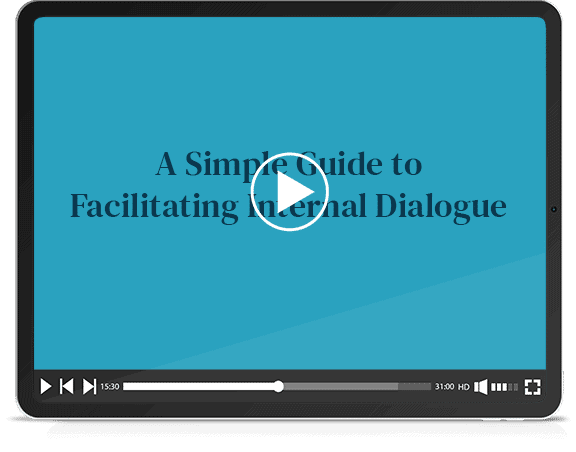
2. An Internal Dialogue Approach to Working with Fragmented Parts: Video with Janina Fisher
Janina will guide you through the steps for using the internal dialogue technique to help clients learn to regulate, soothe, and even heal their traumatized parts.
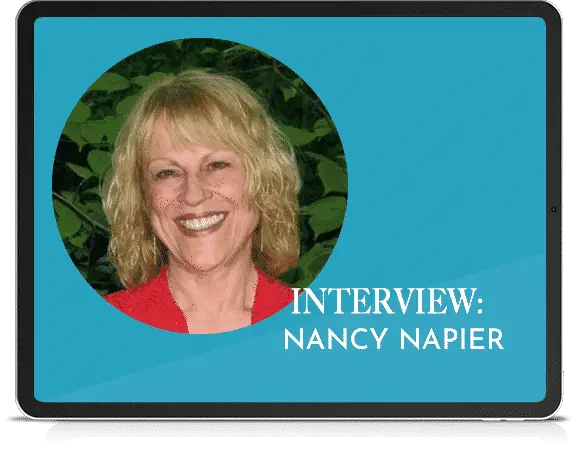
3. The Optimal Future Self: Interview with Nancy Napier
Nancy Napier, MFT, is a longtime expert in the trauma field known for integrating hypnosis, spirituality, and Somatic Experiencing into psychotherapy. So often, trauma deprives individuals of any sense of identity or hope for the future, and Nancy addresses that challenge by speaking to the inherent healing potential in all of us that she calls "the Optimal Future Self." We will talk about ways to help clients tap into their healed self rather than becoming focused on the suffering of their wounded selves.
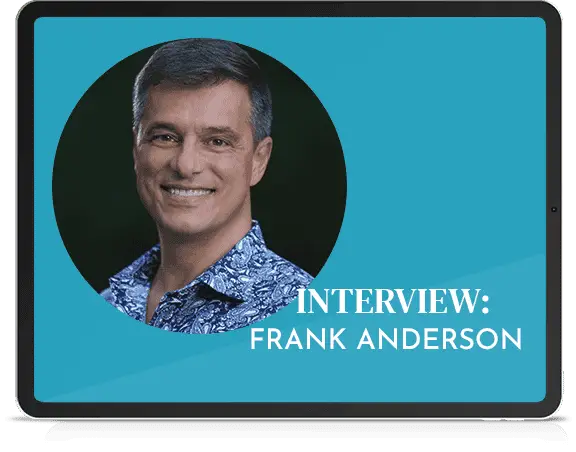
4. Engaging Empathy and Compassion to Connect to Our-"selves": Interview with Frank Anderson
Frank Anderson is a psychiatrist, IFS practitioner and trainer, and author of the forthcoming book, "Transcending Trauma: Healing Complex PTSD with Internal Family Systems (IFS) Therapy." We'll talk about empathy as an essential ingredient in healing trauma and how to understand the difference between compassion and empathy. Frank's emphasis on the importance of helping clients build empathy and compassion for their wounded younger selves is not to be missed!
5. Dissociative Experience Log
A helpful handout to use with your DID clients, this worksheet focuses on increasing their ability to identify shifts or switches from part to part.

"From one of the preeminent experts in the field of trauma and dissociation, Healing the Fragmented Selves of Trauma Survivors imparts a vision of hope and validation to those suffering from complex trauma and the therapists who treat them. Janina Fisher's exceptional ability to synthesize the best of cutting edge trauma psychotherapies has resulted in a brilliant and unique roadmap for resolving chronic traumatization."
- Pat Ogden, PhD, founder,
Sensorimotor Psychotherapy Institute

Our courses are at the intersection of psychotherapy, spirituality and social change.
We know you have options for learning and Continuing Education. Here’s what sets us apart:

Emphasis on Your Learning
We offer a friendly, intuitive learning portal designed specifically so you can easily find your course content, connect with your colleagues, and have fun actually completing it!

Professional Production Quality
A real camera crew with high-end equipment, a deeply involved content director who works closely with every presenter, and a top-notch editing team with over 200 courses produced to date all make our video lessons second-to-none. Each learning module is split into digestible video segments so they are easy to watch and reflect on.

Unparalleled Customer Service
We're proud to maintain a customer happiness rating of over 90%, with 85% of inquiries responded to within 6 hours. We're here for you, every step of the way.
We ensure that your learning experience is not just adequate, but exceptional.
We believe learning should challenge and change you.
Here's Everything You'll Learn Inside Healing the Fragmented Selves
of Trauma Survivors…
Module One
Live call April 24th, 2026 9-11am PDT
Trauma and Self-Alienation
Surviving trauma, especially when young, requires that we disown the abused, humiliated child and try to be a child who is too 'good' to be abused. The effects of disowning and rejecting ourselves to survive have lifelong consequences, resulting in personality or dissociative disorders, unsafe behavior, and tumultuous relationships, including the therapeutic one. In this module, we will look at a trauma model that addresses this important issue and how to help clients understand themselves with compassion rather than shame and self-judgment.
In this module, we will explore:


Module Two
Live call May 8th, 2026 9-11am PDT
Foundational Skills for Trauma-Informed Stabilization
Overcoming internal fragmentation and self-alienation require the ability to focus mindfully rather than 'going with' the flood of emotions and impulses survivors experience daily. Step-by-step instructions will help the therapist guide clients from impulsive actions and reactions to mindful awareness and increase their ability to be "with" themselves. Learning to relate to their intense distress as a communication from young traumatized parts changes their relationship to the strong emotions and tendencies to act out.
In this module, we will discuss:
Module Three
Live call May 22nd, 2026 9-11am PDT
Self-Destructive Behavior as a Parts Issue
Research demonstrates the strong relationship between a history of trauma and the development of unsafe behavior, addictions, and eating disorders. This module focuses on how to help clients learn to relate to unsafe impulses as trauma responses driven by protector parts. Trauma-related cues in daily life stimulate fear and shame, driving fight and flight parts to desperate measures that bring short-term relief but recreate the unsafe environment of childhood. Understanding their intentions as protective often calms the system and allows clients to build the resources and skills they need to manage emotional overwhelm.
In this module, we will discuss:


Module Four
Live call June 5th, 2026 9-11am PDT
The Challenge of Traumatic Attachment
Physical, emotional, and/or sexual trauma in childhood has a profound effect on attachment development, causing what researchers call 'disorganized attachment.' The child (and later adult) respond to the threatening environment with a heightened yearning for closeness and fear of abandonment alternating with fears of closeness and heightened mistrust. Separation anxiety alternates with pushing others away or fleeing from them. The intensity of these opposing drives is confusing and frightening for the client and often strains the therapeutic relationship. In this module, we will address how to deal with traumatic attachment as it complicates the treatment.
In this module, we will discuss:
Module Five
Live call June 19th, 2026 9-11am PDT
Developing Internal Communication and Collaboration
The next challenge in the treatment is the development of internal collaboration between parts driven by conflicting survival responses. Self-destructive behavior is usually addressed behaviorally, but high relapse rates confirm the need to also treat the trauma and traumatized parts. Learning how to help clients change their relationship to unsafe thoughts and impulsive actions is a first step. Next, treatment requires an ability for internal dialogue and negotiation that results in increasing empathy for the parts and a willingness to deal with them creatively and compassionately. Safety becomes common ground where all parts can be welcomed.
In this module, we will discuss:


Module Six
July 10th, 2026 9-11am PDT
Healing the Fragmented Selves of Trauma Survivors
In this last module, we will focus on helping clients 'repair' rather than remember the past in order to resolve the legacy of trauma borne by each part. As bonds of kindness and compassion are built internally, the parts' intense reactivity diminishes, allowing clients to welcome home disowned parts and offer them a safe, loving internal environment. Rather than emphasizing 'integration,' this model focuses on internal collaboration and closeness and on the establishment of internal acceptance, forgiveness, and safety. The client's ability to attach to each rejected, disowned part with warmth and loving-kindness becomes the healing antidote to the trauma.
In this module, we will discuss:
Here's Everything You Receive with Healing the Fragmented Selves
of Trauma Survivors…
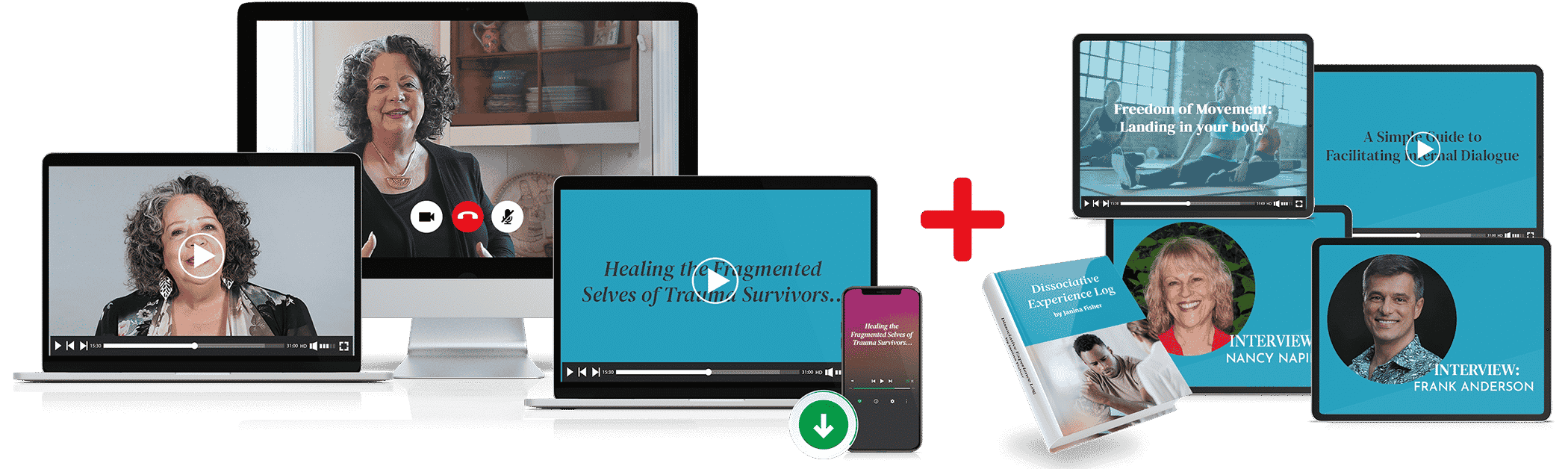
1) 6 Pre-recorded Teaching Modules (10+ Hours)
2) 6 LIVE Video Training Sessions with Janina (12 Hours)
3) Access to the Academy of Therapy Wisdom Community Hub and Course Portal
Plus these special bonuses:
1) Freedom of Movement ~ Landing in your body: Yoga with De West, C-IAYT, RYT, RPYT
2) An Internal Dialogue Approach to Working with Fragmented Parts: Video with Janina Fisher
3) The Optimal Future Self: Interview with Nancy Napier
4) Engaging Empathy and Compassion to Connect to Our-"selves": Interview with Frank Anderson
5) Dissociative Experience Log Handout
ENROLL NOW
$1497
For a limited time, only:
$997
A 3-month payment plan alternative is available at checkout.
Join Over 2000 graduates!
If you are a BIPOC helping professional , please accept our discounted enrollment price for this course by clicking here (single payment) or clicking here (three payments) We are glad to have you with us!

100% Risk-Free Money-Back Guarantee
We are confident you will learn new skills in this online training. However, if 14 days after purchase you don't believe you will learn anything to apply with your clients, please contact our support team at support@therapywisdom.com, and we will give you a full refund, no questions asked.
What Participants Say:
"I love the de-pathologizing of trauma symptoms through Janina's IFS-influenced approach. Being very spiritually myself, I have found myself at odds with the diagnostic/ medically influenced view of human behavior as pathological, bad or wrong. IFS and Janina's approach is such a breath of fresh air. In my younger days I was terrified of working with certain diagnosis, ie, BPD. Using this approach is so affirming and gentle, true and real that I now find working with this population easier and so much more effective."
- Cyndi W
"I am so happy. I will be a better therapist from having sat at Janina's feet."
- Susan Ann Stauffer
"I am in love with Janina's model. It is body-based, collaborative, and anti-oppressive. It has helped me develop more compassion for my clients' parts, my own parts, and family members' parts too."
- Natashia M.
"I thought that the course was excellent. Janina was so kind and compassionate and just lovely in her beingness and her presentations. She is clear and so loving in the way she approaches her clients and her students. I learned so much about how to use words and presence to connect more deeply with clients and how to be welcoming and non judgemental, yet effective and connected....slowly but surely working with the legacy of trauma in us all."
- Danielle Long
Meet Your Presenter...
Janina Fisher, Ph.D.
Janina Fisher, Ph.D. is the Assistant Educational Director of the Sensorimotor Psychotherapy Institute, a former instructor at Harvard Medical School, and an international expert on the treatment of trauma and dissociation. She is the author of Healing the Fragmented Selves of Trauma Survivors: Overcoming Self-Alienation (2017) and Transforming the Living Legacy of Trauma: a Workbook for Survivors and Therapists (2021). Best known for her work on integrating newer neurobiologically-informed interventions into traditional psychotherapy approaches, she is the co-author with Pat Ogden of Sensorimotor Psychotherapy: Interventions for Attachment and Trauma (2015).

Frequently Asked Questions:
Praise for Janina's Book, Healing the Fragmented Selves of Trauma Survivors: Overcoming Internal Self-Alienation
"It will take you to new places and enable you to reach for your clients and find them when they cannot find themselves. Enjoy!"
- Sue Johnson, PhD, professor, researcher, and
author of Love Sense: The Revolutionary New Science of Romantic Relationships
"The role of cumulative trauma in the fragmentation of self-experience, the strategies for identifying, together with the client, the non-integrated parts of the personality during the clinical exchanges, and the integrating power of the psychotherapy dialogue have rarely been dealt with in such a convincing and original way as in the pages of this fascinating book."
- Giovanni Liotti, MD,
APC School of Psychotherapy, Rome, Italy
"Janina Fisher's unique blending of IFS 'parts' with sensorimotor and mindfulness-based therapy is a terrific enhancement to psychodynamic work. Although grounded in structural dissociation theory and trauma treatment, Healing the Fragmented Selves of Trauma Survivors offers insights that will enrich the knowledge-base of therapists treating higher-functioning as well as deeply traumatized individuals. I recommend this remarkable book to all psychotherapists, especially psychodynamic ones, who will discover an extraordinary opportunity to expand their clinical horizons."
- Kenneth A. Frank, PhD, Psychotherapy Integration Training Program,
National Institute for Psychotherapies