
Dear Friends,
I want to talk today about personal branding. Not branding in the slick, influencer sense. But branding in the deeply human sense.
Here is the reality we are stepping into that we have been talking about for the past year. Therapists are increasingly competing with private equity-backed platforms that have massive marketing budgets, polished funnels, and the ability to undercut fees.
At the same time, the internet is being flooded with AI-generated content. Blogs, videos, even mental health advice are now being produced at a scale no individual clinician could ever match.
Attention is no longer scarce. Trust is.
Daniel Priestley, who has studied founder-led growth for years, recently described a YouTube channel that is entirely AI-generated. The scripts, the voices, everything. It is only a few months old and already has millions of views.
People watch it. People enjoy it. But here is the key, they do not trust it.
That distinction makes all the difference. AI will take up attention. Humans still earn trust. And in therapy, as you know with your clients, trust is everything.
Priestley uses a metaphor of an airport as fog rolls in. Air traffic control announces that planes already on the runway can take off. Planes already in the air can keep flying. But planes still in the hangar are grounded.
AI is that fog.
If you have already begun sharing your voice, your values, your way of thinking, and your lived clinical wisdom, you are on the runway. These tools can actually support you. If you have avoided visibility altogether, waiting for someday, it becomes exponentially harder to take off later.
People trust individuals far more than faceless brands. In fact, a personal brand can be many times more effective at building trust than an organizational one. Not because it is louder, but because it is real. Think Richard Branson.
For therapists, personal branding is not about self-promotion. It is about relationship at scale. It is letting people know who you are, what you stand for, how you think, and why your work matters. So that when someone is choosing between an anonymous platform and a real human with a body of work, a voice, and a presence, they choose YOU.
I know this can feel uncomfortable.
My wife De, an incredible yoga therapist whose whole teaching philosophy is on making you your own teacher, hates outreach.
Really, I beg her every day. So I had her read the paragraph above several times. I imagine many of you probably feel the same way. And yet, the therapists who will thrive in the coming years are not the loudest ones. They are the ones who found a way to share their presence that feels true to who they are.
If you are waiting for clarity before you begin, this is the clarity. If you are waiting for confidence, that comes after you start.
The window to build trust-based visibility is still open. It will not stay that way forever.
More soon on how therapists can do this ethically, sustainably, and without burning out.
With care,
Brian
P.S. At Academy of Therapy Wisdom, we believe the future of therapy depends on human presence, not just scalable systems. That is why we are investing in helping therapists share their wisdom in ways that feel aligned, grounded, and deeply relational, without turning them into marketers or influencers.
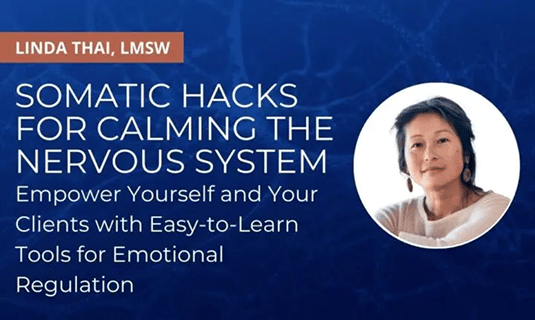
What you´ll learn:
- Vestibular Engagement for Emotional Regulation
- Using the Eyes to Hack the Stress Response System
- Subtle Sounds to Release the Peri-Trauma Response
- Effective Self-Holding and Self-Swaddling Techniques
- How and When to Apply Bilateral Stimulation
- Integration and Completing the Stress Response Cycle