
Dear Friends,
Over the past year, I’ve noticed something subtle but significant happening in our field. Therapists are not just asking clinical questions anymore. They’re asking structural ones. Not “How do I help this client regulate?” but “Is the way I’ve built my career sustainable?”
For decades, the dominant model has been graduate, get licensed, build a caseload, see 20–30 clients a week, repeat for 25 years. For many, that model worked. But something is shifting.
The Solo Caseload Ceiling
More therapists are admitting that twenty-five sessions a week is too much physically, emotionally, and neurologically. We now understand co-regulation, we understand secondary trauma, and we understand nervous system load.
And yet the structure of our profession often assumes infinite capacity. You can be trauma-informed all day long, but if your calendar leaves no down time, your body eventually keeps the score.
Insurance, Fees, and the Squeeze
At the same time, reimbursement rates are not keeping pace with the rising complexity of the work. Administrative demands are growing. Documentation requirements expand each year. Clinicians feel caught between wanting to make therapy accessible and needing to make their own lives workable. That tension is real.
Private Equity and Tech Are Moving In
Meanwhile, as we have discussed in the past and our motivation for creating the WisePractice platform, private equity-backed groups are expanding quickly. They offer streamlined systems, centralized marketing, and administrative relief. But they also introduce new pressures: productivity quotas, reduced autonomy, volume-based incentives. For some therapists, this is a welcome relief. For others, it feels like the corporatization of something sacred.
The Rise of Hybrid Careers
Therapists are more and more going to hybrid models. A smaller caseload alongside a therapy group, a consultation circle, a course, a workshop series, a membership community. Not because they want to become influencers, but because they want income stability, creative expression, time flexibility, and long-term sustainability.
The old narrative was: “If you diversify, you’re not serious about clinical work.” That narrative is dissolving.
A Deeper Question
The real question underneath all of this is not financial, it’s philosophical. Is therapy a service model, or is it a wisdom profession? If it’s only a service model, then volume and efficiency will win. If it’s a wisdom profession, then we have to design structures that protect depth, reflection, supervision, and embodiment.
An Invitation
If you’ve been feeling the quiet pressure of this… if you’ve wondered whether 20+ sessions a week for the next decade feels aligned… if you’ve been curious about building something alongside your practice but felt conflicted about it… you’re not alone.
This isn’t about hustle. It’s about architecture; the architecture of a life in this profession. And I believe we’re in a moment where we get to shape that intentionally, rather than simply inherit it.
I’d love to hear your reflections. What are you noticing? What are you wrestling with? Click HERE to join the conversation in our community. Your voice matters.
With warmth,
Brian Spielmann, Founder Academy of Therapy Wisdom
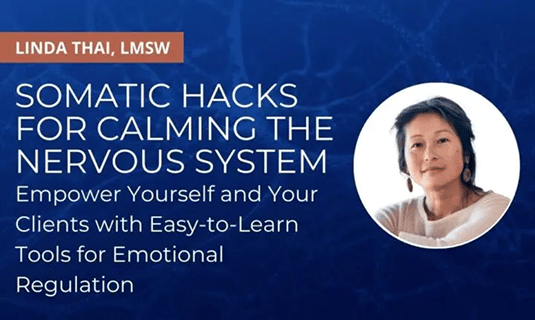
What you´ll learn:
- Vestibular Engagement for Emotional Regulation
- Using the Eyes to Hack the Stress Response System
- Subtle Sounds to Release the Peri-Trauma Response
- Effective Self-Holding and Self-Swaddling Techniques
- How and When to Apply Bilateral Stimulation
- Integration and Completing the Stress Response Cycle