
Dear Friends,
I once helped run a 600-acre retreat center in Northern Colorado. One of our flagship programs was a 30-day silent retreat called a dathun (Tibetan for moon). Now a month of meditation might sound deeply attractive from the vantage point of your busy life. But past maybe the first hour or two of sitting, when your knees or back start hurting, it is far from being nirvana.
You are just sitting from 7am to 7pm, including all meals on the cushion, being with yourself 24/7. Usually no cool teachers with electrifying sermons. Nothing religious here. Just you befriending you.
So as the marketing and business director, how do you advertise perhaps one of the most boring events you will ever experience in your life?
The boredom is so poignant that when I sat one dathun, watching the battle between a fly and a spider over several days near the molding around the shrine was as exciting as watching the most epic movie.
I have been thinking about this as my wife De and I are spending more time in the mountains, in a town of around 1,200 people. A town where almost nothing is happening. So I am acclimating to slowing down, letting my nervous system unravel with the support of piñon pines, abundance of rocks, snow-capped mountains, and a big sky.
With our fast-paced lives, we have forgotten how to do nothing, just be. Constantly entertained with social media, we can’t even tolerate being bored for a minute. I hear that those under 30 spend 2.7 hours a day on YouTube alone. And that does not count TikTok, Instagram, and the endless scroll.
Without facing our boredom and constant need for entertainment, how will we ever regulate our nervous systems?
The founder of the retreat center would distinguish boredom into two kinds. Hot boredom is restless, irritated, looking for distraction. Cool boredom has a quality of being relaxed, spacious, and present.
With cool boredom, our nervous system settles and clarity begins to emerge. You could say cool boredom is a gateway to basic sanity.
So how do we naturally (free-range, organic) rest our minds into boredom and beyond?
Here’s pithy advice from the 11th-century sage Milerapa giving clues on how to rest
Rest just as you are, like a small child.
Rest like an ocean without waves.
Rest brightly like a candle flame.
Rest without self-importance, like a human corpse.
Rest unmoving like a mountain.
As a therapist, you spend your day holding space for others. You regulate your nervous system to help your clients find their own ground. But when do you give yourself permission to truly rest your mind? To let your own systems settle without the agenda of productivity or self-improvement? Resting, not in the sense of zoning out, but with clarity and alertness.
Maybe this week, before reaching for your phone, before filling the silence with a podcast, you might try sitting for say ten minutes with just yourself and your breath. Not meditation with a goal. Just sitting with whatever arises. At least that is what I am trying to practice.
I would love to hear from you: What is your relationship with boredom? Where do you find rest in the midst of your busy life? Share your reflections with us in the free Academy of Therapy Wisdom Hub.
Resting in the mountains,
Brian
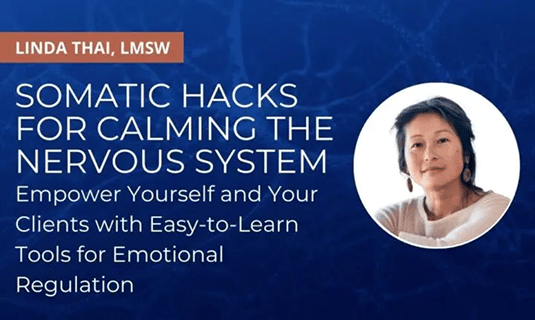
What you´ll learn:
- Vestibular Engagement for Emotional Regulation
- Using the Eyes to Hack the Stress Response System
- Subtle Sounds to Release the Peri-Trauma Response
- Effective Self-Holding and Self-Swaddling Techniques
- How and When to Apply Bilateral Stimulation
- Integration and Completing the Stress Response Cycle