

Each year we open submissions for our Annual Wise Therapy Spotlight, where we ask a question of particular importance to our wider therapist community. We are always moved by the depth and generosity of our community voices.
This year, we asked our community, What Is the Soul of Therapy? Read more about our inspiration for this, our 5th edition, in the letter from the editors and Academy of Therapy Wisdom founders, Brian and Ian.
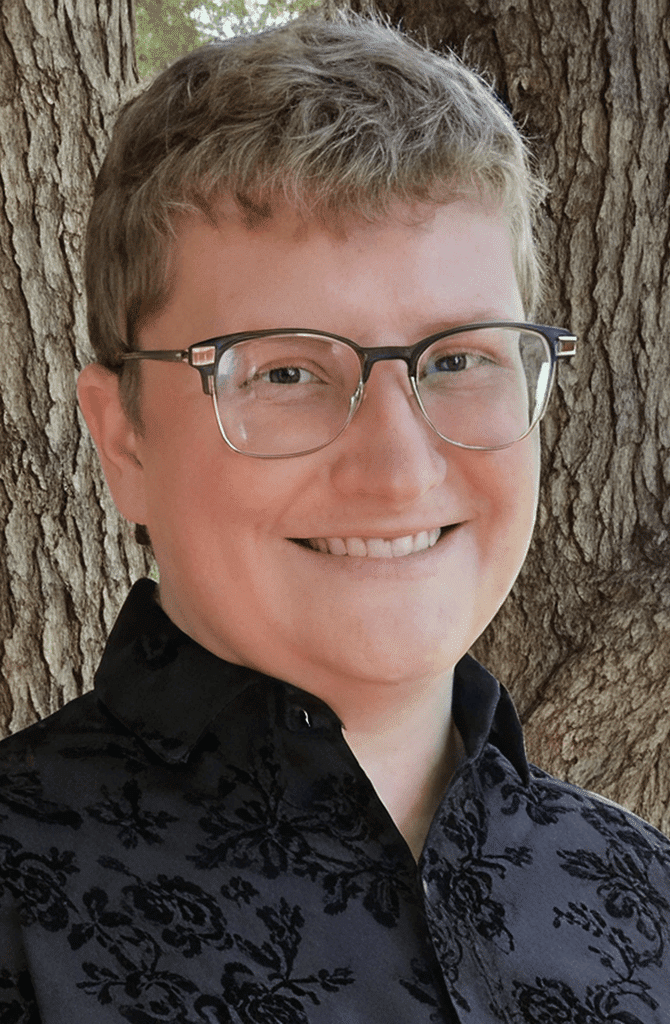
Continue here to read the submission by Asha Gozzelin, LMSW, 500 RYT, TCTSY-F. We hope you enjoy it as much as we all did.
To be a therapist is to walk between the world as we know it to be and the world of our clients. We meet our clients in the here and now, and yet, we are not merely meeting as two beings in this moment. We are meeting in the place and time where personal, interpersonal, cultural and systemic converge.
Research into mammalian mirror neurons and nervous systems indicate that much of what we communicate is nonverbal. So I know that to be an effective therapist, I have to be as well regulated in my body and mind as possible. It matters less what we say and how people feel in our presence. For me, this has meant that I’ve molded my habits to prepare and decompress from the physical demands of focused attention, attunement and compassion, the hours of hearing and holding different stories, trying interventions and assessing folks priorities, action stage of change, case management needs and, and, and…
All while sitting. I wish I knew how much sitting this job entailed before pivoting in my late twenties to become a therapist. My body’s stillness and attention while holding space for others’ struggles feels familiar at times to the freeze and fawn responses of my childhood. So I offer invitations for myself and the folks who land in my sessions: How does that show up in Your body? Does that feel familiar? Does it feel useful? You might move towards or away from that feeling/sensation, or You can stay where You are with it. Can we slow down and notice what happens next? I try to check in with my own body and not disconnect entirely – modeling embodiment is as important as modeling accountability and clear communication, I like to think anyway. The future of therapy is grounded in embodiment practices and recognizing the body/mind connection.
Of course, it’s not always possible to be regulated. Days like November 6, 2024, I feel the familiar tension across my shoulders and flutter of anxiety in my chest. I slow down, breathe deeply into my belly, and exhale using my diaphragm. On such days, I prepare my dysregulated nervous system to attune to the dysregulated nervous systems of my clients. I bring in snacks; no use trying to do emotional work while having low blood sugar. The office runs out of tissues. I don’t know if I’ve helped. I’m both numb and aching. I can feel the desire to scream lodged in my throat, so I do a few times in the privacy of my car on the quiet country roads.
I know why I became a therapist. Like many others in the helping professions, I wanted a career that aligned with my values and would make a difference. I also intended to serve queer, transgender and gender expansive people, polyamorous people, folks with physical disabilities and neurodiversity, because those are all identities I hold myself. As a white person, I also knew my work would likely be predominantly with white folks through an anti-racist lens. Nothing prepared me for the labor and love I would feel; holding the stories, joys and heartbreaks of people who’s experiences feel so familiar to my own while also holding my journey as distinct from theirs. I invoke the soul of therapy by showing up for my community as someone who is hurting and scared, proud and confused, angry and determined. I cannot divest my Self from the therapist I am. As a therapist today, our use of Self as an intervention tool is of paramount importance.
We spend time on survival planning – and we both know I’m not asking about how they plan to manage thoughts of suicide or urges to binge eat or relapse. Those safety plans have their place, but to survive the rise of fascism, racism and anti-transgender legislation, late-stage capitalism, increased family estrangement and deep grief over climate and inter-generational disconnection from ancestral practices – we attempt to survival plan for things such as these. No pathologizing here, we’re all having a proportional response to the polycrisis of the times. Are documents up to date? Where are the local food cupboards? Who can watch the kids if You get detained? Can Your family join a community garden and seed exchange? Where is the next meeting for the local tenant union? We might be meeting for individual therapy, but to be a values-aligned therapist today, we must contextualize what we see and try to reorient towards the communal and relational underpinnings of survival. To protect our craft from being hijacked by systems of oppression, we must tend to the root of pathologized behavior, thought and being.
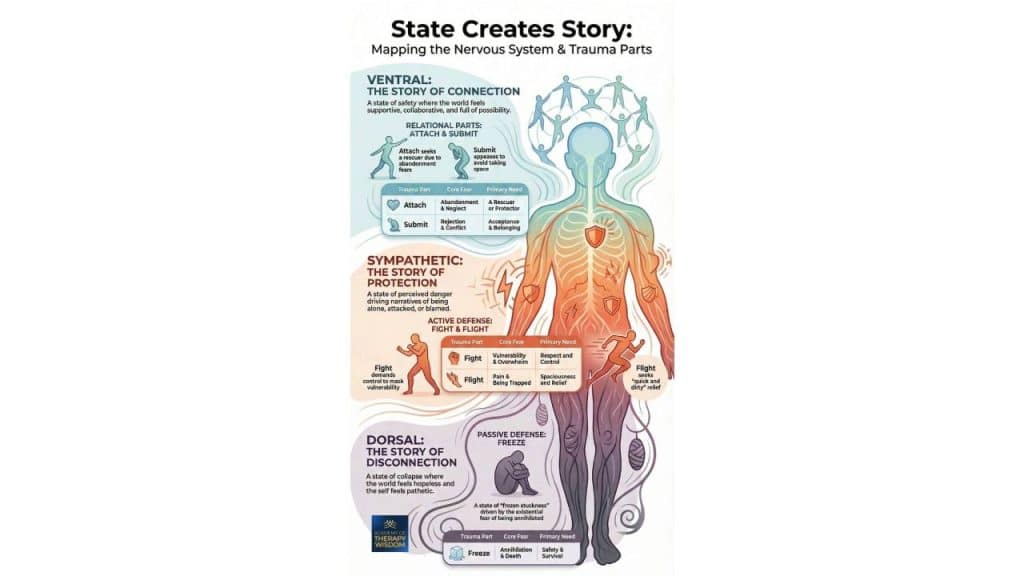
Human nervous systems are hardwired to anticipate threat and under the consistent threat of healthcare crisis, eviction, racism and misgendering, forest fires and militarized police. The pre-frontal cortex finds ingenious ways to utilize it’s mental power for continual survival orientation. Disconnected from their roots, so many of these survival orientations are placed within the medical-industrial model as DSM disorders. As a trauma therapist working with developmental, complex and inter-generational trauma, I approach therapy from a soul of survivorship: if we’re not direct survivors, we’re all descendants of migration, persecution, warfare and hunger. Survival is woven into our DNA; it’s also part of the soul fragmentation that’s wrought our world into polarizations. Being a therapist today means holding this truth while talking about divorce, a depressive episode, anxiety, and the many other topics that come up in our offices.
A core truth is that the work we’re doing as individual therapists is not going to save the world. It won’t be enough to stop the systems at the macro or mezzo levels that we’re in from objectifying people and profiting off pain and exploitation. And yet, another core truth is that we are emerging together through the therapeutic process. It’s sacred in its humanness, in the way it’s both imminent – in the details of the day, and transcendent – in orienting towards patterns across time, bodies and organizations. This is the soul of therapy: the entwinement of the deep inner and interpersonal within the current environment and systems. It’s sitting with how this work moves in and through our bodies, our selves, even as we hold our clients in their self-determination. This is sacred work.
The statistics indicate that most therapists have some history of personal trauma exposure. Those without personal “big T” trauma are still susceptible to vicarious trauma due to the nature of our work. Our profession has a high rate of burnout and compassion fatigue – this is the reality. In order to truly serve in our profession, we must take care of our bodies, minds and souls. My sensitized nervous system has developed to notice and attune to other peoples mental and physical states. To counter this, I’ve attempted to differentiate the attunement required of my therapist self, as an adult with assessment and intervention skills from my child part who wants so desperately to manage everyone’s experience and take away their pain. Nothing in my educational background or clinical training truly prepared me for the weight of this sacred work. It is our duty as therapists to also be educators. Not just for our clients, but as mentors to students, interns and new clinicians. They are the future stewards of our profession and this sacred work. To evolve our art, we must support and protect them.
In these ways, the highest tasks of our therapeutic profession are 1) depathologize our clients responses to multi-generation environmental and interpersonal traumas by recognizing the connection between the personal and environmental/ interpersonal; our work must hold the micro, mezzo and macro together 2) embodiment practices for ourselves and our clients 3) acknowledge our identities, use of Self as an intervention and 4) mentorship future clinicians. These are our pillars to uplift, protect and cultivate, as they are the future of our profession.
The views expressed in this essay are not necessarily the opinions of Academy of Therapy Wisdom, its presenters or its staff. This is part of a series featuring the unedited voices of our community in conversation. All content is used with permission and is copyright 2024 by Academy of Therapy Wisdom. Only the author may reproduce their content.
To read more articles or download a free copy of the final publication visit Wise Therapy Spotlight.