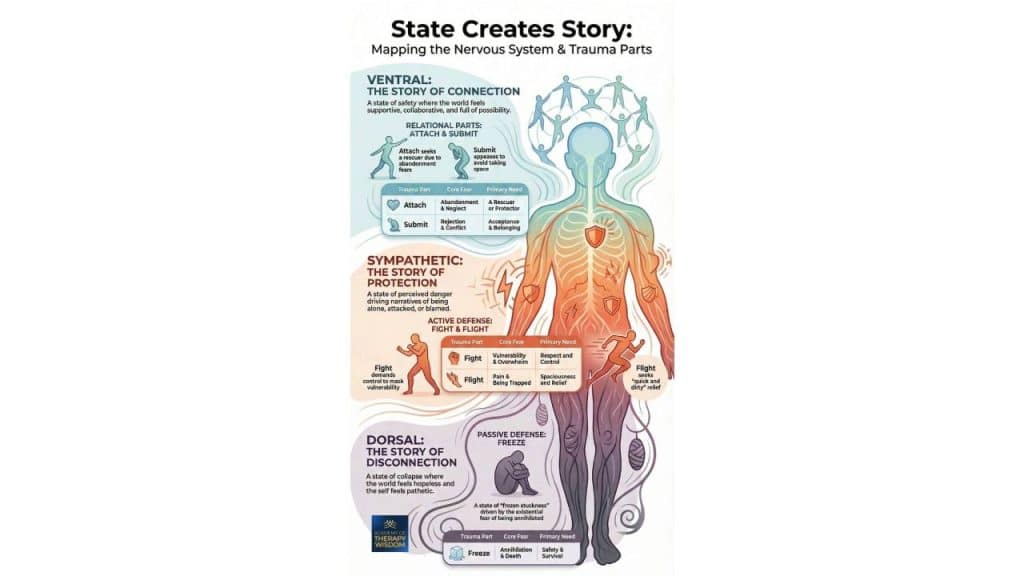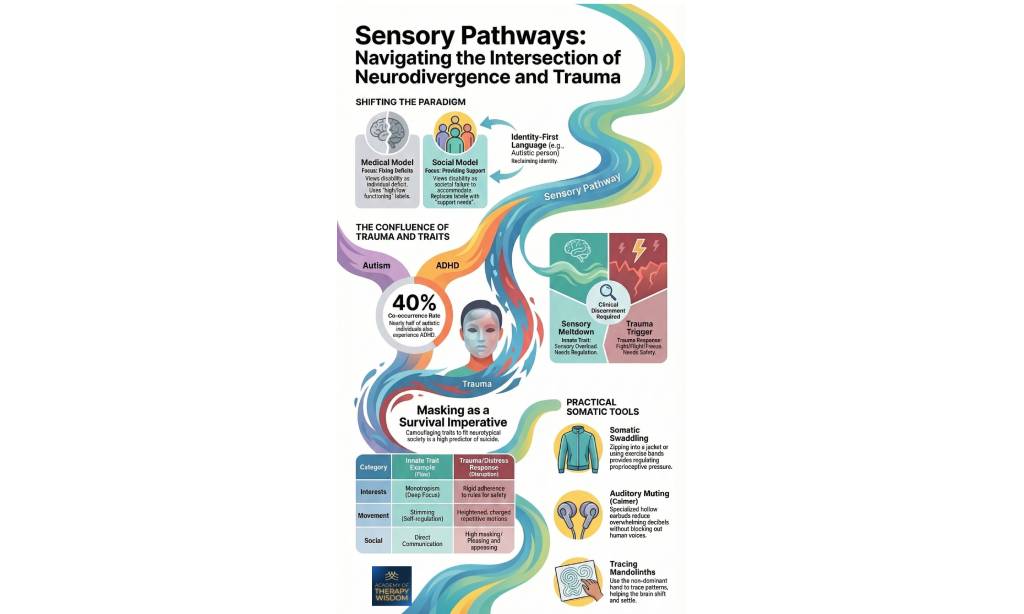


With the pandemic, climate change, and social and justice inequity all posing global threats, it’s no wonder that the demand for mental health specialists has never been higher. Many of you already know firsthand the finding of the APA 2021 practitioner survey that the mental health crisis across the population is putting immense strains on the psychologist workforce.
Anxiety disorders, depressive disorders, and trauma and stress-related disorders have all increased by at least 15-20% in just one year.
A decade ago, James Hillman wrote We’ve Had a Hundred Years of Psychotherapy—and the World’s Getting Worse. Now seems to be the moment where therapy is finally addressing what Mr. Hillman refers to as the “deteriorating environment.” This is a time when there is a rising realization that the outward societal conditions (social, economic, and physical) cannot be separated from a person’s interior spiritual and emotional qualities.
In 2021, we asked the Academy of Therapy Wisdom community to offer submissions in response to the prompt:
What do you believe is the frontier for psychotherapy in social change and/or spirituality and why?
Reading the essays featured in our 2021 Wise Therapy Spotlight, one thing seems clear: the hopeful future of the field of psychotherapy will not be written in universities; rather it will be unfolded by you and your peers in your offices and associations around the world.
Here we share one of the essays from the 2021 community spotlight that inspires us still. If you are a therapist and would like to submit your essay or artwork for consideration in our 2022 Wise Therapy Spotlight, our call for submissions is open and closes December 2, 2022. Visit the therapy spotlight submission form to learn more and submit.
~Brian Spielmann
Therapy Wisdom Spotlight: Laurie Kahn MA, LCPC, MFA
In her community spotlight essay A Fragile Frontier, Laurie shares about how the pandemic has changed us as therapists, the connection between systemic racism and trauma, and the importance of social context in our work with clients.
Disasters highlight the cracks in our social structure, but they also can unleash the depth of our humanity, altruism, and generosity. Confronted with both a global pandemic that forced us inside and systemic racism that brought many of us out to the streets, America had a choice in 2020: seek comfort in tried, if not true, traditions or adapt to a new landscape and chart a different course. In my field—I’ve been a trauma therapist and trainer/consultant for the last 30 years—the personal and professional trauma experienced by therapists and their clients demanded we reinvent ourselves and our practices and forge new frontiers that will, I hope, outlast the scourge of COVID and make an important contribution in the fight for justice and equity for all.
While it remains unclear exactly what our new order will look like, the disorder that has forced us on our journey is all too clear…and painful.
“Laurie, I think you will disapprove of what I did,” Andrea, a trauma therapist I admire says to me. “
“After my zoom session with my client, I went over to my client’s house and left some soap on her front step so she could wash her hands.”
Before COVID, this would indeed be odd therapeutic behavior. In these traumatic times when we are afraid and isolated, human kindness rings loud. The Pandemic changed how we understand ourselves as psychotherapists and how we understand our work.
My work in the last thirty years in the field of Trauma and Abuse taught me that our lives could be drastically altered with little or no warning. With the global pandemic, therapists were exiled to their homes. Overnight our practices move from in-person to screens.
As a consultant and trainer for trauma therapists, I was inundated with requests for help. Emails f rom panicked therapists filled my inbox and my phone exploded with calls. Laurie, “The only place I can set up a computer is in my linen closet or in our leaky basement. I don’t know how to do this. Please call me.” “Laurie, I feel like my brain is exploding. My clients are frightened and so am I. Can we talk?”
I reassured those seeking my counsel, “You can do this. We will learn together.”
The Pandemic upended the conventions of psychotherapy; consistency, predictability, and a quiet space behind closed doors was replaced with uncertainty, children, and dogs entering our shared space with no warning. We improvised because we had no choice.
For a time, I attempted to play the role of the trainer/consultant who was keeping it together, denying that I too was afraid. I was having trouble tracking my appointments and the days of the week. Finally, I sheepishly admitted to my colleagues that I had forgotten a client’s appointment and had shown up for other clients on a wrong day. I was worried that they would think I was losing it and should retire as soon as possible. But they laughed and began to tell stories about their lapses. I was relieved to hear about their mishaps.
Two months into the pandemic, I addressed a large group of therapists.
First, I asked them if they were having trouble eating and sleeping since the pandemic began. Everyone on the screen nodded. We were all dysregulated. Our feelings were more intense, and our moods changed we were more prone to nightmares and exhaustion. Our bodies were on high alert, scanning and sensing danger we could not see. Fear was woven into our bodies, and our stress levels ebbed and flowed. Calm was no longer a resting place. It was difficult for therapists to acknowledge the ways we, too, were traumatized. Collective trauma made its way slowly into our awareness and our vocabulary.
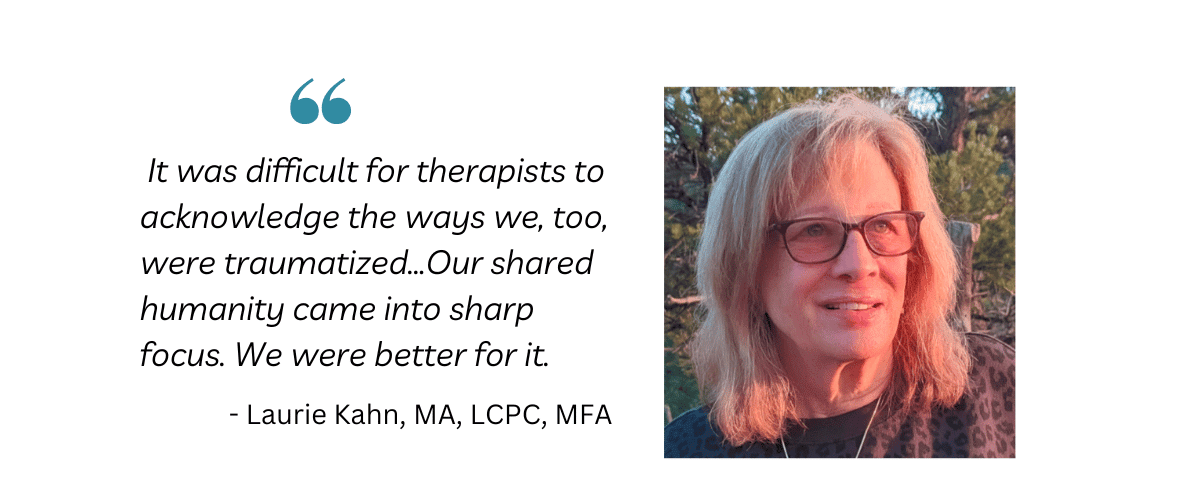
It was difficult for therapists to acknowledge the ways we, too, were traumatized.
The virus did not care who was a client and who was a therapist.
Therapists were eager to talk.
Stacy tells me she must work twice as hard to calm herself since the Pandemic began. “Sometimes my entire body feels like it is on fire. I have lost my confidence as a therapist.”
I reminded Stacy that being overwhelmed is a normal reaction to trauma. It is a result of too much pain and horror with too few resources. We were all living in and through a collective trauma; fear and danger were now part of the air we breathed. There was more expected of us at a time when all our resources were more limited.
“So, I am not a terrible therapist?
“No, Stacy, you are a good therapist in a difficult time.”
Stacy was not alone. Most therapists I talked to echo the same concern; they believed they were failing their clients and were ashamed that they could not replicate the therapist they were pre-pandemically.
If therapists were going to successfully adapt to this new world, we would need to embrace the concept of “good enough.”
Most of us are familiar with the concept of the “good enough parent,” a term coined by the British pediatrician and psychologist D.W. Winnicott. He observed that moderate stress is essential for healthy development, making a child more resilient. Winnicott did not see “good enough” as falling short but as a strategy for fostering healthy development.
The people I spoke with did not take easily to the idea of a “good enough therapist.” During the stress of the pandemic, our internalized perfectionism nearly strangled us, fostering an ongoing sense of failure. Mistakes occurred more often, but so did our clients’ forgiveness and compassion. Professional posturing had worn thin. The Pandemic required us to adjust our expectations, from a therapist who listens compassionately to others’ distress to one who experiences the impact of this pandemic alongside their clients. Our shared humanity came into sharp focus. We were better for it.
My clients and students wanted to know how I was managing.
“Some nights, I don’t sleep very well. My moods change rapidly. Last night I was awake in the middle of the night, and I ordered three pairs of black overalls–and I look terrible in overalls,” I admitted to one client. She laughed and then thanked me and added, “You have no idea how great it is to know you are struggling, too. It is like we are all doing our best, which I find so reassuring. It’s easy to feel like I am losing it, but I guess it is just a normal reaction to a challenging time.”
Naming and sharing our experiences during this time was heartening and created hope during expanding difficulties and challenges. We know that Trauma, unspoken and unnamed, isolates and causes more harm.
I came to cherish this shared heart space, our expanded mutuality, where the role of therapist and client, teacher and student are less rigid, and our shared experiences are more valued.
COVID precautions continue to separate us from each other. We wear our masks, stay six feet from each other, and avoid gatherings of large groups. Social distancing requires us to move away to keep ourselves safe and cautions us that getting close to each other is dangerous. Our basic human instincts are turned inside out. These losses of social connections cut deep.
Maria works in community mental health, and she was distressed. “I love my work,” she began. Working in the Latinx community is what I always wanted to do. I do all of my sessions in Spanish,” she says proudly. “I have no trouble getting clients; they just keep coming. Since COVID, my work has gotten harder. The people I talk to, those who are documented and those that are not, are more afraid. But what is not what is hard. It has been weeks since I spoke to a supervisor or since I talked to any of my colleagues. “This may sound funny,” Maria says,” but I think my mind has dulled like I am not as bright as I was before COVID.”
Maria was withering from the loss of a community. We need our people. We need a sense of belonging that our communities provide. “You are not dull,” I say to Maria. “Your mind is alert and clear.
What if in our new frontier, psychotherapists were cherished as the midwives to our clients’ untold stories and as storytellers themselves?
Imagine if we created sacred spaces where therapists would gather, where our stories were told and valued, where vulnerability is welcomed, perfectionism dismantled, and authenticity treasured. What if we created circles where we questioned our pre-pandemic assumptions and the yearning for a return to normal was not the desired outcome? We could wonder together about what we all learned from virtually being in each other’s homes and meeting each other’s dogs while expanding our capacity to tolerate and even welcome the disruptions of our clients’ lives and our own. We would no longer pretend to be calm, orderly, and above the fray. We would not hide the messiness of our own lives as we help our clients bring more order to theirs.
Hopefully, we will find our better selves and expand what we once understand about how and where healing occurs. Our new frontiers will incorporate the personal and professional transformations that arose from the ashes of this collective trauma,
But there was another Pandemic raging. The cracks in our social fabric were gaping.
Jay and I have met once a month for years. I have witnessed his evolution from a talented, young, overworked community mental health worker to an astute trauma therapist with a thriving private practice. But when he appeared on my screen three months into the pandemic, I was startled by the intense despair on his face, his drooping shoulders, his eyes heavy and worn.
“I am not doing well,” he said. “Things are really tough.” He was glad people were protesting in the streets after the murder of George Floyd. “Protests are good and necessary,” he said. “They bring people together.” But the combination of racial trauma and COVID is overwhelming. “I don’t go out much, and I wear a mask everywhere. Last night, for the first time, I went to a grocery store to pick up a few things, and on the next block, there were gunshots and police cars and sirens blaring. I walked home as quickly as I could.”
Jay took another long breath. “I am so angry. And I am depressed.” “And grief-stricken?” I asked.
Jay nodded. “Yes, and grief-stricken.”
I told Jay that I know my privilege shields me from the racial violence he has known all his life, but that I was heartbroken too. We looked at each other with as much precision as the screen would allow.
Finally, Jay took a breath. “Laurie, there is this virus, and there is the pandemic of police brutality. Both kill us. How amid all this can I be a good therapist who shows up for his clients?
“Jay,” I replied. “You will be an angry, grief-stricken, talented therapist who cares about the people he talks to. “
The story of trauma is always incomplete and seriously flawed if we do not understand the social context in which they occur.
Systemic racism assaults people’s sense of safety, dignity, and belonging; it is life-threatening traumatic, and soul-crushing.
In our new frontier, we will insist that psychotherapists attend to the harm caused by systemic racism and the trauma it inflicts on the hearts, minds, and souls of our clients.

Laurie Kahn MA, LCPC, MFA is a pioneer in the field of trauma treatment. For more than thirty years, she has specialized in the treatment of survivors of childhood abuse. In 1980, she founded Womencare Counseling and Training Center. Since then, her ideas and expertise have served both people who have experienced childhood abuse and hundreds of clinicians who have graduated from her Trauma Consultation Training Program. Kahn’s personal essays have been published in anthologies, and her articles and book reviews in professional journals. She lives in Evanston, Illinois with her husband, Michael, and her labradoodle, Kali.
If you are interested in deepening your skills as a trauma therapist, we recommend studying TIST with Janina Fisher, PhD. Her beginning-level course Trauma Informed Stabilization Treatment (TIST) Introductory Webinar led by Dr. Janina Fisher will give you more ways to work with your clients who have experienced trauma. It will help your clients, and it will help you as a therapist to work with trauma clients in a more effective and less-stressful way.
Another course we recommend is BEING SEEN: A Therapist’s Path for Working with the Racial Trauma of Invisibility and Marginalization with Janina Fisher Ph.D., Debra Chatman-Finley, LPC and Gliceria Pérez, LCSW